Next, we shall investigate the strange food that John ate.
Words mean things, especially in holy
writings. In the previous commentary, you discovered the significance of John wearing
clothes of camel’s hair. In fact, there may be another component. John was born
a son of God in the manner of Adam. What did God do for Adam?
And Adam called his wife's name Eve because she was the mother of all living. Unto Adam also and to his wife did the Lord God make coats of skins and clothed them. (Gen 3:20-21)
There is somehow a connection
between the two verses above. Because Eve was the mother of all;, somehow her and
his kind would need coats of skin. Literally, flesh was put upon what once were
glorious bodies. Glorified bodies are ones without flesh. The faculty of the
flesh made Adam and His wife like the other beasts, and they would reproduce in
the manner of the other beasts God would multiply her labor bringing forth
children. (Gen 3:15). They had not become gods, but beasts, so God covered them
in the same manner.
Since John was born glorified, he
came wearing camel’s hair; and that was to cover his glorious flesh. The best
bet is that beneath that camel’s hair was a glorified naked man. Perhaps God
did not want that special man to outshine Jesus; for the people might think
that he was indeed God Himself, or perhaps the “Bringer of Light” — Lucifer.
After all, they surmised that he was Elijah, and without the Garment of God on
his body, their imaginations might wander to other kinds of beings.
The skin that Adam wore is called
by theologians, “The Garment of Adam.” It was most certainly to fend off the
fiery darts of the wicked (Ephes 6:16). Perhaps John‘s garment was of the same fabric.
Perhaps the Garment of Adam was camel’s hair, or perhaps God provided the Holy
Ghost in the fabric of camel’s hair for both Adam and John.
Could it be that the garment of
the hair of the camel signified the letter gimmel, as was written
earlier. The hair would be the “footprint” that Jews could understand.
So, not only could the coat be
for symbolic reasons, but also for practical reasons; perhaps to make John the “beast”
like them and to reveal the “camel” beneath the hair, the “camel” being the
Holy Ghost that John wore. Indeed, the Power of John was robbed of him just as with
Samson when his hair was cut down to his neck. This time “Samson” would not
just grow more hair, because his head was severed, and all his strength was gone.
Did John grow his hair back? When
Jesus was crucified, dry bones came out of their graves (Ezek 37), just as Ezekiel
foresaw, “The graves were opened and many bodies of the saints which slept
arose, and came out of the graves after His resurrection, and went into the
holy city, and appeared unto many” (Mat 27:52-53). Not only did John get his
hair back, but if he was resurrected with Jesus, John also got his head back,
and because of the Virtue that Jesus lost at the crucifixion, John was made
whole again! [1]
The coat of Camel’s hair probably
represented “The Comforter” who was in the person of John beneath the coat of
hair. According to John 14:6, The Comforter is the Holy Ghost that
remained as the Body of Christ ascended.
Of course, this commentary is more
so about the food that John ate: wild honey and locusts (Mat 3:4).
Albeit John was glorious because he
was born with the Holy Spirit in his person, his food would have been glorious
as well. It appears that the food of Adam’s kind was not herbs but literally “glossy”
things, as can be seen when examining the Hebrew from the English version below:
God said, “Behold, I have given you every herb bearing seed, which is upon the face of all the earth, and every tree, in the which is the fruit of a tree yielding seed; to you it shall be for meat.” (Gen 1:29)
Adam was given seeds to eat from
both the ground and trees. The “glossy” thing found in scripture is manna from
heaven which was like hoar frost on the ground (Exod 16:14). Manna was
the “meat” for the Israelites.
The Garden Paradise was “heaven”
so the food, or meat, therein might very well have been manna that required no
digestion. In The First Book of Adam and Eve, it is written that while
in the Garden, Adam and his wife had no digestive tracts. Glorious bodies would
consume only things that would not decay. Manna just disappeared after the
Israelites had eaten enough without any sort of decay. Manna is divine food.
Manna in the Hebrew is written
only mem-vav. Mem characterizes either blood, water, or both.
Jesus, according to the other
John, said that salvation was not by blood alone, but both blood and water (1
John 5:6). Hence, salvation is by the letter mem. Manna is mem-vav
where the vav means either the Messiah or man since its number is man
(six).
Manna is then both the blood and the
water from the Messiah for mankind. That divine food was from “The Tree of Life”
from which Adam’s kind could eat, and as “vines” of that Tree, they too could
eat from any other tree but the one forbidden (Gen 2:16-17).
Adam’s kind, as sons of God,
could eat only shiny things from trees. Therefore, wild honey from trees were
the “meat” of John. It is the glossy thing that nourishes glorious mankind. Wild
honey is not only nourishing but local wild honey life-preserving. The wild
honey might be symbolic of manna from heaven.
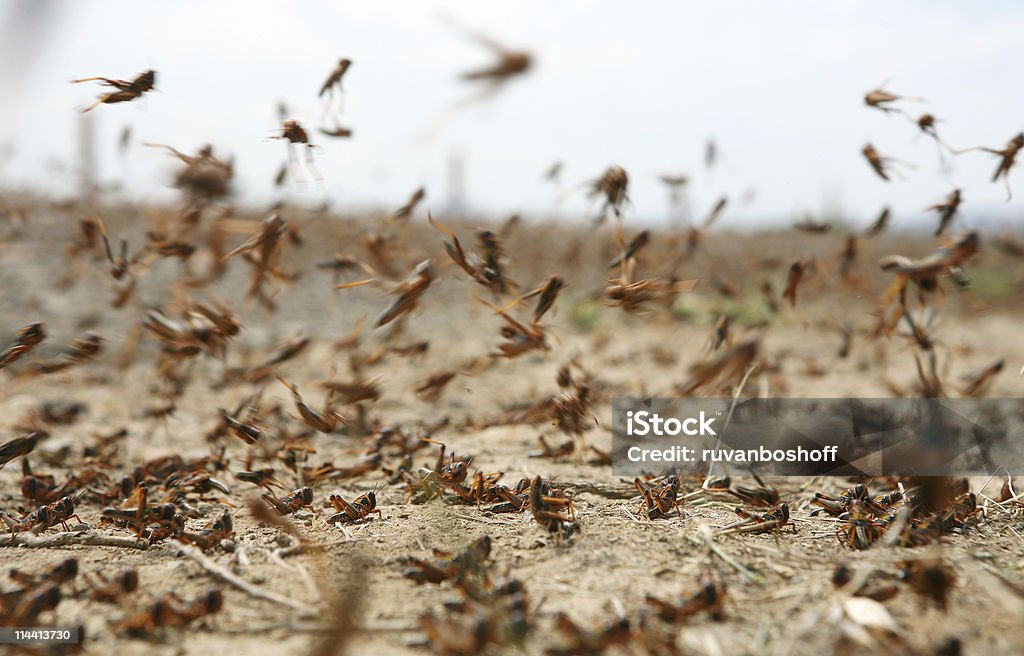
Locusts are more difficult. As it
turns out, locusts are the only insect that God ordained to be good for food
(Lev 11:22).
Throughout scripture, most
memorably, locusts are used by God to reveal His Almighty Power. Before the exodus,
locusts ate the crops of the Egyptians.
Locusts are one of the few
animals that when they eat seeds, they are entirely consumed. Locusts do not
spread any seed in their feces. Locusts spread pheromones, not life itself.
(Pheromones) Specifically, volatile organic compounds (VOCs) within the feces play a role in attracting other locusts, contributing to the formation of swarms. (AI Overview)
God knew that long before AI.
John ate locusts to spread pheromones. Plain old John attracted many people to
the Jordan. Locust food may have been an attractive agent. In other words, God
could have used locusts again to spread His Power just as He gave the dromedary
camel an inflatable “love sac” to attract female camels; “This sac, along with
loud gurgling noises, is a visual and auditory display used to attract females
and assert dominance over other males” (ibid).
So, not only does the camel hair
represent the camel but the spreading of love as well. The locust is like manna
from heaven whose feces are not detrimental at all but beneficial.
When words appear in the Bible,
they all mean something. God, unlike mankind, does not use filler material to embellish
the story. When The Word says, “camel’s hair” and “locusts,” it is there for
very significant reasons, often symbolic, but sometimes literal.
John, as a Nazarite, could not touch
a dead body, but locusts were not “meat” that would decay but meat that would
spread good tidings. The eating of locusts would not diminish John like the
killing of both lions and men long ago diminished Samson while using the
jawbone of a donkey.
Samson was using a dead animal to cause death, so that was why he lost the Nazarite in himself.
Hopefully, now, you know more
about John the Baptist. He was true to form and a man of God like Jesus but not
the Messiah. He prepared the Way for the real baptism, and that was the Baptism
of Jesus who seemed to have never baptized by water but by “Living Water” alone
(Ephes 4:5). That mode is the real baptism, and it is of the Holy Ghost of
Jesus.
John prepared the Way by washing of
the flesh, but Jesus was The Way by washing the inward man.
[1]
John would have been one of the many saints that might have been resurrected
with Jesus. Calvary as “the place of the skull” and that applied to both the skull
of Adam and the skull of John who were both saints. For more about the place of
the skull refer to my book, The Skull of Adam.”
No comments:
Post a Comment