Tuesday, November 14, 2023

HONORING OUR FOREBEARS

My dream… why I came back to Kentucky after living in Indiana and Michigan, was to surround myself with my descendants. That turned out to be merely wishful thinking.

The ideal relationship between the patriarchs and their offspring was my own father and mother. Nearly every Sunday and most holidays, their numerous offspring surrounded them because they were dearly loved. My parents were the ‘glue’ that held the family together. So long as they were alive, the family was cohesive. For the most part, there was no dissension among any family members.

Dad was not only the patriarch of the family but the religious head. To us, Dad was indeed the image of God although he did have some faults, but very few, at least that we could see.

Dad was not always a ‘saint.’ In his youth and early adulthood, even my righteous Dad sinned often. That was not the father that I knew because his conversion changed the sinful man into a righteous one. We did not judge him for how he had been but how he was. Because we loved Dad so much, we all could overlook his past and understand that he was no longer who he had been. I never saw Dad sin except for something he saw as a sin himself.

Dad’s stronghold was tobacco. However, Jesus was lenient about some sins; He said, “Not that which goes into the mouth defiles a man; but that which comes out of the mouth, this defiles a man” (Mat 15:11). Jesus did not hold that against him and neither did we. However, Dad held that against himself. He called on the Lord to deliver him from that sin and deliver him He did! I cannot even imagine Dad smoking; it is as if the sin was blotted out. (I did blot it out of his favorite picture; I edited the cigarette from his fingers because that picture was of the original Dad and not the one that I knew.)

We should judge others as we judge ourselves.

Jesus encountered some scribes and Pharisees who judged the disciples of Jesus as unclean because they failed to wash their hands before eating. Indeed, that is unsanitary but not in a spiritual manner. It is not like they had demons enter their mouths but the dust from which they were made.

Jesus judged the scribes and Pharisees according to their own works, to wit: 

You hypocrites, well did Esaias prophesy of you, saying, “This people draw nigh unto Me with their mouth, and honor Me with their lips; but their heart is far from Me. But in vain they do worship Me, teaching for doctrines the commandments of men” (Mat 15:17-19)

 Jesus was upbraiding the scribes and Pharisees for misusing their fathers and mothers. Jesus was validating that one of the Ten Commandments remained the Law of God. In the original version it is written in the following manner: 

Honor your father and your mother: that your days may be long upon the land which the Lord your God gives you. (Exod 20:12)

 Jesus, the “finger of God” (Deut 9:10) wrote that on stone for perpetuity, and now perpetuity has arrived. Jesus said this about that: 

Honor your father and mother and He that curses father or mother, let him die the death. (Mat 15:4)

 Note that Jesus said it first because He is God, and He said it later because He was still God. God did not change nor did the Word of God. Beneath that human flesh, Jesus remained God. Neither the ‘Word’ nor the commands ever changed. Those who claim God as their Father understand that Jesus is the ‘Father.’

Jesus, according to the Law, must be honored for He is the Father. The scribes and Pharisees were there to dishonor Father God, failing to understand what they were doing. Neither do people of this age.

They followed Jesus wherever He went but not to honor him. They were self-assigned judges who went out of their way to undermine God, their so-called ‘Father.’

Jesus spoke in the Greek; father and mother were pater and meter, respectively. Pater can be the family patriarch like my Dad who was a ‘pater’ to his great-grandchildren, grandchildren, and children. The Romans called that figurehead the ‘progenitor’ and all his offspring, his gens since they were of his genetics.

Father God is the Progenitor of mankind and those who are of His Seed are of the gens of God. Everyone is shaped in iniquity and to be of the gens of God requires rebirth (John 3:7), not by natural means, but by God engendering them to make them His progeny.

The mother in the Greek is ‘meter.’ She is the standard bearer. As such, Eve is the ‘meter’ of all living, or as it is translated to the English, ‘mother.’

Since Eve is the first woman and her offspring were imperfect Cain and Seth, but Abel died, then Eve is the progenitor of all. She is the ‘sin’ in us. As such, honoring the father and mother is putting value (honor), not just on the parents, but all who came before us. Because to honor yourselves is not in that commandment, those who honor themselves and who disregard their forebears are sinning.

Honoring our forebears goes all the way back to God. It is genetic and whereas often animals soon remove themselves from their kind, we are not animals and should remain as close as we can to our kind. That type of righteousness is not out of the mouth but from the heart.

Note that Adam and Eve are still to be honored although they sinned by dishonoring their Father. Hence, since original sin is genetic, then it is genetic that dishonoring those who came before us is just as the original sin. The first sin was Adam and Eve dishonoring their Father — the LORD GOD. Failure to honor your patriarchs and matriarchs is the original sin.

The reward for honoring those who became before you is a long life, possibly even eternal life. Jesus said that in a different way; those who dishonor their predecessors will die the death.

Note that “die the death” may seem repetitive but remember that “surely die” (Gen 2:7) is literally to die, die. It would mean both a short life and spiritually an enduring death in Hell. Therefore, honoring all your predecessors is imperative. Note that Jesus in either case qualified that. It does not say honor your perfect father and mother, but any father and mother that came before you. Adam sinned as well as Eve, but both should be honored.

I believe that Eve committed adultery with Lucifer, since our ‘father’ is the Devil. Should the Devil also be honored if that is the case? No.

However, we are of his gens, and his will we will do. One specific commandment excludes the Devil… “You shalt have no other gods before Me” (Exod 20:2). He portends to be God, so the Devil, although the bearer of our gens, should not be honored.

On the other hand, everyone else who became before us should be. Although they bear the image of Satan, they also bear the Image of God. Whoever your father or mother might be is worthy of honor because although they are depraved, they are not totally so. As God so loves even the worst sinner (John 3:16), we too must love them.

To be honest, even though your fathers and mothers may be evil, you too were shaped in iniquity (Psalm 51:5; depravity). To dishonor parents is hypocritical as Jesus pointed out to the scribes and Pharisees. Why so, you are no better because “all have sinned and come short of the glory of God”  (Rom 3:23). That glory is the Image of God and how Adam was created. Your parents are not glorious, and neither are you. I am sorry, but sin is genetic, we have the capacity to do what evil our forebears did. By the grace of God, we may be more righteous, but it is not of our own works (Ephes 2:8).

Both you and all your forebears were born in sin, but to think that you were not is hypocritical.

I was blessed. My immediate father and mother were Christians. They are to be honored for that very purpose. However, if my father and mother had not been Christians, they still would be sinners such as me. Christians are not born righteous. We are made righteous by God. God chooses to forget how we were, but we must never forget that we too are sinners that will be saved by grace.

Even if we are the worst sinners, God’s grace remains sufficient. He still loves us enough that he sacrificed His own ‘Son,’ or Gens.

Not to honor those who came before us is hypocritical because we are all inglorious bastard gens of the Wicked One. Sure, some parents are much worse than the others, but God made the difference in you. Who are you to judge their sins when we were all born sinners? Judging others who have a little of the Divine Spark in them is not your purpose. That remains for God to do in His time.

We need not condone their sins, but neither can we condemn them (Luke 6:37) unless we use the same metric (meter; Mat 7:2), for ourselves that we use on our ‘meter’ and ‘pater.’

Humbling ourselves, which God calls us to do, means that we are no better than those who came before us.

As it turned out, my dream has not come true. Not that any of my gens might hate me but some may dishonor me. The truth is that I do not deserve honor, but Jesus never used that criteria as none of us are pure enough to deserve it.

How can our progenitors be honored from afar. I learned how. I drove hundreds of miles every month to visit my own mother and father… to honor them in their old age. Sometimes it was tiresome and required much time to travel the distance.

All Christians must go all the distance to honor our Divine Father and those who came before us. As I revealed with Peter in yesterday’s commentary, he walked on water part way but failed to go all the Way to Jesus to become one with Him.

Honor is going all the way, even when hurdles and tribulations are in the way. Sometimes going to Jesus is indeed hard work, but the closer we get to Him, the better off we are.

Jesus went to the worst places to love even the worst sinners, but nowadays Christians avoid sinners because they are nothing but obstacles that must be overcome.


Monday, November 13, 2023

IT IS HOPE THAT FLOATS

Jesus multiplied the fishes and the bread. They never said so, but Jesus took a little and made it much. He created food from just a ‘seed,’ so to speak. He did what gods do. Jesus worked a miracle to prove that He is God.

Then Jesus from dry land walked to his disciples on the water. He overcame the gravity of the world. Scientifically, Jesus would have sunk but His Substance was lighter than water. Scientifically, Jesus proved that He was not just a man but of another unworldly ingredient. Because of gravity, density, and displacement; Jesus should have sunk beneath the water.

Peter tried to emulate Jesus and did so for a time, but because of little faith, Peter proved that he was human; Peter sank because of lack of faith. It is unknown what went through his mind, but ostensibly, he suddenly relented to science and then he sank.

Peter was a Jewish fisherman from Galilee. He knew that anything cast into the water would sink unless there was a flotation device of lesser density than water. Peter, many times it is supposed, had jumped into the water to save his fish and would know that he had to swim to overcome the world. Peter knew that he could only perform that task for a limited amount of time, then he would give out.

Peter must have thought, I am walking on water, but I know the science; I can only do so for a short time. He failed to realize it, but Jesus was His hope, and as they say, “hope floats.” Rather than trusting Jesus, Peter knew by the miracles of Jesus, that He could overcome the world. That too is the ‘science’ because Peter saw Jesus do things that normal men cannot do! Yet, Peter trusted the science more so than he trusted Jesus to be God, the creator of the world and the author of the science!

Now let us consider ourselves for a moment. People are taught science from the time that they are born. Indeed, any good parent should teach their children that touching hot things will burn and hurt them. They are taught that water, if inhaled, will drown them, and make them die. Any good parent should teach children to stay away for deep water. Peter was no different. His livelihood was from the water and the same place from which is food came; knowing water can be very dangerous!

Fear of stormy water had been engrained into the mind of Peter, but for a moment, his mind was the Mind of Jesus. His thoughts had become the Thoughts of Jesus in contrast to the spiritual ‘science,’ namely, “’My Thoughts are not your thoughts, neither are your ways My Ways’, says the Lord.”

Now consider Jesus. He was not thinking about the water, but was focused on getting onto the boat to circumvent the fears of his companions. His focus was not on His own safety, but revealing Himself to mankind to save them, not from the water, but from the fire. Jesus could have said to keep clear of fire because Hell will burn, but He used water, as He did for Noah, to focus on God and then the water will never harm them.

Peter’s faith was measured. “The ship was now in the midst of the sea, tossed with waves: for the wind was contrary” (Mat 14:24). If Peter remained on the ship, he might go down and die with the others. Peter would have feared the storm but then he saw Jesus walking on the water and overcoming the world. Safety would be with stable Jesus rather than on an unstable boat in turbulent waters. Peter knew that ships float on water but could go down in turbulent waters. That had been his thoughts taught to him since childhood. Then, he saw Jesus walking on water.

Now imagine yourselves there. You are on the ship being tossed about. Water is flowing haphazardly over the bulkheads of your ship. You fear that soon you will drown because the science is that many have done so before because turbulent waters are violent.

Now imagine, you see a ‘ship’ without a hull out there, and it is stable. The science is that safety is with the stable one. You would not see the Man walking on waters as a man but a Buoy, or a hope for safety. You could swim to it on your own, but you fear the waters because of their violence. You see the Hope that floats, would you walk on water to go to the Hope and disregard the violence of the storm? Peter thought he could and did so for a short time.

Hope does not come and go; it is maintained if safe haven is in sight. His hope would have kept him afloat if it had not dissipated. Although Peter had faith to get out of the boat, he had not enough faith to get all the way to Jesus. If only he had focused on Jesus rather than the world, Peter would have walked all the way to Jesus. The same goes for any Christian.

A child that rides a bicycle after many failures overcomes the fear of science. A child is taught that anything having two wheels should fall over. Their failures demonstrated that time after time, but once they take off, somehow their past is forgotten because now they remain upright. What they do not know is that an invisible principle is helping them to remain upright. Adults even fail to understand that as well, but trust what even they do not understand.

Jesus knew why He could walk on water; He made the water and for Him it was as solid as the ground. Why so? He trusted that He Himself was the Man who made it, and hence it was no object for Him to overcome it. Paul, if he had been there, could have made it clear for Peter; he wrote, “But let us, who are of the day, be sober, putting on the breastplate of faith and love; and for an helmet, the hope of salvation” (1 Thes 5:8). That ‘helmet’ would conceal the world while at the same time, allow Peter to see Jesus overcoming the world. The world was the scotoma that stood in the way of Peter walking.

Peter would have seen Jesus overcome the world on many occasions and had enough trust in Jesus to keep him on top of the water a short time, although if in full trust, Peter could have walked all the Way to Jesus. His thoughts should have remained on trusting Jesus and for him to have the same thoughts that Jesus Thought. The difference is in their degrees of faith. Jesus knew for certain that He could overcome the world because the seas were subject to Him. Peter surely realized that he could not control the seas and failed to trust Jesus all the way to his destiny.

Faith is scientific as well. In scientific terms, faith is trust in God over some amount of time. It is not one thought for one event but some degree of trust all the time. It is not just trusting God during the good times but in the stormy times as well.

One lady ceased to trust Jesus because her younger sister died. Rather than blame the world for maladies, she blamed God. She looked at death as a punishment all the while a Christian should see death as a walk toward salvation in the end.

Jesus had His own Thoughts. He knew that He is God with flesh that should by all rights sink, but sink He did not. He overcame the science of the world.

Paul pointed out that the Jews trusted circumcision as a measure of their faith. Indeed, that act is a measure of the faith of the parent; that it would ward off evil ones. They were committed to the oracles of God (Rom 3:2), or the sayings of the Word — those words that are the commandments.

Paul continued his argument, “What if some did not believe? shall their unbelief make the faith of God without effect?” (Rom 3:3). He could have asked it this way, What you do not believe cannot cancel out God.  Trust that He is who He says He is?

Most people are skeptics. They doubt God because God does not ‘fit’ the scientific model. Why did Jesus perform all those miracles? To instill in their minds that what they could not see was realer and more powerful than what they could see.

God knows who He is. There is no doubt in His Mind at all. Jesus trusted Himself because He had no doubts that He is God! Peter knew who he was and that he is not God. Maybe he was right in not trusting himself to walk on water, but wrong in the sense that he mistrusted the water more than he trusted God. In effect, Peter trusted the science that he would surely sink, more than he trusted Jesus who did not sink! Jesus revealed that science can be overcome, and He did so when he divided the waters from the waters in the beginning (Gen 1:6).

Jesus created all things (John 1:3). Jesus knew the science because He made things scientifically; it was not all things from no things (alchemy) but all things from the Power of God. His faith was perfect and there was absolutely no doubt in the Mind of Jesus that He was God and demonstrated it by stepping on unstable water, making it not just safe but stable in all ways. Jesus could have sunk if He had any doubts. That is the ‘faith of God’ and means he had perfect faith and was without any doubt. Nobody else but Jesus “knows that they know that they know that they are saved” as some say.

While atop the water Peter could have said, “I am saved,” but after he sank, he yelled, “Lord, save me.” Because he was part way there in sight of Jesus, he was safe, but to be saved, he ceased trusting himself and called on the Name of the Lord. Too many Christians are walking the way of Jesus, all the while feeling as if they are already saved, but when things go awry, they may soon find themselves sinking, or ‘falling away’ (Heb 6:6) in apostasy. They have been deceived just as in the beginning. Salvation is not until you are all the way to Jesus. Peter was safe in the bosom of Jesus but Jesus. To be saved, he had to follow Jesus until his death to be with Jesus in Paradise. Paul wrote, “…now it is high time to awake out of sleep: for now is our salvation nearer than when we believed” (Rom 13:11).

Peter first believed in Jesus when he stepped out of the boat. With each step he was nearer salvation. When he sank, Jesus kept him safe but later Peter denied him. He would have fallen all the way, but his life was preserved until the time of salvation. Peter was not saved until he died, then his soul was saved to Paradise. For him, just as with Paul much later, because he was in Christ; to die would be gain (Phil 1:21). Peter was not saved but preserved for a later time. He did say, “Lord, save me,” and surely Peter was saved in the end, not the end of that walk, but the end of the Way to Jesus.

During the storm, there was no sun shining, so a ‘shadow of a doubt’ would be irrational. Jesus, during the crucifixion, in the Light of God did reveal His Shadow — the Holy Ghost — but in the darkness, the men could only see Jesus for He cast no Shadow. They saw the only Man who was certain that He could walk on water and did so. I submit that ‘without a shadow of a doubt’ is irrational for even Peter soon faltered. He saw the visible Substance of the Man, Jesus, and still had his doubts. How would have Peter responded if only the Holy Ghost of Jesus could walk on water? He could have seen the invisible Image of God and would never have gotten out of the boat. Only if Christians can see the Holy Ghost as the Invisible Image of Jesus can anyone be saved.

Peter did not even trust the visible Image of God, but you say that your trust is so great that you fully trust the Holy Ghost to save you? How arrogant of you! Your faith is the faith of God, you think. The arrogancy is that the Devil is right, that you have become the gods, or so you think.

In humility, I submit; I do not have the faith of God (Jesus) because I am not God. Any sin that is done is evidence that you do not have the faith of God or why would you test God by sinning? It remains the Will of God that you do not sin, yet you sin.

Therein lies doubt. You either doubt that there is really an invisible God, or that He is not the ‘Judge’ that judges fairly. Fair judges have mercy, do they not? If they grant clemency that the trespass will not be repeated, then it will be forgiven. Although a Christian repent but repeats the sin time after time, then that makes the expensive grace of God (payment for our sins with His own flesh), cheapened as if it is a ‘ticket’ to sin again!

That you know that you are saved, beyond a shadow of a doubt, removes any further penalty; and then you can still sin with impunity just as if there is no God.

Peter was safe so long as his eyes were on Jesus and with no apparent sin. Then sin entered his mind as his trust fizzled in the troublesome sea. A good guess is that although he could see God, he still had some doubts that it was God that he was seeing.

Jesus validated that guess, Jesus said to them in danger, “Be of good cheer; it is I; be not afraid” (Mat 14:27). Peter either got brave or tried to convince the others, or even Jesus, just how much He trusted Jesus. He would show them that his faith was so concrete that he could walk on water like Jesus — that he trusted God so much that he too would be a god.

Peter left the boat to go to Jesus. He would show Jesus how intense was his faith and he would make a name for himself as the man who walked on water as if he was God, and then “he walked on the water, to go to Jesus” (Mat 14:29).

Unclear is how many steps that Peter took before he realized that he was not the god that he thought he was. 

But when he saw the wind boisterous, he (Peter) was afraid; and beginning to sink, he cried, saying, ‘Lord, save me.’ And immediately Jesus stretched forth his hand, and caught him, and said unto him, ‘O thou of little faith, wherefore didst thou doubt?” (Mat 14:30-31)

 Peter, for just a few steps, perhaps did have great faith, but was the faith in Jesus or himself? However, Jesus came to him!

Peter had judged that his own faith would save himself, rather than the absolute faith of Jesus who knew Himself to be the God.

Peter was arrogant. He would show the others in the boat that He had great faith. Jesus humbled him. Peter soon realized that he was human and could not save himself. With that truth revealed, he said, “Lord, save me!” realizing that he had no power to save himself.

Peter had such little faith that he did not trust God in person, yet braggarts say that they “know beyond a shadow of a doubt that they are saved” as if it is their minds that do the saving, in a ‘Peter’ sort of way.

If Jesus comes again, many will still doubt. Many who claim great faith now, when shown the sickle of death, they will do anything to save their heads!

Peter thought he had great faith, not even in the Shadow of Jesus — the Holy Ghost — but in God in real material Substance. Yet he doubted. His sinking in the water showed just how little faith he had, and Jesus called him out for his arrogance, “‘O thou of little faith, why did you doubt?” Peter was making a display of how great his faith was, and Jesus revealed to him just how little his faith was. Peter is still known for how shallow his faith in Jesus was. When Jesus said that Peter was the ‘stone’ on which the Church was built; it was the sinking stone, for the Church was built on the solid rock of Jesus, not the doubting Peter.

Peter was not the cornerstone of the Church, as Catholics believe, “The stone which the builders rejected is become the head of the corner” (Mark 12:10). Peter was the sinking ‘stone” (Petra), but Jesus the Living Stone whose Substance can float on water. Hence, a church built on Peter is not the Invisible Church of God but the church that men built, and it was not built on faith is Jesus but faith in Peter… you know, the man that could not walk on water and the same man that denied Jesus.

The point to Peter’s failure to trust Jesus, is that we are all like Peter. It seems that our own faith is what saves, and not that Jesus is God. Overly stating your faith is as much a heresy as thinking moving water will save you!

Can you imagine how displeased that Jesus might be when we say, “I know beyond a shadow of a doubt that I am saved?” Jesus is the great ‘I AM’ and there you go, making yourself the ‘I AM.’

Peter’s failure to walk all the way to Jesus in a dangerous environ supports the notion that “by grace are you saved through faith; and that not of yourselves: it is the gift of God” (Ephes 2:8). Peter’s faith was enough to get out of the boat and take the first steps, but he soon found out that his faith was not faith; it was hope. Hope indicates a future event and some doubt. Christians do not have the perfect faith that they claim, and when the crises come, they often sink.

A Christian must walk “through faith” just as it is written, but preservation is the gift of God that keeps a Christian afloat in times of turbulence and doubt!

The arrogance of it all; you think that it is your faith that floats, when it is the Holy Ghost of Jesus that keeps your heads above water. 

(picture credit; JW.org)


Thursday, November 9, 2023

CONSEQUENCES OF SIN

Today’s commentary will be brief for you that are busy. It is about the consequences of sin. We often forget that. Whenever we think that we got away with something, ‘Consequence’ punishes us.

For instance, those seemingly silly dietary laws that faithful Jews obey are to prevent unwanted consequences. God so loves the world that He wants that they never perish. Those dietary laws that many disregard as nonsensical are essential for longevity. God wants us in His realm, but in His time, not ours. People put things into their mouths and veins that just do not belong there!

Consequences are God’s way of saving ourselves from self-destruction.

Original sin was as if breaking all the commandments, “Whosoever therefore shall break one of these least commandments, and shall teach men so, he shall be called the least in the kingdom of heaven” (Mat 5:19).

Breaking the lesser commandments are not damning but diminishing. Apparently there are levels of sin and levels of consequences. You get to choose your own consequences by either neglecting the will of God — those commandments — or abiding by the Law which are God’s Will that are enumerated.

Of course, dietary laws are lesser laws, but they remain God’s Will. You can certainly break them without fear of eternal death, but you might die young and even wear a smaller ‘crown’ in Heaven.

There are both lesser and greater sins. Sins are not equal in stature, but unpardoned sins suffer the same consequences.

Sins cannot be pardoned unless they are repented of. Thus, each time Christians sins, Jesus said to pray; forgive is our trespasses and, “When you stand praying, forgive, if you have ought against any” (Mark 11:25).

Trespassing is violating the Laws of God’s ‘Estate,’ so to speak. Whenever anyone becomes an adopted son of God, it is expected that they abide by the rules of God’s Estate, or like trespassing anywhere, there are consequences.

Christians still sin after pardoned. It is the nature of mankind to sin. Therefore, each sin must be repented of, and God is faithful to pardon. With that said, even with a Divine Pardon, there are still consequences. Chapter three of Genesis is about sin and its consequences for all the parties. Even the so-called ‘Serpent’ will pay for its sins that are many and great.

The greater sins are called ‘cardinal sins’ by Catholics. Many Christians fail to recognize the ‘Screech Owl Sin” (Isa 34:14), using my own words — blasphemy of the Holy Ghost (Mat 12:31). Jesus even told Pilate that there were greater sins than his own. He was perhaps referring to the sins of the chief priests and Judas.

Judas’s consequence was foretold early on. Satan (the ‘Serpent’) had entered Judas, and the death of Jesus defeated Satan.

After original sin, the Word (Jesus) meted out consequences; for the Serpent, “Because you have done this, you are cursed above all cattle, and above every beast of the field; upon your belly shall you go, and dust shall you eat all the days of thy life…” (Gen 3:14). It was foretold that Satan would suffer death as a consequence of its sins.

Usually, consequences happen both immediately and eventually. For Adam and Eve, they began to die. No longer was the woman of Adam but became independent. Her name was not ‘Eve’ but that was her new kind as the “mother of all living.” (Gen 3:20). She changed genetically from what she was before, and she failed to notice it (for only awhile as sacred literature reveals.).

Likewise, Adam’s kind’s longevity was reduced to 930 years. Adam began to die at that very moment and the ‘carbon clock’ within him began to tick. His consequence was immediate — withering or aging — but the long-term consequence was death just as God foretold… unless he wore the Garment of God at all times (The Whole Armor of God?)

Whenever anyone sins, they may not perceive the consequence. One consequence is alienation from God. That was what happened to Eve; she became alien to God and to Adam. Her new nature was ‘Lilith,’ the screech owl. That was the consequence of the greater sin that she did.

For the Serpent. He would crawl and eat dust, whatever that means, but there would be a long-term consequence as well — “on his belly he shall go.” That would not come true for 5500 years or so as the Books of Adam and Eve reveal. Then the long-term consequence came about when Jesus died, and so did the ‘Serpent;’

Judas with Satan in him hanged himself, then the long-term consequence came about, “This man (Judas) purchased a field with the reward of iniquity; and falling headlong, he burst asunder in the midst, and all his bowels gushed out” (Acts 1:18).

His going was not crawling but going to Hell where he belonged! He fell headlong! That is how he would go, and on his belly just as the Word had foretold, “he burst asunder in the midst.” The Devil also has long-term consequences, and in the end, his wage for sin is the lake of fire. “And death and hell were cast into the lake of fire. This is the second death” (Rev 20:14). ‘Death’ is Satan and ‘Hell’ is his abode. Hell will be removed from the Third Heaven and go to who knows where?

But those whose ‘father’ remains the devil; they too will suffer long-term, even eternal consequences, “And whosoever was not found written in the Book of Life was cast into the lake of fire” (Rev 20:15). Those two things are future consequences of sin that God revealed to John.

You cannot escape consequences, neither immediate nor long-term. The problem is that the pleasure of sin conceals the immediate consequence and feeling free from that, the long-term consequences seem beyond reason as if God forgets unrepented sins. He does not!

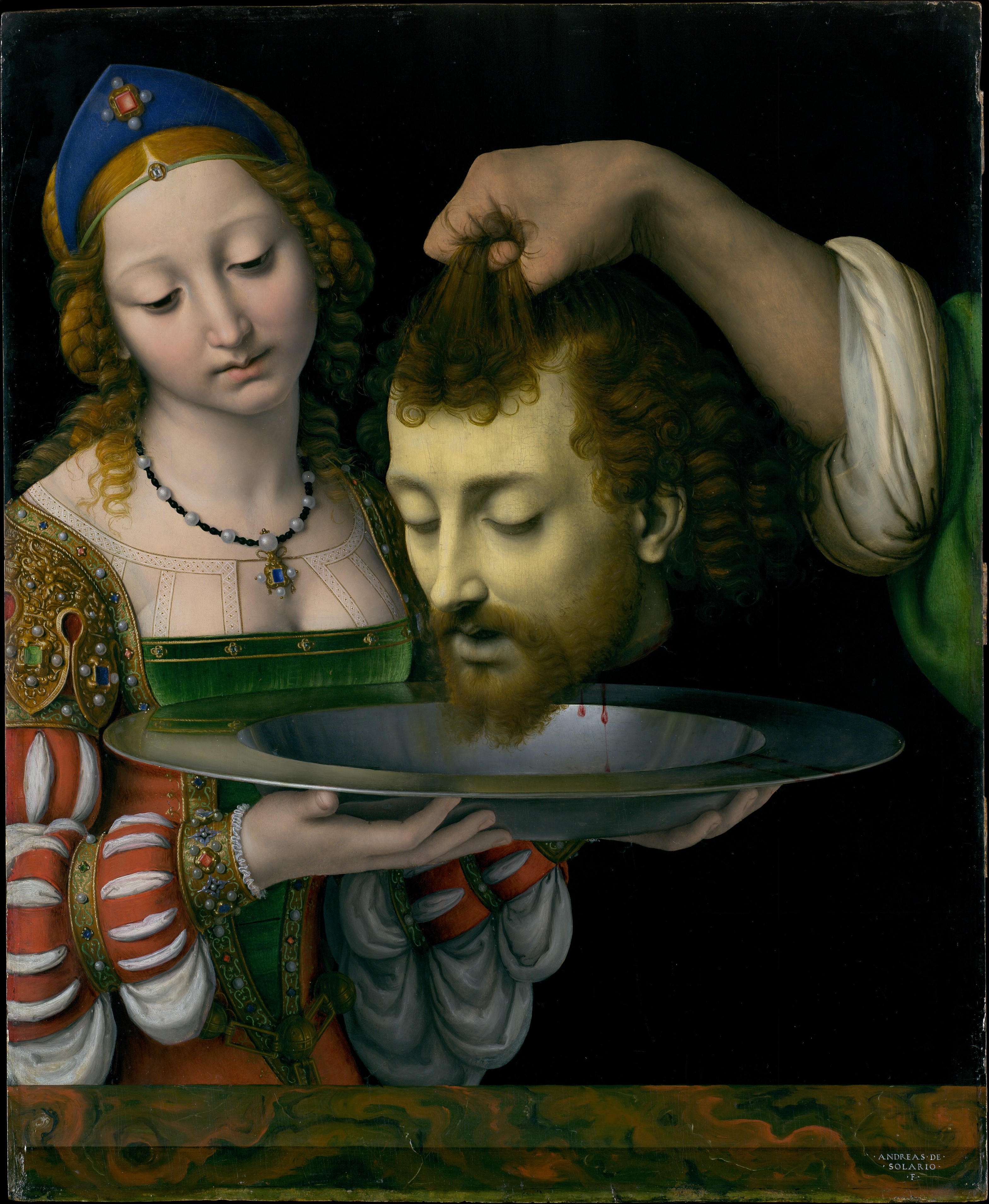
Now consider, Salome’s sin, Herod’s (Antipas) niece and step-daughter: 

When Herod's birthday was kept, the daughter of Herodias danced before them, and pleased Herod. Whereupon he promised with an oath to give her whatsoever she would ask and she, being before instructed of her mother, said, “Give me here John Baptist's head in a charger.”

And the king was sorry. Nevertheless, for the oath's sake, and them which sat with him at meat, he commanded it to be given her.

And he sent, and beheaded John in the prison. And his head was brought in a charger and given to the damsel: and she brought it to her mother.

And his disciples came, and took up the body, and buried it, and went and told Jesus. (Mat 14:6-12)

 First consider Herod. The immediate consequence was sorrow, but he may have never repented. He went halfway to repentance but not all the way.

In the long-term, things began to go bad for him. Like Adam, he worked by the ‘sweat of his face’ to acquire the throne of Judea, but in the end, Agrippa was rewarded. Caesar had turned against his ‘friend.’

As I wrote yesterday, I believe the Emmaus Walk of Jesus was to give one last chance for Herod to see that indeed, He was God in the flesh and not the Ghost of John the Baptist who came to haunt him.

If Jesus did that, then Herod may have been persuaded to become a Christian, but if that was not the case, then Herod is in Hell right now, according to the justice of God. Hell is the last consequence that makes one who fears God to trust Him for reprieve. Hopefully, even wicked Herod was able to see Jesus as God when Jesus may have visited him in glorified flesh.

Now consider Salome, the daughter of Herod’s wife Herodias. She seemed proud that she had pleased her wicked mother at the expense of an empathetic Herod. The head of John was no more than a trophy for her mother, ostensibly to celebrate their defiance of John the Baptist and God.

If she was not totally depraved, she should have sensed some shame for what she had done. Perhaps after she danced the Dance of the Seven Veils, she put on some more clothes as Eve did so long ago. However, the best guess is that making a name for herself that is still remembered overcame any sorrowful feelings. Right then, unknown to Salome, she began to die!

Well, she would have anyway, but God planned her death. It would not be immediate, but she would have to suffer the consequences of that great sin!

Salome as well as Herodias and Herod suffered dire consequences, according to history: 

Wherefore the just vengeance of God burned against all who were concerned in this crime (of beheading John).

Herod was defeated by Aretas. Afterwards he was banished with Herodias to Lyons, and deprived of his tetrarchy and everything by Caligula, at the instigation of Agrippa, the brother of Herodias, as Josephus relates (xvii. 10).

Moreover, the head of the dancing daughter was cut off by means of ice. Hear what Nicephorus says, “As she was journeying once in the winter-time, and a frozen river had to be crossed on foot, the ice broke beneath her, not without the providence of God. Straightway she sank down up to her neck. This made her dance and wriggle about with all the lower parts of her body, not on land, but in the water. Her wicked head was glazed with ice, and at length severed from her body by the sharp edges, not of iron, but of the frozen water.

Thus in the very ice she displayed the dance of death, and furnished a spectacle to all who beheld it, which brought to mind what she had done.” Hear also L. Dexter (in Chron. A. C. 34), “Herod Antipas, with Herodias his incestuous mistress, was banished first to Gaul, and afterwards to Ilerda in Spain. Herodias dancing upon the river Sicoris when it was frozen, fell through the ice, and perished miserably.” (Cornelius À Lapide. The Great Commentary. chapter 6. v. 28.) (Calahan 2005)

 Again, that quotation is from history. There were indeed short-term consequences as can be seen by Calahan above, but the eternal consequences were much greater!

Even if Herod was persuaded to become a Christian, according to my earlier commentary, he still suffered the loss of fame and fortune. Herod was soon defeated in battle by the Arabians, Herodias fell through ice and froze solidly, and like Herod whose head Salome desired, God desired hers for justice to be met.

The Law of God for the Jews were this: 

Then shall you do unto him, as he had thought to have done unto his brother: so shall you put the evil away from among you.  And those which remain shall hear, and fear, and shall henceforth commit no more any such evil among you. And your eye shall not pity; but life shall go for life, eye for eye, tooth for tooth, hand for hand, foot for foot. (Deut 19:19-21)

 God did not pity Salome nor her mother. They suffered the consequences of their sins, and so did Herod. They thought that they had escaped the Law when they moved away, but justice followed. You cannot hide from God nor divine justice.

God is merciful, however. Upon sinning, if sorrow leads to repentance — serious repentance — then the sin is canceled out and God forgets it (Jer 31:34). He does not forget the way we think of it, but He chooses to no longer to hold the sin against us. That, in theological terms, is the gist of ‘justification,’ not just as we never sinned, but that God never again holds that sin against us, meaning that once forgiven, no more repentance is necessary.

However, there does remain the consequences of sin. We remember the sin and hopefully choose to do it no more. (I still wrestle in sleepless nights remembering my sins that I try to forget but know that I deserve death. That is a consequence of that sin.)

We are not God, and we should never forget that we are sinners safe by grace, to put it literally. God, for instance, kept Herod safe because of his sorrow, but whether or not he was saved remains debatable.

You may never know it, but even the lesser sins have consequences. At some time, all those lesser sins must be repented of because if they are not, the lesser sins compound into greater sins until damnation may be the final consequence.

(I seemed to have been mistaken about brevity and for that I am sorry.)


Wednesday, November 8, 2023

WHY JESUS WALKED TO EMMAUS

 Admittedly, this commentary contains some extrapolation, but it is based on scripture. It is me adding 1 + 1 and getting 2. I am referring to Herod’s mistaking of Jesus as John the Baptist resurrected. In his usual manner, Jesus would think it necessary to prove to the man who would be king wrong.


The murder of John the Baptist would have been heartbreaking to those who he baptized. Just think about that; John was beheaded just for telling the truth!

The Tetrarch Herod had just stolen his brother, Philip’s wife, Herodias (Mat 14:3). John said one thing, “It is not lawful for thee to have her” (Mat 14:4). That one truth cost John his head and denying that cost Herod eternal life.

Just what Law was that? “You shall not commit adultery” (Exod 20:14). Committing adultery is double faceted; (1) lying with another man’s wife as if she is your own, and (2) the worship of idols is adultery, or fornication, against God. The head of John became the idol of his wife and his step-daughter. It is supposed that they would keep it on the platter in Herod’s palace as a trophy for victory.

Jesus could have pardoned Herod for his sin because no sin is too great for His mercy.

Herod gave John credit for something that was not true. He said to his servants, “This is John the Baptist; he is risen from the dead; and therefore mighty works do shew forth themselves in him” (Mat 14:2). Herod thought that Jesus was John who had been resurrected. Herod had John killed, but then thought that he had arisen. John had not. Jesus was God in the flesh and John was a dead man, whose soul lived on in glory!

How is that known? When Jesus died, John did arise. “Where does it say that?” you ask. 

And the graves were opened; and many bodies of the saints which slept arose, and came out of the graves after his resurrection, and went into the holy city, and appeared unto many. (Mat 27:52-3)

 John, even though his body was in one place and his head another, nothing was too hard for God.

John was sleeping. He would not sleep forever, but only until the resurrection. Paul wrote that the Jews require a sign (1 Cor 1:22). Although Herod thought that Jesus was John who had awakened, as it turned out, his nightmare came true; John would soon wake up and appear to him!

How could it be that those who arose from their graves included John? “His disciples came, and took up the body, and buried it, and went and told Jesus” (Mat 14:12). John’s body was buried; it was not put into a tomb. His grave could be opened by supernatural causes and men would not be required to roll back the stone, as people assumed with the resurrection of Jesus.

Further evidence is that John was a saint. Based on divine inventory, as with Lazarus, the last in should be first out! Lazarus had already arisen, but John had not. It was his time to be awakened.

But would he not have decayed over the years? Yes, like Lazarus, he would stink (John 11:39); he would stink very badly, if not for new flesh that was incorruptible.

Resurrection is the restoration of the flesh. In modern terms perhaps his DNA was used by God to make him a new person. That, readers, is the process of rebirth. It begins with trust, passes beyond life unto death, and ‘born again’ is an engendering by God above. (Strong 2006).

Was John a ‘saint’? A saint is a follower of Christ who is morally pure. Literally, a saint is an ‘awful thing’ (ibid). A headless man fits that description quite well!

John’s head was not with his body. It was asleep somewhere else, indubitably in Herod Antipas’s palace.

Those saints “appeared to many.” Herod Antipas was alive and well when Jesus died. It seems that the long dead John may have appeared to Herod.

Where was John’s head? Probably in the city of Tiberius where the palace of Herod Antipas was and to which the springs of Emmaus was near.

After Jesus was resurrected, for some reason, he was on His way to Emmaus. Why would he go to Emmaus immediately upon being resurrected? Perhaps, to see John who was resurrected that same day, if my incite is true! Jesus was on the way to Herod Antipas, probably to appear to him; to show Herod the real Jesus and stand alongside John to convince Herod that, not John, but Jesus is the Way, the Truth, and the Life (John 14:6).

Jesus was unrecognizable. He had been glorified. Scripture reveals that when the regeneration process was complete; after Jesus died and was resurrected, they conjectured, “Ought not Christ to have suffered these things, and to enter into His glory?” (Luke 24:26). They failed to recognize Jesus because He had been glorified. No longer was his Person or even His flesh subject to the world for He had overcome the world.

After serving the men who walked with Him at one of their homes, Jesus just disappeared. “Jesus himself stood in the midst of them, and saith unto them, Peace be unto you. But they were terrified and affrighted, and supposed that they had seen a spirit. (Luke 24:36-37).

The Substance of Jesus had changed. His flesh was such that it revealed His Spirit. They could obviously see the Image of God within Him just as with the first Adam whose Image was a Phantom (ibid). What would Jesus look like? The ‘Son of God’ that Nebuchadnezzar saw in the fiery furnace (Dan 3:25).

However, this commentary is more about John and Herod Antipas. I submit that Jesus went to Emmaus only to join John there and both appear to Herod together to prove to Herod that Jesus is not the arisen John, but God Himself. Perhaps he wanted to show Herod His new flesh to persuade Herod to become a Christian despite his adulteress relationship with Herodias.

Jesus then overcame the world. Concluding supper, which by the way, Jesus did not eat, “Their eyes were opened, and they knew Him; and He vanished out of their sight” (Mat 24:31), then immediately appeared to the remaining eleven apostles who were still eating their suppers; “Jesus himself stood in the midst of them, and saith unto them, ‘Peace be unto you’” (Luke 24:36).

Jesus, soon after his resurrection made the rounds and appeared to many. It makes sense that John did the same thing if he was one of the saints that was resurrected with Jesus. [1]

As it turned out, King Agrippa was persuaded that Antipas was traitorous with the accusation that he conspired against Tiberius Caesar with Sejanus and was now plotting against Caligula Caesar.

Antipas died in exile, and as early historians believe, he was executed. If so, what he did with John, others did to him. Was he persuaded by a possible visit from both John and Jesus? That remains unknown.

Consider now the story of the other Lazarus and the rich man; The rich man begged Abraham in Paradise that his brothers be warned. He replied to them, “If they hear not Moses and the prophets, neither will they be persuaded though one rose from the dead” (Luke 16:31).

Antipas may have seen both John and Jesus after they arose from the dead, but he would still not believe. He might have seen two but remained unpersuaded.

Herod Antipas had his mind set on his own fantasies: (1) That he should be king but as it turned out Agrippa became King of Judea. That was also the royal title of Jesus. It stands to reason that Herod feared Jesus who was the true heir to the Judean throne. His resurrection would have frightened him for obvious reasons! (2) His other fantasy is that he would be the favored one, not of Jesus, who was ‘King of kings,’ but Caligula who would soon have that title as Caesar.

The evidence suggests that although Herod may have seen two men arise from their graves, that he still did not believe. He lies to this day in his grave at Lugdumen in Spanish Gaul… and is still awaiting his own resurrection. He will be and then Jesus will say to him, “I never knew you: depart from me, you that work iniquity” (Mat 7:23).

With that said, Jesus and John are both still alive. Time has no significance to the dead. There is no record of John ever entering the grave again. The best bet is that John is in Paradise and both he and Abraham are in Jesus’s Bosom; and that John, like Jesus, has already been glorified, and indeed, Jesus surely found his head in Emmaus to make him whole!


[1] In my book, The Skull of Adam, I assumed that John appeared to Herod and confronted him for breaking so many laws for Herod was a usurer, a schemer, and a traitor to Caesar as well.

Tuesday, November 7, 2023

GREATEST PASSION PLAY EVER TOLD

I sat down to write this morning with an empty mind. I had no idea what to write. Then I received a thought… continue with Matthew chapter thirteen. I obeyed, then God filled my mind.

It certainly was not my thoughts because I was being lazy and apathetic. I would have preferred to do other things, but my routine could not be undone, so I just sat there, and God opened my eyes and took off the scales from my eyes. I saw very clearly what He would show me — all the things that happened in the dark on the day that God died, not died, died but came undone.


Jesus spoke to the crowd from the seashore. His device was to speak in parables — a simple story that most could understand to present the truth. It was not deception, but a ‘tool’ to use to make difficult ideas clearer.

That was required because the crowd were neither divine beings with extrasensory natures nor prophets that could see things that common people cannot see.

The crowd would not be prophets nor divine beings on this Earth, so Jesus painted for them simple pictures of abstract ideas on the ‘walls’ of their minds so they could understand what they could not see.

Now, for a moment, let’s revert to the ‘Allegory of the Cave’ of which Plato wrote. Men were chained fast so that they could not see behind them. Behind them was a light that cast shadows on the cave wall. To them, that ‘fragment’ (the shadows) of the real thing became their truth. The shadow of the things behind them allowed them to see what was going on just out of their sight.

Parables are much like that. The parables are ‘shadows’ of the truth. Lost men, chained to the ideas of the world, were revealed the truth by Jesus ‘painting a picture’ for them in their minds’ eyes.

Some asked Jesus Why He spoke in parables. His answer was this: 

I speak to them in parables: because them seeing, see not and hearing they hear not, neither do they understand. And in them is fulfilled the prophecy of Esaias, which says, “By hearing you shall hear, and shall not understand; and seeing you shall see, and shall not perceive: For this people's heart is waxed gross, and their ears are dull of hearing, and their eyes they have closed; lest at any time they should see with their eyes and hear with their ears, and should understand with their heart, and should be converted, and I should heal them.”

But blessed are your eyes, for they see and your ears, for they hear. (Mat 13:13-16)

 They could all see and hear but failed to understand, even since the days of Isaiah and before. It is not that they were stupid but that they could not comprehend the boundless knowledge of God. They were so dull that for mankind to understand Himself, God would soon paint a living picture of a Man dying in their minds. [1]

Now return to the beginning. God told Adam about the Tree of Knowledge of Good and Evil. “…in the day that you eat thereof you shall surely die” (Gen 2:17). Until the time of Jesus, many still failed to believe that they would die. They freely ate of the wisdom of the world from the forbidden tree, but they should have eaten from the Tree of Life, or which they could freely eat.

The words, “surely die” is not an exact translation; it should have been “die, die.” God said it twice to make it clear, just as any orator will repeat himself for clarity.

Jesus came to satisfy the promised grace. Mankind deserved to die, die; but the grace was that a person could die, then live.

The crucifixion was about God painting a living picture. He loved His creatures so intensely (John 3:16) that He painted a picture in much more detail than Di Vinci did of the last supper. (It is said that it took years for Di Vinci to paint the Last Supper, doing so a small portion at a time.)

Well, God painted a picture of His death much more vividly, but so many still fail to understand all that detail.

First God made the ‘canvas’ on which to paint the picture. It was Calvary, not by coincidence on the cranium (Calvary) of the world. Beneath the rocks, there He had Shem and Melchizedek bury Adam in the place of his skull, according to sacred literature. He painted the picture for both Adam and his kind, not just for the Jews.

Then God created the Roman Empire to reveal to the world the type of empire that He was Himself ‘Caesar’ over, as ‘King of kings and LORD of lords” (Rev 19:16). That took much time, but God’s time is not our time! Jesus was not subject to Caesar, but Caesar to Jesus, and He made that clear.

Pilate, as prelate of Caesar, who was on permanent vacation on the island of Capri, had the authority of Caesar. He was the ‘right hand of Caesar,’ just as Jesus was the ‘Right Hand of God.’

Pilate thought that he was in charge, even perhaps having delusions of grandeur. He would make a name for himself for killing God.

That failed.

Pilate, making only a name for himself in the Bible, disappeared quickly into oblivion. Here is the picture of that, that God painted into the minds of the readers of the Word: 

Said Pilate unto Him, “Speak you not unto me? know you not that I have power to crucify you, and have power to release you? Jesus answered, “You could have no power at all against Me, except it were given you from above” (John 19:10-11)

 Pilate had no power and neither did Caesar. As it turned out the ‘right hand of Caesar,’ Pilate, was cutoff, and Jesus revealed that He was not just ‘king of the Jews’ but both Caesar and God, that the emperor claimed to be! [2]

In ancient days, Nebuchadnezzar was made king and god for a time just to destroy the Jews and then he was humbled, and now there was Pilate who was there to save the nations, and Jesus humbled him. Nations were made for God to plant the world’s greatest picture in the minds of its citizens — the apparent death of God!

Continuing to ignore the parable, focus on the real ‘painting,’ not the ‘caricature’ in the parable.

The crucifixion was an enactment of the ‘Allegory of the Cave.’

With no cave on Calvary, excepting the tomb of Adam beneath (it is claimed to be there today and is a tourist attraction), God made a special ‘cave’ for those chained to watch.

Think of the multitude surrounding Jesus as the people chained to the wall so that they must see the Shadow on the wall, so to speak.

God prepared the scene for them, “Now from the sixth hour there was darkness over all the land unto the ninth hour” (Mat 27:45). God created for them a ‘cave’ and on one ‘wall’ of the cave, He placed Jesus. He fixed Him on the wall, and that ‘wall’ was the portal from life to death. The Holy Cross was the ‘Wall’ on which Jesus was fixed. Those with bright eyes, even in the dark, could see clearly the Man, Jesus, by the huge Shadow that He cast.

In this case, the men were not chained; the Savior was, but they were in invisible chains — they were blind to the truth! It was them that Satan and the government held captive, even the religious Sanhedrin. Although Jesus was nailed, it was the crowd that was in chains. (That is much the case in this era).

So, it was not an ‘allegory’ but reality. Neither was this ‘picture’ a parable but a revelation for those with bright eyes.

Something happened on Calvary for all those in chains. Suddenly, Jesus “cried with a loud voice, saying, ‘Eli, Eli, lama sabachthani? ‘ that is to say, ‘My God, my God, why hast thou forsaken Me?’” (Mat 27:46).

First there was Light and then it got dark. The Father is ‘Adoil’ — the Light. [3] With the Light gone and Jesus forsaken, as usual, those with bright eyes could see in the dark. God lit the scene for just a few; He cast the ‘Shadow’ of the Man Jesus for those with bright eyes to see.

“Jesus, when He had cried again with a loud voice, yielded up the Ghost” (Mat 27:50).

Arkhas (Jesus) became undone. First the Light (Adoil) was there, then He went first, and next the Holy Ghost departed, and then there was One — the body of God without either Image; neither the ‘Light’ nor the ‘Shadow.’ The Godhead came undone to reveal His three substances. After all, the Holy Ghost — the ‘Shadow’ of God — revealed right there in the darkness that God made that ‘it’ is as real as the Man, Jesus, was then.

The Holy Ghost is still Jesus and Jesus is still Yahweh. The performance that God created revealed the truth, to answer Pilate’s question, “What is truth?” (John 18:38).

Just who there had bright eyes enough to see God in Jesus even in the dark? Pontius Pilate, Dismus the repentant thief, Longinus the centurion who pierced him in the side to make sure that Jesus was dead, dead; the apostles whose eyes were finally opened, and some of the women.

That was the greatest Parable ever told but although it was simple for God to paint, it was still too hard for the most to believe! Think of all the trouble Yahweh took just to prove that He is who He says He is.

That was proof enough for Pilate who got it; he found no fault in Jesus at all (John 18:38), and Longinus believed that Jesus was who He said He was (John 19:35)!

Few understood the parables of Jesus and even the apostles retained their doubts. The final proof was revealed in detail. God painted a living picture that even a fool could have seen. He died, died to reveal to Adam’s kind what death was. His body lost its animation, and His Soul went elsewhere. For a few days.

The Body of Jesus was undone. God was gone and so was the Ghost of Jesus. The Good News is that God became whole again, and so can those who trust Him! Just as Jesus and Adam were resurrected soon after, surely Jesus will come quickly for those who see Him for what He IS.

Most people are familiar with the parables that Jesus spoke, but nobody seems to have never heard of the 'Allegory of Jesus' that He performed. 

(picture credit; Sociological Cinema; "Allegory of the Cave")


[1] In the Garden before sin, Adam and Eve had bright eyes and bright natures, according to the Books of Adam and Eve. Sin darkened their eyes and dulled their glorious natures and they became brutish.

[2] Caesar claimed to be God and appointed himself Pontifiex Maximus. That was the Identity of Jesus alone!

[3] Enoch wrote of God as the Light – Adoil — and that Arkhas came undone. That could be the Word as well as Jesus, when the Cross undone the Godhead to reveal the Holy Trinity.

Monday, November 6, 2023

Much Ado About Abel

I have been studying ancient Hebrew. Those almost unreadable Hebrew letters of their alphabet are a sort of script writing of objects. Hence, the Hebrew letters represent objects and works that are the moving of objects. Those beautiful letters are much like Egyptian hieroglyphics and can be read in the same manner, right to the left directions.

This week, I had the opportunity to test my insight. I met a Jew who knows Hebrew and who has read the Talmud completely through in that language. I told him about that insight, and he said it fit the purpose of Hebrew letters. With that said, now move on to the insight that I received.


If the ‘creature’ from Eve (Gen 4) was Cain (1 John 3:12) and that Cain was marked by God, but from whom did Abel come?

Abel came from Eve… “She again bare Abel” (Gen 4:2) As the mother of all living (Gen 3:20), Abel indeed was the son of Eve. Adam seems to have nothing to do with the birth of Abel!

Cain and Abel both brought offerings to the LORD GOD, “And the Lord had respect unto Abel and to his offering, but unto Cain and to his offering he had not respect” (Gen 4:3-4).

Much later, both grain and meat offerings were respected by the LORD GOD. Each type of offering was for different types of sins. Both were gift offerings; the fruit of the ground (from Cain) and the ‘fruit’ of the womb (from Abel). However, Cain’s fruits were not respected, although both were from the labors of each of the two.

What was missing? Abel offered himself in the Spirit of God. Cain offered the fruit but not himself. Just as Cain indicated that he was “not his brother’s keeper” Gen 4:9), Abel was in fact, as it was implied, was his brother’s keeper. He was appointed by God to keep the Garden in the same manner as Adam, who had failed to properly do that.

The purpose of Cain was to redeem the sins of Adam and Cain. The purpose of Cain’s sacrifice was to elevate himself in the eyes of God.

Cain seed was scattered in the Land of Nod to where he was cast out — east of Eden. That could be directional, or it could be time related — before time. In this case, perhaps it was to the East in the land outside the Garden, the land that was made for isolation before time!

God knew that mankind would degenerate and had prepared for them a place outside the Garden, but still in Eden. (Based on extant names in the middle east, the middle east seems to have been Eden.) Cain was not allowed in the Garden but was condemned to the “prison” outside the boundaries of the Garden.

Abel is referred to in scripture as “Righteous Abel” (Mat 23:35), and Abel’s sacrifice was “more excellent” and even in death, Abel still spoke” (Heb 11:4). Paul hinted that Abel still lived even thousands of years later. Because Abel’s sacrifice was more excellent, death was gain for him, as Paul would say it. Abel is alive and well in the Garden of God in the ‘land’ of Paradise whereas Cain is dead in ‘Nod.”

Now, take some liberty to free your mind. Cain never quit wandering. His soul is eternal and to this day, Cain is still wandering, not in the flesh, but a wandering soul. He is lost forever outside Paradise in Hell. As Enoch revealed, heaven has two substances: Paradise and Hades. Just as there is no longer a Paradise on Earth but only in heaven (another realm), therefore it is reasonable to assume there is no longer a ‘Nod’ on Earth and it may be the Hades in heaven.

There is a hint to the lack of excellence in Cain’s gift to God, “For the love of money is a root of all sorts of evil, and some by longing for it have wandered away from the faith and pierced themselves with many griefs” (1 Tim 6:10). It was not Cain’s gift that was lacking excellence, but his nature; he did not like sacrificing the works of his hands.

Their gifts, Cain’s and Abel’s, was their ‘money’ in that economy. Cain was cursed to wander because of his demonic nature… the root of all evil! “A man who wanders from the way of understanding will rest in the assembly of the dead” (Prov 21:16).

Cain is still wandering. God has prepared for him another place outside of Paradise because with his selfish gift, Cain lost rights to the Way to the Tree of Life (Gen 3:24). He remains wandering outside of Paradise.

On the other hand, Abel’s gift was excellent, and he gained rights to the Way to the Tree of Life. Death in the Word (Jesus) accomplished that for him. For Cain, his death was loss in addition to the selfish sacrifice but for  Abel’s gain.

The name Cain (Qayan) means “acquisition” and “possession,” and related words mean “spear” (Abarim Publications 2023). The devil seems to have possessed both Eve (beguiling) and Cain (inseminating). Indeed, Eve acquired Cain and thus Cain was the ‘possession’ of the Wicked One. Not by coincidence, a spear is a ‘lance’ and the centurion, Longinus (‘the lance’) pierced the Savior.

There was some sort of ‘hedge’ about the Garden — a wall of some sort — because there was a portal to enter in although it was guarded (Gen 3:24).

It could be that the crown of thorns of both God’s ram in His sacrifice for Abraham as well as the crown of thorns on the head of Jesus were symbolic of the Garden with the only Way to enter in was by the Mind of God, either the Spirit of God or the Man, God.

Abel (Hebel) was in scripture for a reason. He was not just a cameo star to give credit to the scene but an important figure.

Remembering that God added an ‘H’ to the names of Abram and Sarai, Hebel lost his ‘H” (Hebrew ‘hey’ or ×”ֶ).

The hieroglyph for the Hebrew ‘H’ is a man with upraised arms. Between the Hebrew and Greek, Hebel lost his ‘H’ (praise), going to ‘Abel’ whose death prevented him from raising his arms in praise. That motion is the beginning of a wave offering that Cain prevented him from doing any longer.

Hebrew reads from right to left. Hebel’s name is in Hebrew characters, “×”ֶבֶל” leaving only the two to the left. The hieroglyphics of Hebel are hey, bet, and lamed; arms in praise, a house or building, and a staff to lead or teach; respectively.

In hieroglyphics, perhaps the meaning might be to teach a house to praise. The ‘house’ in this case would be the family of God in the same fashion as royalty is a ‘house,’ like the house of the Stewart kings.

Names means things in scripture. It seems that Hebel was meant to be a priest, and one on the order of Adam, both of which would have been high priests in the Garden. As Adam was to keep the Garden, he was the high priest, and since Cain was of the Wicked One, Abel was in line to be High Priest.

Cain failed to be High Priest and was sent on his way, and in the meantime, Seth was made High Priest in the house, or room, of his father Adam, as a replacement for Abel, to wit: Eve “bare a son, and called his name ‘Seth’ for God, said she, has appointed me another seed instead of Abel, whom Cain slew’” (Gen 4:25).

Seth’s lineage were ‘sons of God’ because his ‘house’ replaced the house of Abel who had no children. Hence, Seth became High Priest in the ‘room’ of Cain, who by primogeniture would have been High Priest and King.

Seth’s name (‘Set’) means ‘compensation.’ Now check that to the hieroglyphics of his name (שֵׁת) shin het (heth). The hieroglyphics are breasts and a thread. Breasts are the chest and that points to the action of breathing. The thread indicates continuity; that makes sense that Seth was the replacement for Abel who was dead.

Called, ‘Righteous Abel,’ indicates that he was not born in iniquity. As God did with Mary and with Sarai, it appears that He breathed life unto Eve just as He had with Adam, and that Abel was the produce of God. That is somewhat validated by his name meaning ‘Breath.’

The thread hieroglyph may be of what Solomon wrote about, “Or ever the silver cord be loosed” (Ecc 12:6); literally the pale twisted thread become unwound. I believe that Solomon was speaking of degeneration of Adam’s kind until the DNA “thread’ would become completely undone.

Seth had kept the thread of Abel intact, and by that I think it may be his DNA in the blood that Abel cried out from the ground (Gen 4:10).

The blood has the DNA of the organism in every nuclear cell. Hence, Seth was Abel’s blood, in a sense, crying out. Abel was alive in heavenly Paradise because for him the Way to the Tree of Life was wide open. Death saved his living soul, and death to this day does just that!

Paul wrote about Christians, “Receiving the end of your faith, even the salvation of your souls” (2 Pet 1:9). Salvation is at the end of the faith of Christians. That ‘happy ending’ is not when the faith falls away (Greek; apostasia), but death. Abel got his reward when Cain killed him. He found the Way to the Tree of Life all the while ‘dead’ Cain still wanders in the netherworld of Nod to this day… the place built before time for his forever dying soul!

Abel was the first living soul to die in the Garden and the devil killed him in the flesh of Cain. The sacrifice of his own flesh to God was the best sacrifice and still is. Paul wrote, “I beseech you therefore, brethren, by the mercies of God, that you present your bodies a living sacrifice, holy, acceptable unto God, which is your reasonable service” (Rom 12:10. Abel did that, and immediately Abel was back in the Garden because the sacrifice of his own flesh was the most excellent sacrifice!

(The story of Cain and Abel is a foreshadowing of the Savior and us ‘wicked ones.’ Abel lived on in heaven, and so does Jesus!)

What do even Christians hang onto the most? The flesh. Even those who trust God, even Cain, hang onto their flesh.

Cain could have bought the most excellent sacrifice from Abel with his ‘currency’ of grain and that would have been acceptable. Not him; he held onto what could have been better spent.

The problem with you and me is that the flesh is the stronghold of us all. Even the very act of trusting God is to save, not our souls, but are fleshes, or so we think.

This flesh will never enter the portal to heaven because it is too much of a burden. It will be our immortal souls that find the Way to the Tree of Life and God who will regenerate the living souls by providing for us incorruptible flesh (1 Cor 15:52.)

It appears that other than Jesus, Abel was the only other person that never sinned, and deviate mankind killed him for only one reason; Abel was the righteous ‘son of God’ and he was killed by Cain, the unrighteous ‘son of the Wicked One,’ Lucifer. With that finished, Lucifer won the battle, but God saved the day with Seth.

But the plan of Lucifer is always to go after the righteous ones and leave the unrighteous to their own devices, because they have the genes of the Devil in them and are already of the ‘house of Lucifer’ (John 8:44).

(picture credit; Pinterest)