Tuesday, April 21, 2020

HIS CUP BROKEN FOR OURS


KEY VERSES:
38 And when the Pharisee saw it, he marvelled that he had not first washed before dinner.
39 And the Lord said unto him, Now do ye Pharisees make clean the outside of the cup and the platter; but your inward part is full of ravening and wickedness. 40 Ye fools, did not he that made that which is without make that which is within also? (Luke 11:38-40)

  “Cup” herein is a metaphor for the soul which is inside. With that said, the outside of the cup is the flesh. Jesus was chastising the Pharisees for keeping the flesh clean, but the soul going unwashed. Before we move on, rebirth is the washing of the inside of the cup, and baptism the outside, but testifying that the inside has been washed clean from sin. Of course, water and blood cleanses ALL the cup, but what is inside is Spirit.

6 This is he that came by water and blood, even Jesus Christ; not by water only, but by water and blood. And it is the Spirit that beareth witness, because the Spirit is truth. 7 For there are three that bear record in heaven, the Father, the Word, and the Holy Ghost: and these three are one. 8 And there are three that bear witness in earth, the Spirit, and the water, and the blood: and these three agree in one. (1 John 5:6-8)

  The Pharisees did the ritual cleansing according to Mosaic Law. So far, so good. Jesus did not need to do that because He was pure inside and out. Jesus demonstrated that he didn’t come to clean the outside of the cup, but the inside! That cleansing was the fulfillment of the Law of Moses, according to the passage, “Think not that I am come to destroy the law, or the prophets: I am not come to destroy, but to fulfil” (Mat 5:17). The Jews washed the outside of the cup, but Jesus washes it within.
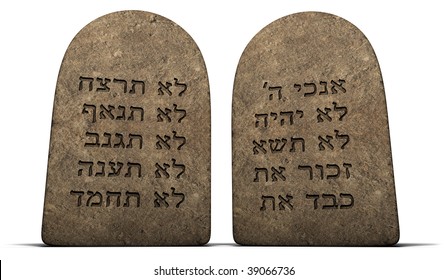
  Yesterday, I wrote about the Ten Commandments. They wash the outside of the “cup” and they are still binding (Mat 5:18). Jesus came to “fulfill” the commandments — to wash the inside of the “cup.”
  Jesus, speaking of his accuser and crucifixion said, “He that eateth bread with me hath lifted up his heel against me.” What was Jesus speaking of the psalm, “Yea, mine own familiar friend, in whom I trusted, which did eat of my bread, hath lifted up his heel against me.” (Psalm 41:9), but was alluding to another saying: “And I will put enmity between thee and the woman, and between thy seed and her seed; it shall bruise thy head, and thou shalt bruise his heel” (Gen 3:15).
  Jesus first act of grace, or the Adamic Covenant, was that the Serpent’s heel would be bruised. (I believe that Jesus heel was bruised for the Serpent’s).  That may be metaphoric but could be reality as well. My book, The Skull of Adam, explains that literally, but for now take it metaphorically. Genesis 3:15 was the start of the covenant from which all the other covenants are substantiation. The Adamic Covenant was finished when Jesus died (John 19:30) and shed blood and water (John 19:34).
  The psalmist wrote about Jesus saying, “My familiar friend, in whom I trusted” would “lift up his heel against me.” That seems as if Jesus was speaking of Judas. Judas was a disciple, and by then, he was known quite well by Jesus, but was Jesus really speaking of Judas? I submit that He was not; He was speaking of the angel, Lucifer, who was once His friend in the beginning, but became His adversary. Jesus was speaking of the familiar Serpent who Lucifer had entered Judas as Satan: “And after the sop Satan entered into him (Judas Iscariot). Then said Jesus unto him, ‘That thou doest, do quickly’” (John 18:27).
  If Adam is indeed buried under the rock of Calvary, as Jews and I believe, then Jesus was referring to the Devil’s seed, sinful Adam, who would lift up his heel against Jesus and be bruised, as Genesis 3:15 indicates. Adam and the Serpent would exchange injuries on Calvary. At that time, the Word’s Covenant would be fulfilled, and the promise finished. The water and the blood would become available as it gushed forth from Jesus’s abdomen. Why is that significant? Because Eve did not come from Adam’s rib, but gushed from his side, if the original Hebrew is examined. Eve sinned first, and Adam paid for it.
  When Jesus died, the sacrfice was complete; it was no longer by water only as had been the case with Moses, but by the water and the blood. Jesus’s propitiation of His own blood (1 John 2:2) was the efficacious sacrfice, the blood of animals being insufficient (Heb 10:4).
  Moses regulations merely cleaned the outside of the “cup” but Jesus blood the inside. Afterwards, then the third substance imbues the cup then clean on the inside — the Holy Spirit.
  Some believe that the “water” means baptism. That is an ordinance, just as the Pharisees did. It is okay to clean the outside of the cup, but futile if the inside is not cleansed first. Rebirth (John 3:7) cleanses the inside, but baptism merely the outside. When is the Spirit imbued? When the inside is cleansed. Then the formality (ordinance) of washing the outside of the “cup” is done. Baptism without the cup being cleansed inside is an effort in futility and is like the Pharisees clean on the outside but not on the inside. (To be honest, neither internal cleansing nor baptism imbues sotiria, but rebirth is the commencement of the process for those who endure to the end, according to Arminian doctrine.)
  When Jesus breathed life unto Adam, yes, He IS Jesus who did that, Adam’s “cup” was filled. When he sinned his “cup” was broken. Jesus death and resurrection was the fix for Adam’s broken “cup” as Jesus provided His own cup in exchange for Adam-kind.  As Peter started to protect Jesus from persecution, “Then Jesus asked of Peter, ‘Put up thy sword into the sheath: the cup which my Father hath given me, shall I not drink it?” (John 18:11). He was speaking of sacrificing His entire cup: blood, water, and Spirit. In His agony, Jesus prayed, “O my Father, if this cup may not pass away from me, except I drink it, thy will be done” (Mat 26:42). Jesus “cup” was to experience death of the flesh, of the mind, and of the Spirit — His entire cup and contents.
  Of course, Jesus’s cup was a triune death, but it was also His purpose. It was He who Satan would lift-up his heal against Jesus. Judas with Satan in him, just as the Serpent had Satan in him, turned Jesus into the authorities. Judas had his head bruised when he hung himself. It was not Judas (the Serpent) whose “cup” fulfilled the Covenant but Jesus’s “cup.” (Some sects of Islam accept Judas Iscariot’s sacrfice as efficacious but deny Jesus’s death at all.)
  Judas worked to relieve his conscience, but to no avail. Jesus asked of His disciples, “Ye know not what ye ask: can ye drink of the cup that I drink of? and be baptized with the baptism that I am baptized with?” (Mark 10:38). Jesus “cup was His own sacrificial death. Judas’s cup was not effective, and neither would none of the others be. Jesus “baptism” was God washing His Son’s entire cup within and without and emptying the “cup” of His Holy Ghost. They couldn’t do that; Judas tried but could not; only Jesus “cup” could be broken to save the cups of mankind. His cup was soon restored, and as His was, Adam-kind can have life breathed back into all the broken “cups” again.

(picture credit: MyStock)

Monday, April 20, 2020

PRESCRIPTION FOR ETERNAL HEALTH

  Yesterday my video for Facebook Live was about eternal healing. Herein is both the video and the text of the commentary. If you misunderstand the Ten Commandments, and why they remain significant to this day, Jesus somehow got a lawyer to persuade himself.


KEY VERSES:

25 And, behold, a certain lawyer stood up, and tempted him, saying, “Master, what shall I do to inherit eternal life?” 26 He said unto him, “What is written in the law? How readest thou?” 27 And he answering said, Thou shalt love the Lord thy God with all thy heart, and with all thy soul, and with all thy strength, and with all thy mind; and thy neighbour as thyself. 28 And He said unto him, “Thou hast answered right: this do, and thou shalt live.” 29 But he, willing to justify himself, said unto Jesus, “And who is my neighbour?” (Luke 10:25-29)

  In the key verses, there we have a lawyer who wanted to do what lawyers are noted for. The lawyer tempted Jesus. Lawyers want to trip-up those who testify to the truth. I have said before, in college lawyers surely have a course in “Trip-up 101” followed by “Advanced Tripping-up.” Fo  r what purpose would they lawyer want to do that? To prove to himself and standers-by that Jesus is a fraud; that He is not God in the Flesh.
  The lawyer knew Mosaic Law and God’s Law. I make a distinction because Moses wrote the regulations for righteous living, but God wrote His Law with His own finger (Exod 31:18).
  It is to be noted, that God’s “finger” is Himself manifested, and it was Jesus who wrote the Ten Commandments. That is validated by His speaking the Word encompassed in the Ten Commandments. We should know by now that the Word is Jesus (John 1-3,14).
  The Law is introduced by, “And God spake all these words, saying…” (Exod 20:1) then the sayings of the Words are written. They were what we call the Ten Commandments.
  Jews rightly call the subsequent precepts “The Ten Words.” As “precepts,” they are the Ten Prescriptions for eternal life. The “Ten Prescriptions” are for the healing of the soul and are the way to unify the spirit and the flesh; “the spirit indeed is willing, but the flesh is weak” (Mat 26:41b).  Rather than commandments, the Ten Words should be looked on as ten things that Christians are willing to do in gratitude to God. Philemon wrote, “… that thy benefit should not be as it were of necessity, but willingly” (Phil 14b). Hence, the Ten Words should not be done by compulsion, but voluntarily. That is what the lawyer should have understood and Christians as well!
  To get the idea across, Jesus tested the lawyer. He basically asked, “What does the Law say about that and what is your understanding of it?  The lawyer was bright and well-studied. He referred to God’s statutes, just as any lawyer would in modern times. He could have merely answered, “God’s statutes in Deut 6:5-6 and Lev 19:9-18,” and us modern readers would have understood. Face it, most of us thought that Jesus was the first to pronounce the Greatest Commandment and the one like unto it. Another lawyer, or possibly the same one asked,

36 Master, which is the great commandment in the law? 37 Jesus said unto him, Thou shalt love the Lord thy God with all thy heart, and with all thy soul, and with all thy mind. 38 This is the first and great commandment. 39 And the second is like unto it, Thou shalt love thy neighbour as thyself. 40 On these two commandments hang all the law and the prophets. (Mat 22:36-40)

  Jesus told that lawyer that “all the Law” is about loving God and loving others. The Greatest Commandment is broken into two parts: God-centered and people-centered. If the Ten Words are examined the first four sayings of Jesus are God-focused, and the last six neighbor-focused. The point is that Jesus said those sayings millennia before. God wrote them down for Moses and Moses wrote them down for us in Deut 6:5-6 and Lev 19:9-18, and made them statutes as well as prescriptions. Again, they are Ten Prescriptions for eternal well-being. In the key verses, Jesus said to the first lawyer, “This do, and thou shalt live,” in reference to loving God and neighbors.
  To lawyer number two, Jesus said, “On these two commandments hang all the Law and Prophets.” Jesus stated that the Law always was reverence for God and compassion on others.
  Lawyer one, getting technical, sought to trip-up Jesus more. Just who is a neighbor? With that, Jesus operationalized “neighborliness” with the Parable of the Good Samaritan. The lawyer likely understood it before he troubled Jesus to repeat it in the process of tripping Him up. The lawyer quoted scripture. Scripture at that time was the Law and the prophets. He turned to the Old Testament Law, commencing with,

5 And thou shalt love the Lord thy God with all thine heart, and with all thy soul, and with all thy might. 6 And these words, which I command thee this day, shall be in thine heart: (Deut 6:5-6)

  Love must be from the heart, not from rules, and it should be with the entire being. After that follows a repeat of the first four commandments using much the same words. Then after he asked who “neighbors” are, he should have, and likely did know, the answer to that, and continued Advanced Trip-up:

9 And when ye reap the harvest of your land, thou shalt not wholly reap the corners of thy field, neither shalt thou gather the gleanings of thy harvest.
10 And thou shalt not glean thy vineyard, neither shalt thou gather every grape of thy vineyard; thou shalt leave them (the crops) for the poor and stranger: I am the Lord your God.
11 Ye shall not steal, neither deal falsely, neither lie one to another.
12 And ye shall not swear by my name falsely, neither shalt thou profane the name of thy God: I am the Lord.

13 Thou shalt not defraud thy neighbour, neither rob him: the wages of him that is hired shall not abide with thee all night until the morning.

14 Thou shalt not curse the deaf, nor put a stumblingblock before the blind, but shalt fear thy God: I am the Lord.
15 Ye shall do no unrighteousness in judgment: thou shalt not respect the person of the poor, nor honor the person of the mighty: but in righteousness shalt thou judge thy neighbour.
16 Thou shalt not go up and down as a talebearer among thy people: neither shalt thou stand against the blood of thy neighbour; I am the Lord.
17 Thou shalt not hate thy brother in thine heart: thou shalt in any wise rebuke thy neighbour, and not suffer sin upon him.
18 Thou shalt not avenge, nor bear any grudge against the children of thy people, but thou shalt love thy neighbour as thyself: I am the Lord. (Lev 19:9-18)

  My point is that the commandments should not be seen that way; they should be seen more as privileges or ways to please God. The concept of “cheap grace” is believing in God without honoring Him for it. The Ten Words are essentially how to show gratitude to God for recreating. Lawyer one asked, “What shall I do to inherit eternal life?” Jesus was surely thinking; Marvel not; ye must be born again! And what would be the new person’s attitude at that simple thing? Show gratitude by willingness to live the Ten Words as a demonstration to God that your person has been transformed!

Thursday, April 16, 2020

BLIND LEADING THE BLIND


KEY VERSES:
9 “As long as I AM (Jesus) in the world, I AM (Jesus) the light of the world.” 38 And he (the previously blind man) said, “Lord, I believe.” And he worshipped him. 39 And Jesus said, “For judgment I AM come into this world, that they which see not might see; and that they which see might be made blind.” 40 And some of the Pharisees which were with him heard these words, and said unto Him, “Are we blind also?” 41 Jesus said unto them, “If ye were blind, ye should have no sin: but now ye say, ‘We see;’ therefore your sin remaineth.” (John 9:9; 38-41)

  Of course, Jesus came into the world to save, but he also came to judge. Those who He judged as innocent, would be saved, and those who were judged guilty would perish. The Pharisees were very righteous, but far from innocent. Rather than the humility to admit that Jesus healed the blind man, and rejoice, they accused Jesus of having a demon, and the blind man to be liar. In the story of the blind man who was healed from congenital blindness by Jesus, Jesus broke the Sabbath by molding the mud into a ball and heal. The Pharisees seemed to have a larger problem with remolding the blind man than molding the clay.
  Jesus came into the world to thresh-out the seed of Adam from the seed of God. Generally, judgment was done on the “threshing floor” of the Temple in previous times, whereon the good seed was threshed from the tares, and God winnowed the chaff from Ornan’s threshing floor into the abyss below.
  In this example (of the blind man) Jesus used a different tactic to persuade the Jews to believe. Jesus was in Galilee and would cross Samaria into Jerusalem. The Temple was in Jerusalem, and there was no threshing floor in Galilee. Hence, Jesus used spiritual vision as the test for who should be saved.
  Those who have great sight see things from a rational standpoint. Those who have been born blind cannot be convinced by observable things. Faith is believing in things unseen as is written, “Faith is the substance of things hoped for, the evidence of things not seen” (Heb 11:1).
  The blind mand had faith because he could not see Jesus but called him the “Son of God.” The Pharisees could see Jesus but called Him “demon.” You see, their sight not only failed to convince them, but confounded them as well. It is irrational to believe, as it had never been done before, to make a congenital blind man see. Because Jesus made the blind man see, and kept the Pharisees in darkness, He calls Himself, “The Light of the World.”
  The “Enlightenment was an era in the western world in the 17th and 18th centuries. That was a period when the philosophers began to persuade the people that the Church was the cause of darkness and philosophy the way of the enlightened ones.  They laid claim that they were the light and Jesus was not. Since that time, the vain philosophies of men have blinded people. Of course, there is scientific proof for things seen, but science disregards things they cannot see or detect. The Enlightenment was also called the, “Age of Reason” because faith, for them is unreasonable, and logic is reasonable. Logic depends on cognition, and that is a sorting of the body of knowledge in two categories: reasonable and unreasonable.
  Now look at what happened — FACTS: (1) They all knew the blind man had been born blind, (2) The skeptical Pharisees could plainly see that the man was no longer blind, (3) A man born blind had never been able to see before, (4) The blind man was impartial; he only knew that he had been blind but now could see, (5) The man gave Jesus credit, finally, as the Son of God, (6) and that Jesus  claimed to be the True Light. Rational people would consider the evidence, and the preponderance of it points to Jesus as able to heal the blind, and God, they should admit, is the only one that can Heal. Those “enlightened” Pharisees failed to see the truth and were spiritually blind.
  Now consider that some were more unbiased. They looked at the evidence and were persuaded. However, the “blind” Pharisees persuaded, using Mosaic Law, that what they believed was true, was truly false, because healing the blind could only be by God, and this “man” broke Moses’s law of keeping the Sabbath. Again, they were more offended that Jesus had formed clay than healed the blind man. Is that rational thinking?
  They also failed to admit that a “man” who they knew could do what only God would be able to do, although there was evidence that Jesus did it. They had no faith because faith is believing that an unseen Power healed, and by not crediting God, they blasphemed Him; albeit they perceived that Jesus was the one who was blasphemous. Cognitive “enlightenment” is false because is disallows the supra-natural. Spiritual Enlightenment is truthful because it allows for things unseen as reality.
  There are two types of real “substances” in the universe: the seen and the unseen. Skeptics rule out half the substances in existence by denying that there are things unseen. Scripture calls seen things “earth” and the unseen, “heaven.” Because the Pharisees were so blind that they could only see earth, they could not see the heaven. They were blind to half of existence because they refused to believe Jesus is indeed the Light of the World.
  Jesus came to sort out the two countenances of people: the spiritually astute from the spiritually blind. Some believed, and certainly the blind man understood, as he finally credited Jesus as God. However, the spiritually blind Pharisees convinced those who saw the truth to be blind with them. Jesus by that one miracle, caused a sorting to occur, and his miracle served the same purpose as the threshing floor which was then by then the Temple.
  Jesus’s purpose was, “that they which see not might see; and that they which see might be made blind.” Jesus came in the Flesh so that men could either walk with Him or deny Him. The Pharisees had great vision, except they could not see the truth. And the truth is… that there is more than meets the eye. There is an unseen existence that only a few can see because the world blinds them so. Is that not true? Do not Christians to this day accept the “enlightened” scientists as more credible than God? Scientists deny what they cannot see; are they really the enlightened ones, or are they confounded into believing that what is seen or can be measured is all there is?
  As a Christian, do you believe in evolution? If you do, you are blind to the greatest miracle that God ever performed. Do you believe in the general resurrection? If not, that will be an even better miracle. How about those who believe they will be made whole at the Re-creation, but do not believe in the Creation? You deny the Creation because men who are blind to the truth, in what they cannot see nor understand, have persuaded you… and you claim that you are free-thinkers who rely on observable evidence. In fact, even if you claim to be a Christian, you are blind to truth. Jesus came to sort those out from the previously blind who now see the truth.
  The blind man was born again. How so? He never re-entered his mother’s womb, but he saw the Light of Jesus. He knew not how, but he believed that only God could work that wonder, and he sensed Jesus there when he was came to see, and with sight he saw that Jesus had healed him. He surely heard of Jesus’s miracles before but did not believe before He experienced Jesus. He did not see Jesus, but felt the virtue flowing out of Him as he received his sight. The Pharisees just could not believe that, even though they believed in God. Hence, they failed the test, and Jesus’s miracle had made them blind to truth.
  The Pharisees were so blind-thinking that they only believed what they had been taught to believe. Free-thinkers would allow, that just maybe, Jesus healed the blind man. Most free-thinking people in this Age of Reason are blind to ultimate truth. Jesus will sort them out in the end.

(picture credit: Shutterstock)

Wednesday, April 15, 2020

FACING JESUS


KEY VERSES:
55 Yet ye have not known him; but I know him: and if I should say, “I know him not, I shall be a liar like unto you: but I know him, and keep his saying.” 56 Your father Abraham rejoiced to see my day: and he saw it, and was glad. 57 Then said the Jews unto him, “Thou art not yet fifty years old, and hast thou seen Abraham?” 58 Jesus said unto them, “Verily, verily, I say unto you, Before Abraham was, I am.” (John 8:55-58)

  Jesus said in the Greek, “Ego Eimi,” or in English “I AM”.  In Hebrew that would be “Hayah,” and all those translations means that Jesus is the “Existence” from which grace comes;  “Grace be unto you, and peace, from Him which Is, and which Was, and which Is To Come” (Rev 1:4) or “I Am Alpha and Omega, the Beginning and the Ending, saith the Lord, which Is, and which Was, and which Is To Come, the Almighty” (Rev 1:8). The Lord Is “Almighty God.” Jesus is “Lord.” Jesus is “Almighty God,” and when it is written “I Am,” Jesus lays claim to Being Almighty God, and He was crucified for that.
  The keepers of the Law brought a woman to Jesus to test him. By Law, she deserved stoning. By grace, the sinful woman was freed from her sin, and was told to not sin any more. No one condemned her although she had fornicated, and hence Jesus did not condemn her, but saved her mortal life, and gave her the incentive to sin no more. With that said, by grace, Jesus gave her the option of eternal life. She took it by not turning away from Jesus.
  No longer would she physically die but had the opportunity to live forever. Jesus bestowed “something” in her conscience that she would be willing to sin no more.
  Jesus also touched the conscience of those who condemned her, but they felt guilty and left. They too had sinned, and although they knew they were guilty, since their real “god” was not the True God, they would continue in sin. The accusers seemed to deserve grace because their conscious bothered them, albeit they did nothing to resolve their guilt. They were ashamed but turned their backs on Jesus. On the other hand, the sinful woman faced Jesus alone, just as we all will on judgment day, and by grace, although she did nothing but willingly face Jesus, Jesus forgave her sin, and then provided the opportunity to sin no more.
  What was the “something” that saved her? Since the accusers did not understand Abraham, perhaps she did. Perhaps she saw Abraham and Isaac as Father and Son, and perhaps she understood the true significance of Abraham whereas the accusers did not. They saw Abraham merely as one party to the Covenant with God, and the Law of Moses as the parts of the Covenant. I believe that the adulterous woman understood the Abrahamic Covenant better than her “jury” of peers.
  The key verses have meant much to me since the day I saw the light. I have written about it several times before, but one day, I understood the truth; “verily, verily” as Jesus said it. While riding alone in my car, listening to nothing more than my own thoughts, I came to understand the meaning of Abraham’s willingness to sacrifice his only remaining son (since Ishmael had been emancipated.). Abraham needed not to obey God’s command. The test was complete, and Abraham passed it when he was willing to make the sacrifice. Abraham was willing to sacrifice his son, and Isaac was willing to be sacrificed, but by grace God stepped in and provided a ram in Isaac’s stead.
  It seems that the woman’s accusers didn’t understand that, but the woman, just as I was, was alone with Jesus and came to know that. She said nothing and did nothing for the grace that Jesus bestowed upon her. She understood that this young “Man” had seen Abraham! When had He?
  When Jesus made the Covenant with Abraham (Gen 17:4-6), when Abraham remembered Jesus with the a pascal-type of bread (Gen 18:5-7), when Jesus provided a son for Abraham in an empty womb (Gen 18:3), when He promised Abraham a great and mighty nation, when Jesus blessed him with the promise of Himself (Gen 18:17-19), and when Jesus said for him and his children to keep the just and fair judgement of the way of the Lord (Gen 18:19). Let’s stop there for a minute. That last thing that “Jesus,” as the Word, said to Abraham was for his children — those who were truly children of Abraham — would keep the “Way” of Jesus and with fair justice.
  That applies to the accusers of the woman who claimed to be children of Abraham but were really children of the Devil. Jesus “Way” was by love and grace; their way was by harsh judgment. When Jesus made the Covenant with Abraham, it was a Covenant of Grace, with one contingency; that He will be their Lord if they would be His people. The accusers were not Jesus’s people (disciples) but judges who did not use the standard that they would use if they were the accused (Mat 7:1-4).
  That specific Will of the Lord was meant for that day far in the future when God’s so-called people would harshly judge another, not as they would judge themselves. Had those men sinned? Their conscience bothered them all; they had sinned but walked away from Jesus who would gladly have pardoned their sin if they had only understood that it IS HIM, who had made the Covenant with Abraham. I came to understand that; that the Lord of Abraham is the same Lord who died at Calvary for my sins.
  Of course, Jesus met Abraham many times, but showed Himself clearly one specific time. Think on this passage Paul wrote to the Jews:

1 For this Melchisedec, king of Salem, priest of the most high God, who met Abraham returning from the slaughter of the kings, and blessed him; 2 To whom also Abraham gave a tenth part of all; first being by interpretation King of righteousness, and after that also King of Salem, which is, King of peace; 3 without father, without mother, without descent, having neither beginning of days, nor end of life; but made like unto the Son of God; abideth a priest continually. (Heb 7:1-3)

  “Continually” is that Melchisedec is “the Alpha and Omega; the Beginning and the end.” Melchisedec is the King of Righteousness as well as the King of Peace (Salem). As such, I believe, as King of Salem, Melchisedec was King of New Jerusalem, or the City of God. Melchisedec blessed Abraham. He gave Abraham prosperity in this life, and bliss in the next. How is that known? Abraham was already in Paradise when Lazarus was in his “bosom” (Luke 16:22). Better said was that Lazarus and Abraham were in Melchisedec’s (Jesus’s) Bosom.
  The accusers asked, “Thou art not yet fifty years old, and hast thou seen Abraham?” He sure had; and Abraham had seen Him! Abraham had even tithed to Jesus and was blessed by Him. Then what did the New Testament “Melchisedec” do? He let the accusers judge themselves, and they judged fairly, but didn’t “tithe” to Jesus. The adulteress “tithed” to Jesus by facing Him and awaiting fair judgment. Jesus didn’t seem to mind that she had sinned, because she was willing to sin no more. The accusers knew they would sin so more and convicted themselves for what they knew they would do again. They felt guilty but didn’t seek forgiveness because they were at least honest with themselves; they knew they would continue in sin.
  I have a problem with future sin. You do too. Jesus propitiated His blood to “declare His righteousness for the remission of sins that are past” (Rom 3:25). His blood covered all sins — past present and future — but remission of sins is continual. In other words, Christians must be willing not to sin in the future; to “sin no more,” as Jesus said to the accused. Each time I grievously sin, I promise to sin no more. My bet is that I am not alone in that. How are we to handle strongholds; those things that the Devil knows are effective? Keep our face on Jesus, and sin no more.
  Sin is a choice, and each time we sin, it says some things. Whose “way” shall we go? Whose “will,” will master us? Will we turn our backs on Jesus, or stand eye-to-eye with Jesus and not deny our sins? His grace is dependent on, not only our conscience, but facing Him to administer justice His Way.
  The accused woman’s judgment day was that day, but in the end, she shall face Jesus again at the Great White Throne Judgment. I suspect that on that great day, Jesus will say, Well done good and faithful servant. It seems probable that on that same terrible day, that Jesus will tell the accusers who judged harshly, and turned away,  I never knew you: depart from me, ye that work iniquity (Mat 7:23). When the unfair accusers turned away from Jesus, perhaps their fate will be the terrible day when Jesus judges them fairly. They will have to turn away and die because they didn’t truly know Jesus, just as they had turned away from Jesus after accusing Him of never knowing Abraham. That is poetic justice, is it not?

(picture credit: Peter Bruegel; 1565; Courtland Gallery)


Tuesday, April 14, 2020

WILLINGNESS


KEY VERSES:
14Jesus went up into the temple and taught. 15 And the Jews marveled, saying, “How does this Man know letters, having never studied?” 16 Jesus answered them and said, “My doctrine is not Mine, but His who sent Me. 17 If anyone wills to do His will, he shall know concerning the doctrine, whether it is from God or whether I speak on My own authority. 18 He who speaks from himself seeks his own glory; but He who seeks the glory of the One who sent Him is true, and no unrighteousness is in Him.”  (John 7:14-18 NKJV)

  Jesus taught the Doctrine of Yahweh. Although Jesus is both Man and God, His doctrine is not of men but God. At twelve years of age he taught adult leaders in the Word of God. Some theologians say that Joseph taught Jesus Scripture when they were exiled in Egypt. That is entirely wrong; that would be Joseph’s doctrine, but Jesus said “it is from God.” There are two doctrines: the Doctrine of God and the doctrine of men.
  For His servants that, “… the name of God and his doctrine be not blasphemed” (1 Tim 6:1; KJV). There are three key ideas in that passage: (1) Misappropriating another doctrine as God’s is blasphemous, (2) that the Doctrine of Christians must be the Doctrine of God, and (3) that the Doctrine of God is the Doctrine of His Name. What is Yahweh’s Name before the Messiah came? He was without Name; he said that “I AM WHAT I AM” (Exod 3:14). Yahweh was “Named” when he became Flesh. They called Him Jesus. (Mat 1:21). God is called “Jesus” and that Name means, “Yahweh Saves.” That is God’s Doctrine and Jesus the One who came to perform it.
  Elsewhere the Doctrine of God is referred to the “Doctrine of Christ” (2 John 1:9).  Yahweh, at Jesus’s birth was also called the “Christ” (Mat 1:16). But Jesus said that God’s Doctrine is not His own.
  Surely, He meant that the Doctrine of God is not the doctrine of men, because Jesus was both a man and God. Jesus spoke God’s Doctrine before He became incarnate (John 1:14). The Word that he spoke was the Words of God (John 1:1-2). Did Joseph teach Jesus the Doctrine of God? No, the Word of God was experienced by Jesus. They were Words that pre-incarnate Jesus said. The Doctrine of Jesus is the Word of God. God’s Doctrine is the Doctrine of the Messiah, called the “Christ.” When Jesus taught in the temple, it was not the doctrine of men, but the Doctrine that He spoke before He was born.
  Jesus didn't come to magnify Himself. He was humble Flesh. He spoke to magnify His Father in heaven. The Father sent Him, and to the Father, Jesus gave the glory. He didn’t come to glorify Himself but the Father. He came to serve His Father and mankind; not for what He experienced on Earth to be taught. The Doctrine of Christ was the Doctrine of God because it included only what God willed for Jesus and mankind.
   The crowd knew that Jesus never studied. They spoke truly. Joseph never taught Jesus nor anyone else. Jesus, from birth, knew the Doctrine of God because it was always His Doctrine without any confounding by the philosophy of men that Jesus would experience. In other words, the Doctrine of Christ was pure Doctrine because it was the uncontaminated truth of God. Men always contaminate the truth, but Jesus spoke unadulterated truth.
  Almost hidden within those passages is imperative Doctrine; and I never saw it until I read the New King James Version: “If anyone wills to do His will” (verse 17). Jesus never said, If anyone DOES His will, but “wills to do His will.” That phrase has significant implications; it is not what men do, but what men are willing to do. People fail at doing the Doctrine of God, and since God experienced the Flesh, He knew that it was hard to follow His own Doctrine. Paul elaborated on that about himself when he wrote, “…For what I would, that do I not; but what I hate, that do I” (Rom 7:15). Jesus had said that in different words, “The spirit is willing but the flesh is weak” (Mat 26:41).
  Thus, the human “will” is what must be given over to God. To be a Christian, the person’s will must be in harmony to God’s Will. What is God’s Will for His people? The Greatest Commandment; to love Him, and by the way, that is exemplified by loving others. The “Greatest Commandment” has a corollary, and that is to love others as you love yourself (Mat 26:36-40). Everyone inherently loves themselves. A measure of great love, is loving others that immensely. (I disagree with the entire concept of self-esteem because no ones hates themselves, according to Ephes 5:29).
  I repeat this often in my commentaries, but the “Ten Words” (Exod 20:1) are the “Ten Sayings of Jesus” and they are how to love God (1-4) and others (5-10). The Doctrine of Jesus is the Doctrine of God and the Ten Words are the Greatest Commandment operationalized. They are the metrics on how to love God and others. Can we DO them all without fail? Jesus understood that we could not, but it is not what we DO but what is inside; what people are willing to do even though they will fail on some Word.
  The problem with Calvinism is the practice of their doctrine; they need not WILL to do Jesus’s Ten Words. They see them as commands rather than God’s Will for them.  “Eternal security” makes it unnecessary to even consider the Law, which by the way, was written on stone for perpetuity. The Ten Words are essentially the Ten Parts of the Abrahamic Covenant, God’s eternal covenant with mankind.
  The Ten Words are not to be taken flippantly or with apathy. They are a list of God’s desires for His people. He knows that His people will fail in doing them, so He checks the hearts of His people. God judges based on what mankind, of His own freewill, are willing to do, even knowing in advance that they will fail. If they were merely commands, Christians would be required to do them, but if they are truly God’s people, and abide in His Doctrine, they will to do God’s Will.
  God could have merely killed those who flagrantly violated His will for them. Because He is a merciful God, He doesn’t look at what they did or didn’t do, but what they endeavored to do to please Him. I believe in commandment-keeping because I don’t consider them as “commandments;” they are merely a list of God’s Wills for His creatures. He created us for a purpose, and that was to love and honor Him. That short list are reasonable ways to love and honor God, are they not?  They are God’s expectations of His people:

I beseech you therefore, brethren, by the mercies of God, that ye present your bodies a living sacrifice, holy, acceptable unto God, which is your reasonable service. (Rom 12:1)

  The Ten Words are God’s Ten Merciful Ways to present ourselves to God: (1) Honor the One who Created us, (2) Honor no others in that manner, (3) Do not take Jesus’s Purpose in vain, (4) Set one day aside to magnify God, (5) Honor those who created you in a like manner you would honor God, (6) Preserve life because lives of others are as precious as yours, (7) Show fidelity to the Groom by showing fidelity to your groom, (8) Respect what belongs to others in like manner you belong to God, (9) Speak only truth because that sets one free from the Devil, and (10) Do not desire what is not yours as God will provide for your needs. Are those not good things that righteous people would want to do? Are they not how you would want to be treated? Can you blame God for desiring that his “children” behave in a gracious manner?
  Note that great fathers do not discard or kill their children who miss his marks, but works with them and gives a multitude of chances for redemption. Well THE Great Father does it the same way. It not only pleases fathers when their children do right things, but it is good for the children as well. Honoring fathers promises the reward for a long life. I submit that all those precepts do! Just think of the danger in adultery, lying, stealing, and such. Do those things and you may die, and soon. Do those things with impunity and you may die spiritually in the end.
  The way to a long life on Earth is the willingness to do those precepts. They are the Doctrine of God. The way to an eternal life is also the willingness to please God; that He not have sorrow that He ever Created you, so that He desires to re-create you at the end of life.
  Are we following the right doctrine? We must compare continually, and ask ourselves, Is our will what God Wills for us? I submit that we all fall short, and that there is always room for improvement in our attitudes. That is how the heart is circumcised — allowing God to rid ourselves of the things which displease Him. Not aware of how you displease? Well, look at the list and examine your attitude toward God!

"Cheap grace" is an unwillingness to please God by doing the things that He would have us to do.

(Picture credit: Shutterstock)

Ten Commandments Images, Stock Photos & Vectors | Shutterstock

Monday, April 13, 2020

UNBELIEF IN BELIEVERS


  The subject is casting out demons from a child. The “multitude” was arguing about why the disciples were not effective. We find out later that someone, other than the disciples, was casting out demons elsewhere. Why could some cast them out and others unable? It was a matter of faith. Now examine two passages about exorcism.

And when he came to his disciples, he saw a great multitude about them, and the scribes questioning (disputing) with them. (Mark 9:14)

And Jesus said unto him (John), “Forbid him not: for he that is not against us is for us.” (Luke 9:50)

  In the first instance, the scribes were arguing with the disciples. In the second instance, John had seen some unidentified person, who was not one of them, successfully casting out demons. Using the argument from the synoptic gospels that those of little faith could not, that would imply that the one who was not among them had more faith. What was the biggest difference? Multitudes were watching the disciples, but it seems that John alone saw one not of their sect casting out demons.
  We don’t know what the multitude was arguing about in the first case, but certainly how THEY would do the exorcism of casting out demons. Perhaps the disciples were doing it for show, and the other for the benefit of the person with the demons. In order to cast out some demons, Jesus’s prescription was prayer and fasting. It can be assumed that His disciples had not done that, but the other one not of their sect either had, or had enough faith that he could do what only Jesus did theretofore.
  There are several lessons in those events; lets list some of them:

·         Works cannot be used to impress the crowd.
·         Works are not of ourselves, but of God.
·         Faith changes things; people do not.
·         Faith is not subject to ritual. 
·         Our faith is riddle with doubts.
·         Jesus taught faith; not works.
·         Jesus indicated that faith provides effective works.
·         Jesus is not a respecter of persons.
·         Arguing is not productive to works.
·         Proximity to the “Church” does not make closeness to Jesus. 
·         And the list goes on!

  The thing that struck me is that the scribes seemed to have perplexed the disciples from their faith. They knew that Jesus could work wonders, that they followed Jesus, but yet they could not do so themselves. Perhaps we should look for the reason for that.

And straightway the father of the child cried out, and said with tears, “Lord, I believe; help thou mine unbelief.” (Mark 9:24)

  Let me reword that from another perspective: Lord, I believe, but diminish my doubt. The sincere (crying) father had the faith that would “move mountains” — faith the size of mustard seed. Jesus defined “unbelief” as is written:

Because of your unbelief: for verily I say unto you, “If ye have faith as a grain of mustard seed, ye shall say unto this mountain, ‘Remove hence to yonder place; and it shall remove;’ and nothing shall be impossible unto you.” (John 17:20)

  Perhaps the father could have said, I have faith but need more! While the disciples were arguing about ritual, the father was more trusting. And the “non-sectarian” elsewhere was just doing what was God’s will without regard to the masses who argued, You aren’t doing this right! Performing the exorcism right would be having the faith that God (Jesus) could heal although He was not there in their presence. Jesus is not confined by proximity; He can work wonders from afar. Disciples are those who are close to Him and they believe even when He seems afar. The greater the belief the closer the proximity to His Spirit. With His disciples, Jesus was nearby, but they were ineffective. The other exorcist was further away, but yet he was spiritually closer than Jesus’ own sect.
  We know from the Book of Acts that the Holy Ghost revealed Himself when the Jews were of one accord (Acts 2:1). The Holy Ghost is the Spirit that experienced death in Jesus. The “Comforter” is Jesus. The disciples were not close to Jesus because there was discordance. The other man exorcising was alone with the person but close to Jesus spiritually.
  Another point to be made is the father’s cry: “Lord, I believe; help thou my unbelief.” Jesus has perfect belief. He healed without prayer and fasting! Everyone else has less belief, or to put it another way, much doubt. Prayer and fasting would have required the disciples, like the lone man, to be closer to Jesus and to commune alone with Him. Prayer and fasting would not be a ritual for show, but an attitude of humility. The lone man was not elevating Himself, but magnifying God. Casting out demons to the multitude would have diminished Jesus and elevated the disciples.
  Now for the subject of doubt: One of my worst disagreements is the popular saying, “I know that I know that I know that I am saved” which Joyce Meyers introduced. Not to be technical, Meyers has the assurance that she “shall be saved” and that she will “endure to the end” (Mat 10:22), but that is faith in what God promises. She strongly believes in public, but when she is alone and looks at how undeserving she is, perhaps doubts arise. They will because as disciples, we are not Jesus, and our faith is sub-standard. We have little faith… or as well said, much doubt. 
  The disciples could not even cast out demons, let alone move mighty mountains. Their faith was deficient, and when they could not cast out demons, even in Jesus’s Name, and demonstrated that even those with the person of Jesus had doubts. We who are only close to Jesus’s “Ghost” would have even more doubts. Neither Meyers, you, nor I have enough faith to cast out demons or move mountains. Admit it, we have unbelief, and we also need to ask Jesus to help my/your/our unbelief.
  Jesus healed, not because of the little faith of His own disciples because they were arguing how to do it, but because of the simple “mustard-size” faith of the parent who believed that Jesus could heal when the others could not! What if the father had said, “I know that I know that I know that you can cast out demons.” Would that be honesty? Would Jesus have honored that embellishment? The father knew of his doubts. He had just doubted because he saw Jesus’s own disciples fail. However, he had not given up hope. He looked at Jesus, and saw something there that the he had not seen in the disciples. He didn’t see a bunch of people like Simon the Magician later saw them, but a humble Son of a tradesman who could fix broken things.
  I myself know that I know that I know that I have unbelief that Jesus can fix. I wish I had perfect faith, but I do not. I have tried to cast out demons and I failed because Jesus’s Holy Ghost, although in me, was far from me. I had ears to hear but failed to understand. I wanted to cast out demons with a certain man, but for my own glory. I wanted to go to church and say, “I cast out a demon… good for me.” The man of anther sect, with his own way of following Jesus, wanted no glory, no attention, and for Jesus who was not even on the area, to do the healing. That is great faith!
  I am not big on public faith-healing but I am on prayer and fasting. Even with that, it should be in secret so as not to magnify ourselves. I recently tried that, but after studying today’s scripture, I came to realize that I wanted MY prayers and fasting to change things. It is not MY works which can, but faith that Jesus will!

(Photo credit of Jesus casting out demons: Pinterest Vanessa Bates Sanscouci)

Jesus casting out demons