Tuesday, April 14, 2020

WILLINGNESS


KEY VERSES:
14Jesus went up into the temple and taught. 15 And the Jews marveled, saying, “How does this Man know letters, having never studied?” 16 Jesus answered them and said, “My doctrine is not Mine, but His who sent Me. 17 If anyone wills to do His will, he shall know concerning the doctrine, whether it is from God or whether I speak on My own authority. 18 He who speaks from himself seeks his own glory; but He who seeks the glory of the One who sent Him is true, and no unrighteousness is in Him.”  (John 7:14-18 NKJV)

  Jesus taught the Doctrine of Yahweh. Although Jesus is both Man and God, His doctrine is not of men but God. At twelve years of age he taught adult leaders in the Word of God. Some theologians say that Joseph taught Jesus Scripture when they were exiled in Egypt. That is entirely wrong; that would be Joseph’s doctrine, but Jesus said “it is from God.” There are two doctrines: the Doctrine of God and the doctrine of men.
  For His servants that, “… the name of God and his doctrine be not blasphemed” (1 Tim 6:1; KJV). There are three key ideas in that passage: (1) Misappropriating another doctrine as God’s is blasphemous, (2) that the Doctrine of Christians must be the Doctrine of God, and (3) that the Doctrine of God is the Doctrine of His Name. What is Yahweh’s Name before the Messiah came? He was without Name; he said that “I AM WHAT I AM” (Exod 3:14). Yahweh was “Named” when he became Flesh. They called Him Jesus. (Mat 1:21). God is called “Jesus” and that Name means, “Yahweh Saves.” That is God’s Doctrine and Jesus the One who came to perform it.
  Elsewhere the Doctrine of God is referred to the “Doctrine of Christ” (2 John 1:9).  Yahweh, at Jesus’s birth was also called the “Christ” (Mat 1:16). But Jesus said that God’s Doctrine is not His own.
  Surely, He meant that the Doctrine of God is not the doctrine of men, because Jesus was both a man and God. Jesus spoke God’s Doctrine before He became incarnate (John 1:14). The Word that he spoke was the Words of God (John 1:1-2). Did Joseph teach Jesus the Doctrine of God? No, the Word of God was experienced by Jesus. They were Words that pre-incarnate Jesus said. The Doctrine of Jesus is the Word of God. God’s Doctrine is the Doctrine of the Messiah, called the “Christ.” When Jesus taught in the temple, it was not the doctrine of men, but the Doctrine that He spoke before He was born.
  Jesus didn't come to magnify Himself. He was humble Flesh. He spoke to magnify His Father in heaven. The Father sent Him, and to the Father, Jesus gave the glory. He didn’t come to glorify Himself but the Father. He came to serve His Father and mankind; not for what He experienced on Earth to be taught. The Doctrine of Christ was the Doctrine of God because it included only what God willed for Jesus and mankind.
   The crowd knew that Jesus never studied. They spoke truly. Joseph never taught Jesus nor anyone else. Jesus, from birth, knew the Doctrine of God because it was always His Doctrine without any confounding by the philosophy of men that Jesus would experience. In other words, the Doctrine of Christ was pure Doctrine because it was the uncontaminated truth of God. Men always contaminate the truth, but Jesus spoke unadulterated truth.
  Almost hidden within those passages is imperative Doctrine; and I never saw it until I read the New King James Version: “If anyone wills to do His will” (verse 17). Jesus never said, If anyone DOES His will, but “wills to do His will.” That phrase has significant implications; it is not what men do, but what men are willing to do. People fail at doing the Doctrine of God, and since God experienced the Flesh, He knew that it was hard to follow His own Doctrine. Paul elaborated on that about himself when he wrote, “…For what I would, that do I not; but what I hate, that do I” (Rom 7:15). Jesus had said that in different words, “The spirit is willing but the flesh is weak” (Mat 26:41).
  Thus, the human “will” is what must be given over to God. To be a Christian, the person’s will must be in harmony to God’s Will. What is God’s Will for His people? The Greatest Commandment; to love Him, and by the way, that is exemplified by loving others. The “Greatest Commandment” has a corollary, and that is to love others as you love yourself (Mat 26:36-40). Everyone inherently loves themselves. A measure of great love, is loving others that immensely. (I disagree with the entire concept of self-esteem because no ones hates themselves, according to Ephes 5:29).
  I repeat this often in my commentaries, but the “Ten Words” (Exod 20:1) are the “Ten Sayings of Jesus” and they are how to love God (1-4) and others (5-10). The Doctrine of Jesus is the Doctrine of God and the Ten Words are the Greatest Commandment operationalized. They are the metrics on how to love God and others. Can we DO them all without fail? Jesus understood that we could not, but it is not what we DO but what is inside; what people are willing to do even though they will fail on some Word.
  The problem with Calvinism is the practice of their doctrine; they need not WILL to do Jesus’s Ten Words. They see them as commands rather than God’s Will for them.  “Eternal security” makes it unnecessary to even consider the Law, which by the way, was written on stone for perpetuity. The Ten Words are essentially the Ten Parts of the Abrahamic Covenant, God’s eternal covenant with mankind.
  The Ten Words are not to be taken flippantly or with apathy. They are a list of God’s desires for His people. He knows that His people will fail in doing them, so He checks the hearts of His people. God judges based on what mankind, of His own freewill, are willing to do, even knowing in advance that they will fail. If they were merely commands, Christians would be required to do them, but if they are truly God’s people, and abide in His Doctrine, they will to do God’s Will.
  God could have merely killed those who flagrantly violated His will for them. Because He is a merciful God, He doesn’t look at what they did or didn’t do, but what they endeavored to do to please Him. I believe in commandment-keeping because I don’t consider them as “commandments;” they are merely a list of God’s Wills for His creatures. He created us for a purpose, and that was to love and honor Him. That short list are reasonable ways to love and honor God, are they not?  They are God’s expectations of His people:

I beseech you therefore, brethren, by the mercies of God, that ye present your bodies a living sacrifice, holy, acceptable unto God, which is your reasonable service. (Rom 12:1)

  The Ten Words are God’s Ten Merciful Ways to present ourselves to God: (1) Honor the One who Created us, (2) Honor no others in that manner, (3) Do not take Jesus’s Purpose in vain, (4) Set one day aside to magnify God, (5) Honor those who created you in a like manner you would honor God, (6) Preserve life because lives of others are as precious as yours, (7) Show fidelity to the Groom by showing fidelity to your groom, (8) Respect what belongs to others in like manner you belong to God, (9) Speak only truth because that sets one free from the Devil, and (10) Do not desire what is not yours as God will provide for your needs. Are those not good things that righteous people would want to do? Are they not how you would want to be treated? Can you blame God for desiring that his “children” behave in a gracious manner?
  Note that great fathers do not discard or kill their children who miss his marks, but works with them and gives a multitude of chances for redemption. Well THE Great Father does it the same way. It not only pleases fathers when their children do right things, but it is good for the children as well. Honoring fathers promises the reward for a long life. I submit that all those precepts do! Just think of the danger in adultery, lying, stealing, and such. Do those things and you may die, and soon. Do those things with impunity and you may die spiritually in the end.
  The way to a long life on Earth is the willingness to do those precepts. They are the Doctrine of God. The way to an eternal life is also the willingness to please God; that He not have sorrow that He ever Created you, so that He desires to re-create you at the end of life.
  Are we following the right doctrine? We must compare continually, and ask ourselves, Is our will what God Wills for us? I submit that we all fall short, and that there is always room for improvement in our attitudes. That is how the heart is circumcised — allowing God to rid ourselves of the things which displease Him. Not aware of how you displease? Well, look at the list and examine your attitude toward God!

"Cheap grace" is an unwillingness to please God by doing the things that He would have us to do.

(Picture credit: Shutterstock)
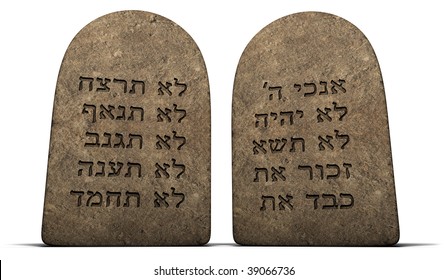
Ten Commandments Images, Stock Photos & Vectors | Shutterstock

Monday, April 13, 2020

UNBELIEF IN BELIEVERS


  The subject is casting out demons from a child. The “multitude” was arguing about why the disciples were not effective. We find out later that someone, other than the disciples, was casting out demons elsewhere. Why could some cast them out and others unable? It was a matter of faith. Now examine two passages about exorcism.

And when he came to his disciples, he saw a great multitude about them, and the scribes questioning (disputing) with them. (Mark 9:14)

And Jesus said unto him (John), “Forbid him not: for he that is not against us is for us.” (Luke 9:50)

  In the first instance, the scribes were arguing with the disciples. In the second instance, John had seen some unidentified person, who was not one of them, successfully casting out demons. Using the argument from the synoptic gospels that those of little faith could not, that would imply that the one who was not among them had more faith. What was the biggest difference? Multitudes were watching the disciples, but it seems that John alone saw one not of their sect casting out demons.
  We don’t know what the multitude was arguing about in the first case, but certainly how THEY would do the exorcism of casting out demons. Perhaps the disciples were doing it for show, and the other for the benefit of the person with the demons. In order to cast out some demons, Jesus’s prescription was prayer and fasting. It can be assumed that His disciples had not done that, but the other one not of their sect either had, or had enough faith that he could do what only Jesus did theretofore.
  There are several lessons in those events; lets list some of them:

·         Works cannot be used to impress the crowd.
·         Works are not of ourselves, but of God.
·         Faith changes things; people do not.
·         Faith is not subject to ritual. 
·         Our faith is riddle with doubts.
·         Jesus taught faith; not works.
·         Jesus indicated that faith provides effective works.
·         Jesus is not a respecter of persons.
·         Arguing is not productive to works.
·         Proximity to the “Church” does not make closeness to Jesus. 
·         And the list goes on!

  The thing that struck me is that the scribes seemed to have perplexed the disciples from their faith. They knew that Jesus could work wonders, that they followed Jesus, but yet they could not do so themselves. Perhaps we should look for the reason for that.

And straightway the father of the child cried out, and said with tears, “Lord, I believe; help thou mine unbelief.” (Mark 9:24)

  Let me reword that from another perspective: Lord, I believe, but diminish my doubt. The sincere (crying) father had the faith that would “move mountains” — faith the size of mustard seed. Jesus defined “unbelief” as is written:

Because of your unbelief: for verily I say unto you, “If ye have faith as a grain of mustard seed, ye shall say unto this mountain, ‘Remove hence to yonder place; and it shall remove;’ and nothing shall be impossible unto you.” (John 17:20)

  Perhaps the father could have said, I have faith but need more! While the disciples were arguing about ritual, the father was more trusting. And the “non-sectarian” elsewhere was just doing what was God’s will without regard to the masses who argued, You aren’t doing this right! Performing the exorcism right would be having the faith that God (Jesus) could heal although He was not there in their presence. Jesus is not confined by proximity; He can work wonders from afar. Disciples are those who are close to Him and they believe even when He seems afar. The greater the belief the closer the proximity to His Spirit. With His disciples, Jesus was nearby, but they were ineffective. The other exorcist was further away, but yet he was spiritually closer than Jesus’ own sect.
  We know from the Book of Acts that the Holy Ghost revealed Himself when the Jews were of one accord (Acts 2:1). The Holy Ghost is the Spirit that experienced death in Jesus. The “Comforter” is Jesus. The disciples were not close to Jesus because there was discordance. The other man exorcising was alone with the person but close to Jesus spiritually.
  Another point to be made is the father’s cry: “Lord, I believe; help thou my unbelief.” Jesus has perfect belief. He healed without prayer and fasting! Everyone else has less belief, or to put it another way, much doubt. Prayer and fasting would have required the disciples, like the lone man, to be closer to Jesus and to commune alone with Him. Prayer and fasting would not be a ritual for show, but an attitude of humility. The lone man was not elevating Himself, but magnifying God. Casting out demons to the multitude would have diminished Jesus and elevated the disciples.
  Now for the subject of doubt: One of my worst disagreements is the popular saying, “I know that I know that I know that I am saved” which Joyce Meyers introduced. Not to be technical, Meyers has the assurance that she “shall be saved” and that she will “endure to the end” (Mat 10:22), but that is faith in what God promises. She strongly believes in public, but when she is alone and looks at how undeserving she is, perhaps doubts arise. They will because as disciples, we are not Jesus, and our faith is sub-standard. We have little faith… or as well said, much doubt. 
  The disciples could not even cast out demons, let alone move mighty mountains. Their faith was deficient, and when they could not cast out demons, even in Jesus’s Name, and demonstrated that even those with the person of Jesus had doubts. We who are only close to Jesus’s “Ghost” would have even more doubts. Neither Meyers, you, nor I have enough faith to cast out demons or move mountains. Admit it, we have unbelief, and we also need to ask Jesus to help my/your/our unbelief.
  Jesus healed, not because of the little faith of His own disciples because they were arguing how to do it, but because of the simple “mustard-size” faith of the parent who believed that Jesus could heal when the others could not! What if the father had said, “I know that I know that I know that you can cast out demons.” Would that be honesty? Would Jesus have honored that embellishment? The father knew of his doubts. He had just doubted because he saw Jesus’s own disciples fail. However, he had not given up hope. He looked at Jesus, and saw something there that the he had not seen in the disciples. He didn’t see a bunch of people like Simon the Magician later saw them, but a humble Son of a tradesman who could fix broken things.
  I myself know that I know that I know that I have unbelief that Jesus can fix. I wish I had perfect faith, but I do not. I have tried to cast out demons and I failed because Jesus’s Holy Ghost, although in me, was far from me. I had ears to hear but failed to understand. I wanted to cast out demons with a certain man, but for my own glory. I wanted to go to church and say, “I cast out a demon… good for me.” The man of anther sect, with his own way of following Jesus, wanted no glory, no attention, and for Jesus who was not even on the area, to do the healing. That is great faith!
  I am not big on public faith-healing but I am on prayer and fasting. Even with that, it should be in secret so as not to magnify ourselves. I recently tried that, but after studying today’s scripture, I came to realize that I wanted MY prayers and fasting to change things. It is not MY works which can, but faith that Jesus will!

(Photo credit of Jesus casting out demons: Pinterest Vanessa Bates Sanscouci)

Jesus casting out demons

Friday, April 10, 2020

TRANSFIGURATON - SON OF MAN


  To understand the transfiguration of Jesus, it is imperative to understand the substance, or person, of Jesus. Transfiguration is to metamorph (metamorphoo: Greek), or to change from one form to another, or from one substance to another.  Metamorphosis occurs in animals when there is an abrupt and profound change in the structure at birth into another structure subsequent to that. It is simply a change in forms of the animal; thus transformation. Transfiguration comes into the English translation because Jesus went from one type of Figure to another.
  God transfigured Himself when He changes “states,” or transitions Himself from one phase to another. The Old Testament is the initial phase, his physical life is God’s second phase, and His Glorification, the final phase. Homeostasis — when equilibrium is reached — would occur only in the final state, at Glorification as a consequence of the Resurrection. Homeostasis (balance) was achieved when Jesus died, was resurrected, and came into the Presence of God.
  After the Resurrection, “Jesus saith unto her, ‘Touch me not; for I am not yet ascended to my Father’…” (John 20:17). Some think that Thomas touched Jesus. He did not; Jesus merely challenged him to do that to remove any doubt. “Glorification” is the last step in the order of salvation (ordo salutis; Latin). It refers to the stasis of the Christian after death and judgment. It is when God “knows” the Christian in contrast to those he did not know:

Many will say to me in that day, “Lord, Lord, have we not prophesied in thy name? and in thy name have cast out devils? and in thy name done many wonderful works?” And then will I profess unto them, “I never knew you: depart from me, ye that work iniquity.” (Mat 7:22-23)

  It seems Christians metamorph as well; from iniquitous persons, born again, to spiritual persons by the indwelling of God’s Holy Ghost. From the “old creature” to the “new creature.” (2 Cor 5:17). Birth generates the old creature, and rebirth the new creature. The old creature is like Adam, and the new creature like Jesus. The old person exists as the “son of man” and the new person as the “son of God.”
  In the Old Testament, before the days of Noah, “The sons of God saw the daughters of men that they were fair; and they took them wives of all which they chose” (Gen 6:2). The “sons of God” were ben ‘Elohymn, and the “daughters of men” were bath ‘adam in the Hebrew. Therefore, the reference to Jesus as the “Son of man” (Huios Anthropos; Greek) would refer to the “Son of Adam” or the Flesh from Adam. “Anthropos” refers to a man with both body and soul. That applies to Adam since God breathed life unto him and he became a living soul (Gen 2:7). Hence, Jesus was the “Last Adam” or the “Ultimate Adam” in that Adam will someday be like Jesus.  Adam represents death, and Jesus life because Adam sinned and Jesus did not (Rom 5:12-21).
 Adam morphed (Gen 3) just as the Serpent did. He went from the Old Creature to the New Creature when God removed his apron of fig leaves and replaced it with a coat of skin (Gen 3). Of course, the Serpent morphed from a walking creature to a slithering one, (from that same chapter).
  Adam was transformed from an endangered naked creature to a safe covered creature. How was he “covered” in safety? By the blood that God shed on his behalf. In Genesis chapter three, Adam was transfigured from an iniquitous beastly creature (like the Serpent) to a justified righteous creature (like God.)
  During “phase one” Jesus was not “the son of man” as is written, “God is not a man, that he should lie; neither the son of man, that he should repent…” (Num 23:19). God was “the Word” in phase one (John 1:1-2). In phase two, God like Adam before him, put on skin (John 1:14). He was “the Second Adam” in phase two, or the “Son of Adam” (aka, “the Son of man”).
  The psalmist sang of that metamorphosis when he wrote, “Let thy hand be upon the man of thy right hand, upon the son of man whom thou madest strong for thyself” (Psalm 80:17). That was written as prophecy forecasting that the Word of God would be transformed into the Flesh of God — phase I to phase II, and the process of Jesus’s Glorification was well on the way to homeostasis.
  The Old Testament was not to trust in Jesus who had yet to die, but the trust in Jesus who would die for them: “Put not your trust in princes, nor in the son of man, in whom there is no help” (Psalm 146:3). The Jews were expecting a “prince” (what kings were often called), but they were not to put their trust in the Son of man. Who then? The Son of God. Something would happen to Jesus which transformed Him from the Son of man to the Son of God.
  Metamorphosis is changing from what once was to a new figure with no ability to change back. Jesus changed as he moved between one reality to the next — from the natural to the supra-natural. Jesus traveled freely from in earth to in heaven. Not from the place Earth to the place Heaven but from one existence to another. His “substance” seemed to be what it needed to be in whatever realm He was in.
  Jesus arose and disappeared in the clouds. I believe that He transformed from the physical to the Spiritual. Likewise, when Jesus descended as the Holy Ghost, He transformed Himself into the Holy Spirit for His new residence, which is inside the souls of Christians, as God breathes life (Jesus) back into them.
  And when God comes to get His children, He will be seen in the clouds as “the Son of man,” according to this verse, “I saw in the night visions, and, behold, one like the Son of man came with the clouds of heaven, and came to the Ancient of days, and they brought him near before him. (Dan 7:13).  In other words, Jesus’s countenance as a human being is as the Son of man, and His countenance as the Holy Ghost is as the Son of God. That surely refers to Jesus because Matthew wrote, “For the Son of man is Lord even of the sabbath day” (Mat 12:8).
  Jesus made a distinction between His physical nature and His Spiritual or supra-nature:

And whosoever speaketh a word against the Son of man, it shall be forgiven him: but whosoever speaketh against the Holy Ghost, it shall not be forgiven him, neither in this world, neither in the world to come. (Mat 12:32)

  Therein, it is clear that God has another nature, and now there are three: The Son of God, the Son of man, and the Holy Ghost. That should be recognized as the Holy Trinity.
  Jesus was in the tomb three days as was the son of man, Jonas. Jonas was physically in the whale’s or fish’s belly, and Jesus was physically in the tomb for three days. (“For as Jonas was three days and three nights in the whale's belly; so shall the Son of man be three days and three nights in the heart of the earth;” Mat 12:40)
  While Jesus was “asleep” in the tomb, all the sins of mankind were being delivered into Hell. As Jesus died, His Holy Ghost was given up (Mark 15:37). Jesus Flesh died but His Spirit lived on as the “Ghost” of Jesus. Jesus was alive in a different form; hence, he was merely sleeping. God suffered death but He did not die. He was in a different form.
  God adjusts His form, perhaps, for mankind. The Holy Ghost resides in the souls of men, of course unseen, but when God comes to reward those in whom He resides, He will again appear as “the Son of man,” as is written: “For the Son of man shall come in the glory of his Father with his angels; and then he shall reward every man according to his works” (Mat 16:27).
  Today, I have tried to explain the implication of Jesus as “the Son of man.” Tomorrow we shall examine Jesus as “the Son of God.”

(picture credit: Shutterstock)

Adam Images, Stock Photos & Vectors | Shutterstock

Thursday, April 9, 2020

DENYING ONESELF


KEY VERSES: 
Then said Jesus unto his disciples, “If any man will come after me, let him deny himself, and take up his cross, and follow me.” (Mat 16:24)… “deny himself” (Mark 8:34)… “deny himself” (Luke 9:33)… “if we deny him, he also will deny us.” (2 Tim 2:12) 
Peter answered and said unto him, “Though all men shall be offended because of thee, yet will I never be offended.” Jesus said unto him, “Verily I say unto thee, That this night, before the cock crow, thou shalt deny me thrice.” Peter said unto him, “Though I should die with thee, yet will I not deny thee.” Likewise, also said all the disciples. (Mat 26:33-35)

  In Mat 16:16, Peter said, “You are the Christ, the Son of the living God.” To which Jesus responded “blessed art thou” (Mat 16:17). How would Peter be blessed? “I will give you the keys of the kingdom of heaven” (Mat 16:19).
  Peter, because he knew Christ, would be “blessed” — blissed, well-off etc. Jesus wasn’t referring to “well-off” in earth because as we find out from Foxe’s Book of Martyrs, Peter was crucified, and not right side up as Jesus, but upside down. He did not want to trivialize Jesus’s Purpose. Peter took-up Jesus’s Cross and followed him to death (Mat 16:24). In between, Peter denied Jesus three times; for what Purpose? To save his own flesh from death.
  You see, Peter did not depend on Jesus. He said that he knew that He was God, and what had Jesus said about himself? “The Son of man must suffer many things, and be rejected of the elders, and of the chief priests, and scribes, and be killed, and after three days rise again” (Mark 8:31). Jesus said that he would die but live again. With that said, if Peter had truly known that Jesus IS God, then he would never have denied Jesus! It seems that Peter had some doubts that evaporated when Jesus suffered, died, and was resurrected. Peter had not theretofore denied himself.
  Dietrich Bonnhoeffer called that “cheap grace;” Peter believed, but he had not denied himself. At his own crucifixion, Peter did exactly what Jesus would have him do; deny himself, and take up the cross and follow Him (Mat 16:24). That verse is packed full of the Way to salvation. When Peter suffered for Jesus by spreading the Word, in the end, he took on Jesus’s Cross himself. Finally, he was not ashamed of Jesus!
  Jesus went on to say, “Whosoever will save his life shall lose it; but whosoever shall lose his life for my sake and the gospel's, the same shall save it” (Mark 8:35). Peter eventually lost his life for Jesus and the gospel’s sake. With that accomplished, Peter is in Bliss, as Jesus promised. What and where is bliss? It’s living in the Presence of God in heaven. Jesus said, “Blessed are the meek: for they shall inherit the earth” (Mat 5:5). But did not Peter inherit the heaven? “Earth” (with small “e”) in this context would be matter.
  Peter, although he would die, and return to the dust from which he came, would be resurrected in material form. When the soul rejoins the body at the rapture, when the dead in Christ shall rise, the bodies will be glorified; bodies will be with the spirit just as in the Garden Paradise. I believe that is “regeneration;” that is being generated a second time, and is when Christians return to their designed state. This “regeneration” would commence when those “born again” (John 3:7) are glorified and taken to heaven, as is written:

But we all, with open face beholding as in a glass the glory of the Lord, are changed into the same image from glory to glory, even as by the Spirit of the Lord. (2 Cor 3:18).

  Let me re-write that; When we see ourselves, not as gods, but like Christ, we get His glory. Finally, those who are Christians (justified) are regenerated in the original image of Christ, who by the way, was there in the Garden (John 1). The English Standard Version says, “… with unveiled face, beholding the glory of the Lord, are being transformed into the same image.” The meek will be transformed into the glorious. When? When they are snatched into the heaven with the coming of Jesus. That is called the “rapture.” Because Peter took up his cross and followed Jesus, Peter will be resurrected and be like Jesus.
  There is some ambiguity to regeneration. Calvinists consider “regeneration” as the moment when people first believe. That moment is “born again.” Regeneration is enduring suffering as Jesus did, until death, terminating in resurrection. I believe that regeneration is finished at the resurrection. Think about that; after Jesus was raised from the dead, he could not be touched until he had been in the presence of His Father. It seems that Jesus’s regeneration commenced at the transfiguration and was completed when He was with His Father in Heaven.
  With that said, the point of today’s verses, is that people must deny themselves and take up Jesus’s cross. That means, humiliation, suffering, and even death. As Jesus was resurrected after that was finished, we too shall be if we are Christians. What makes one a Christian? Not merely believing as Peter had, but taking up Jesus’s cross. How is that done? By denying himself. (Note that the brazen serpent on the pole was Jesus’s “cross” because His Purpose was the slay the Serpent; Gen 3:14).
  Was Peter able to save his life by denying that he followed Jesus? Did thrice denying keep him alive?
  Now let’s travel back to Adam. He was told that eating of the forbidden fruit would cause death. Eve ate, and did not appear to die, so Adam ate as well. He failed to understand death. It is not death of the flesh but isolation from God. What caused Adam’s spiritual death? As the Serpent rightly said, they would be as God (Gen 3:5). That was their perception of themselves. They did what they wanted to do in the face of the Serpent. They would be like the Devil. Paul (from above) wrote, “(All) with open face beholding as in a glass the glory of the Lord.” Glorification is when Christians quit seeing themselves as the Serpent, but see themselves as Jesus. Not that they are not God, but are TO BE in the image of Him.
  When Adam and Eve ate, there was some introspection. They did not see themselves like God, but they saw themselves in their minds’ eyes as the Serpent. They were contrite and made aprons of fig leaves. That did not cover all their flesh, but merely their genitals. (Circumcision only ridded the Jews of the flesh of their genitals, but did noting to circumcise their hearts. Circumcision was basically a repetition of men trying to justify themselves by cutting-off only part of their flesh to compensate for their sin. Circumcision of the heart is God cutting off all the flesh.)
  Denying oneself, is denying that a person can save their own soul. For a few years, Peter saved his skin, but not his soul. When he took up his cross is when Jesus saved his soul because he was being more like Jesus. “Denying oneself” therefore is imperative to be saved. By denying Jesus, Peter lived a little longer, but by denying himself, he finally got the keys to heaven. Not the physical “keys” but the “password.” Just what is the password to heaven? “Jesus!” because nobody can save themselves but Jesus can. When Jesus said, “marvel not; ye must be born again,” He explained that by recounting the story of Moses with his brazen serpent on the pole.
  Some say that the brass serpent on the pole was a foreshadowing of Jesus. It was not “Jesus” who the serpent symbolized, but Jesus’s Purpose — to crucify the Serpent in his Tree. The serpent, looking bloody red in the sun, was Jesus’s Purpose. At about the same time that Jesus was crucified, Judas took care of his shame himself. He failed to depend on Jesus’s death to save him, but took it on himself to endeavor to do what only Jesus would be able to do. With Judas hanging from his tree and Jesus crucified on His Tree, God’s need for Flesh was finished.
  Humility is recognizing that we are not gods, and cannot save ourselves. Just as the Hebrews who walked among serpents were bitten and would die unless they looked up at what God can do, Peter had to trust Jesus for salvation. He could not deny Jesus and expect to live. He had to finally trust Jesus enough to sacrifice his own flesh just as Jesus did.
  “Cheap grace” is believing without trusting. Right now, I could save my own flesh by social-distancing, and that is the rational thing to do. However, the imperative thing to do, is depend on Jesus to save both my flesh and my soul. I suggest that is the same for you as well! Self-esteem is mankind’s problem; Christ-esteem is the solution to our problem.

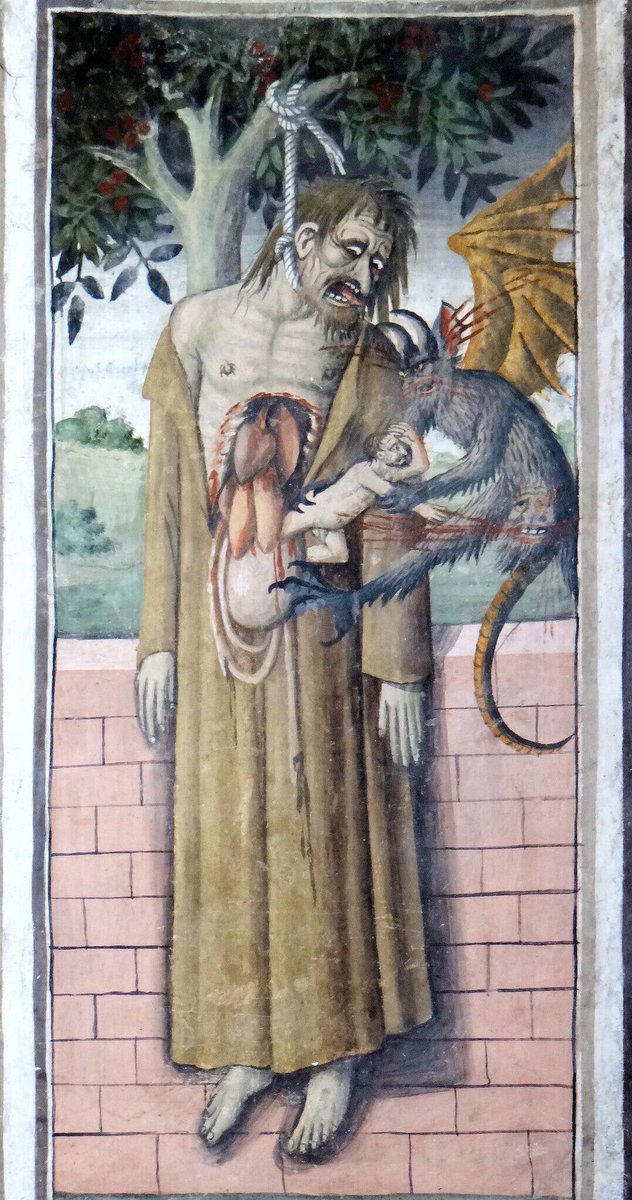
(Picture credit: Damien Kempf on Twitter)

Damien Kempf on Twitter: "Judas Hanging Himself [Notre-Dame-des ...

Wednesday, April 8, 2020

THEY DIDN'T GET IT

  Jesus had fed the five-thousand and later the four-thousand with bread and fishes. Jesus in the first miracle had broke five loaves, fed 5000, and took up twelve baskets of left-overs. Later, Jesus fed the 4000 with seven loaves, and they took up seven baskets of remnants. The Jews had seen those two miracles, yet the Pharisees and Sadduccees asked to have a sign. Jesus questioned their hearing and vision. They could not add two plus two and get four.
  Bread takes leaven to rise. Jesus increased five and seven loaves to feed 5000 and 4000 respectively plus had twelve baskets and seven baskets left over. Jesus’s “leaven” was those two miracles which they had seen and heard about. Leaven increases the size of bread. Jesus increased the amount of bread without it losing its yeast. Yeast is the leavening agent for natural bread, but in this case, Jesus was the leavening “Agent.” Yeast is impure, but Jesus is pure. The Jews had seen two great signs, but asked for another.
  Those two groups, knowing the Talmud quite well, knew about Moses well. They knew that Moses saved them from Pharaoah and Egypt, representing Satan and sin, respectively, but needed another sign. They always, throughout history, needed signs to convince them. God would work miracles, and yet they would still not believe.

  The rich man in Hell was discussing Hell with Abraham. He wanted to convince his brothers to change. Abraham said, “They have Moses and the prophets; let them hear them.  And he said, Nay, father Abraham: but if one went unto them from the dead, they will repent.” (Luke 16:29-30) Obviously, the Pharisees and Sadduccees should have looked at Moses for their signs. In fact, Moses and the Exodus was symbolic of Jesus and salvation. The Jews had not connected the dots and wanted another sign.

  Years ago, I connected the dots. I wondered about Abraham and his willingness to sacrifice his only remaining son for the sins of the Jews. With that dot down, I connected many of the dots. I soon realized that the exodus from Egypt represented salvation from the Devil, and it was by the blood of Christ. Soon I began to connect many more dots until I said to myself, “The Old Testament is all about Jesus, and is not old at all; it’s the same “testament” to Jesus and salvation was always for everyone and by grace.” Incidentally, that is the “mystery of Christ” of which Paul spoke (Rom 16:25). God revealed the mystery to me, but the Jews, represented by the Pharisees and Sadduccees were still blind to the mystery.

  When the Pharisees asked for a sign, Jesus sighed (they had not connected the dots), as you shall see in the next passage:

11 And the Pharisees came forth, and began to question with him, seeking of him a sign from heaven, tempting him. 12 And he sighed deeply in his spirit, and saith, Why doth this generation seek after a sign? verily I say unto you, There shall no sign be given unto this generation. (Mark 8:11-12)

  Not only did they know about Moses, but saw and heard about both miracles of the loaves. They just did not get it because they lacked discernment. Their spirit was disharmonious to Jesus’s and had been to the Holy Spirit all along. Jesus called them out, if the sigh was not enough:

4 A wicked and adulterous generation seeketh after a sign; and there shall no sign be given unto it, but the sign of the prophet Jonas. (Math 16:4)

  The Sadduccees did not believe in the resurrection of the dead (Mat 22:23), and surely were making doubters of the Pharisees who did. Those of that generation already had a sign, but failed to understand. Jonah’s three days in the belly of a great fish was representative of Jesus’s stay in the tomb before he was resurrected. Jonah was given a second chance, and the Jews would be given the same with resurrection. Paul validated that:

22 For the Jews require a sign, and the Greeks seek after wisdom: 23 But we preach Christ crucified, unto the Jews a stumblingblock, and unto the Greeks foolishness (1 Cor 1:22-23)

  Gentiles would consider the resurrection as irrational; thus “foolishness.” Because Jews did not recognize all the signs throughout the ages, Jesus’s crucifixion and resurrection would make them stumble. They thought their works would save them, and missed the point that Moses holding up the dead Serpent in his tree of knowledge was what would save them (John 3:15).
  Jesus was harsh on the Jews, but the Gentiles were foolish. Greeks, especially at that time, thanks to Plato and others, used reason in their doctrines of Stoicism and Epicureanism. Plato even questioned reality! How can a second life be real if the first life may not be?
  The Pharisees and Sadducees were somewhat Hellenized around the south shore of the Sea of Galilee. They reasoned just as the Greeks would, but were not so good at it, according to Jesus. Examine that conversation:

17 And when Jesus knew it, he saith unto them, Why reason ye, because ye have no bread? perceive ye not yet, neither understand? have ye your heart yet hardened? 18 Having eyes, see ye not? and having ears, hear ye not? and do ye not remember?  19 When I brake the five loaves among five thousand, how many baskets full of fragments took ye up? They say unto him, Twelve. 20 And when the seven among four thousand, how many baskets full of fragments took ye up? And they said, Seven. (Mark 8:17:20)

  Jesus was saying, I leavened the bread and I did it without yeast! Yeast in the Bible represents sin, or more precisely the law of the world which Paul called the “Law of Sin.” That “law” is in the flesh of mankind (Rom 7:23). Jesus’s leavening was pure, and was from the “Law of God.” Natural leavened bread took yeast, but spiritually “leavening” was by the blood of Jesus in that unleavened bread is to be used in remembrance of Jesus’s death.
  The Jews knew their scripture, but failed to understand that the Torah had provided them all the signs they needed. Indeed, the entire gospel can be found in Genesis Chapter three alone if one looks for it there! Test yourselves; go do that.  Jesus pointed to two numbers in regard to His “leavening” — twelve and seven. Let’s look at the easiest one first (seven);

Seven days shall ye eat unleavened bread; even the first day ye shall put away leaven out of your houses: for whosoever eateth leavened bread from the first day until the seventh day, that soul shall be cut off from Israel. (Exod 12:15)

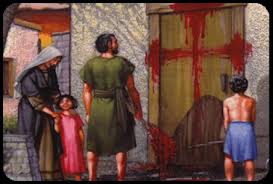
  In Egypt, just as in Judea, Jesus… yes, JESUS)…  was about to save the Jews by blood on the “cross” of the wooden Hebrew doors. In preparation for salvation and the resurrection of the Hebrews, Moses would lead them out safely because of His confidence in Jesus… and yes, Moses had spoken with JESUS… The Hebrews would eat unleavened bread for seven days. They would eat bread that represented the Bread of Life, Jesus by Name. The lack of leaven represented Jesus’s pure Flesh.
  It was by grace the Hebrews were saved. That was one “mystery of Christ.” The doctrine of Jesus is that He is the “Leaven” in the Showbread. The natural leavening was yeast, and that was the doctrine of the Pharisees:

And he charged them, saying, “Take heed, beware of the leaven of the Pharisees, and of the leaven of Herod.”  (Mark 8:15)

  The leaven of the Pharisees was works, and by the way, reason. They apparently were beginning to believe the reasoning of the Sadducees. And how about Herod? Herod Antipas was king at the time. He was essentially an Epicurean; that philosophy was the pleasure principle, which by the way, was two of the three temptations of the Tree of Knowledge (Gen 3). I believe that Jesus was implying, Leaven works to raise the bread, I can raise bread and my own Bread. Don’t you get it yet? The leaven of the Pharisees was salvation by works, and with the miracles of the loaves, Jesus did the work.
  How about the twelve baskets? Jesus fed the multitude, but there were twelve baskets left over. I believe those baskets represent the 144,000 remnant of the Jews who will be saved at the Great Tribulation. God, by grace, shall resurrect them as well, of course after the multitude of Christians are fed:

And had a wall great and high (New Jerusalem), and had twelve gates, and at the gates twelve angels, and names written thereon, which are the names of the twelve tribes of the children of Israel (Rev 21:12)

  Perhaps, Jesus was indicating that you Jews are represented by the remnant of bread in the twelve baskets, just as the multitude was represented by the seven baskets. Because the miracle of the loaves was in an area that was heavily Gentile and quite Hellenized (like the Greeks), that the multitude was mostly Gentile. They had ample bread left over for those who knew the Law so well.

  I use “perhaps” in my conclusions. I’m sure that the Pharisees knew much better what Jesus was implying than what I do, but they rejected His Purpose. I do not! He is the Bread of Life, and in the end, a remnant of the Jews will come to understand what the miracle of the loaves is all about!
  How about the fish? Jesus is represented as a “fish” because he was born under that sign. The sign of the Antichrist is Aquarius. “Jesus” was in those baskets, symbolized by both the bread and fish.

(picture credit: GentlyHewStone,com)

download (1)

Monday, April 6, 2020

BREAK ONE AS BREAKING THEM ALL

  Traditionalists asked Jesus why his disciples failed to wash their hands before they ate? Jesus wondered… uh, knew… why the traditionalists did not wash their thoughts before they spoke:

3 But he answered and said unto them, “Why do ye also transgress the commandment of God by your tradition? 4 For God commanded, saying, ‘Honour thy father and mother: and, He that curseth father or mother, let him die the death.’ 5 But ye say, “Whosoever shall say to his father or his mother, ‘It is a gift, by whatsoever thou mightest be profited by me; 6 And honour not his father or his mother, he shall be free.’” Thus, have ye made the commandment of God of none effect by your tradition.  (Mat 15:3-6)

  If you’ll remember, “honour thy father and mother” is imperative.  So, imperative that, “that thy days may be long upon the land which the Lord thy God giveth thee” (Exod 20:12). Note that the command was not to honour good and perfect parents, but our parents even with all their faults! Why would that be? Honoring parents is a way to honor God, and by honoring parents, it is honoring God. Honoring hard to love parents is even harder work, and God rewards those significantly who do that.
  Honoring those parents who are hard to love, is much the same as God who loves his children who are hard to love. Who are those children? Those who dismiss God’s commands as trivial. Those who don’t honor their parents take God’s Word trivially. When they don’t love their parents, as God so loves them (John 3:16), then they profane God’s Name. (That is blasphemy.)
  What if God only loved you if you were a perfect child? Then no child would be loved! What if children only loved perfect parents? Then no parents would be loved! We must love even the most deficient parents, because God even loves his most deficient children.
  God even rewards for that honoring: “…that thy days may be long upon the land which the Lord thy God giveth thee” (Exod 20:12b). That comes from the Abrahamic Covenant. God’s people would obtain the promised land if they kept their end of the bargain. God expected His people to honor their father and mother. If they did not, they would forfeit their “land.”
  What the Hebrews did not realize, albeit Abraham and Moses did, is that God wasn’t referring to economic prosperity. His people would not be landed gentry, but humble peasants on His land, doing His Will. What God was referring to was the real promised land — an eternal home in a mansion in His House, as is written:

2 In my Father's house are many mansions: if it were not so, I would have told you. I go to prepare a place for you. 3 And if I go and prepare a place for you, I will come again, and receive you unto myself; that where I am, there ye may be also. (John 14:2-3).

 The Fifth Commandment was not necessarily a “commandment” in that God did not want parents honored by tradition, but because they truly love them; with their faults and all. That intensive love warranted a long life on God’s “land.” What they failed to understand is that God was not referring to a long mortal life, but an everlasting immortal life — an eternal life. Thus, honoring parents is harmonizing our wills with God’s Will.
  Tradition is by the things coming out of the mouth. Anyone can say they are ritually clean, but it is all ritual. Saying that one loves his parents is noble, but shallow. He or she must truly love their parents, even bad parents, from the heart just as God loves us. Jesus even elaborated on what comes from the hearts of those destined to perish:

20 And he said, “That which cometh out of the man, that defileth the man. 21 For from within, out of the heart of men, proceed evil thoughts, adulteries, fornications, murders, 22 thefts, covetousness, wickedness, deceit, lasciviousness, an evil eye, blasphemy, pride, foolishness: 23 All these evil things come from within, and defile the man.” (Mark 7:20-23)

  Evil thoughts, perhaps about one’s father or mother; adulteries — being your own god rather than being “married” to Jesus who is the “bridegroom;” murder (hatred); wickedness (doing it your way); pride in doing what you are doing; and so forth. Those who fail to honor their father or mother will exhibit one or more of those characteristics.
  Thus, the Fifth Commandment is a prescription for eternal life. Realizing that, that “commandment” is a prescription for eternal well-being, just as God promised. It should be obvious that to claim to honor is a deficient tradition. Honoring parents must be from the heart, and done for the love of them and for God. Hence, all the commandments are prescriptions for eternal health — or more bluntly, eternal life!
  Jesus mentioned all sorts of sins in the verse from Mark 7 above. All of those are covered in the Ten Commandments. Hence, the Ten Commandments are corporately God’s “Ten Prescriptions” for eternal life.
  Jews call them the “Ten Words.” Why is that?  Because the Ten Words are introduced by, “God spake all these words, saying” (Exod 20:1). Just Who is the Word? The Word was God made Flesh and His Name is Jesus (John 1). The Ten Commandments are Jesus’s Ten Words giving the Ten Prescriptions for eternal health.
  Jesus even mentioned them all when he spoke those words in Matthew chapter fifteen and Mark chapter seven. The parable was not just about clean hands, but also clean hearts. The Ten Commandments are neither about clean hands from the tradition of the Law, but clean hearts as to the Will of Jesus.
  Who Wills that His people not murder? Jesus. His Word said so. Who is He that wills that parents be honored? Jesus. His Word commands that, and promises a great outcome… essentially living forever. What does one forfeit by ignoring Jesus’s Fifth Word (or saying)? Eternal life! Since breaking one Word is as if breaking them all, what is forfeited by ignoring any of Jesus’s Ten Words? Eternal life! You just as well be an adulterer, liar, or blasphemer for all the good that your commandment keeping by tradition would be.

  I know of a man who often provoked his mother. She was provoked until she had, had enough. Due to the stress and such that the prodigal son had induced in her, she emancipated him by legal action. He could have accepted the consequences of his behavior by admitting that he had coveted and taken some things that belonged to his mother. He had dishonored her, and his father for that matter, but he became hateful and resentful of his mother, and oddly, for some reason to his father, brother, and sister as well! Not only that, but he failed to do what was God’s Will was for Him, and neglected God. Should that prodigal son be welcomed back by his father, mother, brother, sister and even the Father? They would all welcome him back with loving arms. When one dies it will be too late because dead parents cannot sense contrite and loving children.
  Ironically, that man resented his mother and abandoned her because it has cost him great money. How so is insignificant. However, he put the love of money over the Will of Jesus. The irony of it is that he had cost the father the same amount, but his father never mentioned that he had squandered the father’s money. The father welcomed the prodigal son back, but yet the son will not do the same for the imperfect mother, who of course, could have handled things better, but how she did as how she knew best.
  The old saying when parents punish; this will hurt me more than you, is so true. The mother was distraught when she had to emancipate her son for her own mental health and well-being; she had emancipated with tough-love because the things that God would have us do are usually not easy, but remain the right thing!

  Then steps in prodigal son number two who feels the same way about his brother, sister, and father. Because pride is a difficult thing to overcome, a prideful attitude wins out, and only one person is left pleased, and only Satan smiles. Honoring parents is also toughlove because all people are tough to love. Why would Jesus command that we love others as ourselves? Because loving is hard work for everyone but loving ourselves comes easily. Hard love is a test that the Ten Prescriptions are having the affect of healing the soul.

  When my own parents died, I lived remotely from them. When I heard the news, I did not need to rush to make amends when they were still alive. I honored both my parents continually from my infancy through my adulthood, and still love and honor them in their death. I expect that God will give me a long life here (which He has) and an eternal life in Heaven as He promised. Doing the Words of Jesus because you are willing to, leads to long-life, but if it is only by the tradition of obeying the Law, then it is frivolous and foolish.

(picture credit: The Forward):

11 Ways To Show Moses Breaking the Tablets – The Forward