Friday, April 10, 2020

TRANSFIGURATON - SON OF MAN


  To understand the transfiguration of Jesus, it is imperative to understand the substance, or person, of Jesus. Transfiguration is to metamorph (metamorphoo: Greek), or to change from one form to another, or from one substance to another.  Metamorphosis occurs in animals when there is an abrupt and profound change in the structure at birth into another structure subsequent to that. It is simply a change in forms of the animal; thus transformation. Transfiguration comes into the English translation because Jesus went from one type of Figure to another.
  God transfigured Himself when He changes “states,” or transitions Himself from one phase to another. The Old Testament is the initial phase, his physical life is God’s second phase, and His Glorification, the final phase. Homeostasis — when equilibrium is reached — would occur only in the final state, at Glorification as a consequence of the Resurrection. Homeostasis (balance) was achieved when Jesus died, was resurrected, and came into the Presence of God.
  After the Resurrection, “Jesus saith unto her, ‘Touch me not; for I am not yet ascended to my Father’…” (John 20:17). Some think that Thomas touched Jesus. He did not; Jesus merely challenged him to do that to remove any doubt. “Glorification” is the last step in the order of salvation (ordo salutis; Latin). It refers to the stasis of the Christian after death and judgment. It is when God “knows” the Christian in contrast to those he did not know:

Many will say to me in that day, “Lord, Lord, have we not prophesied in thy name? and in thy name have cast out devils? and in thy name done many wonderful works?” And then will I profess unto them, “I never knew you: depart from me, ye that work iniquity.” (Mat 7:22-23)

  It seems Christians metamorph as well; from iniquitous persons, born again, to spiritual persons by the indwelling of God’s Holy Ghost. From the “old creature” to the “new creature.” (2 Cor 5:17). Birth generates the old creature, and rebirth the new creature. The old creature is like Adam, and the new creature like Jesus. The old person exists as the “son of man” and the new person as the “son of God.”
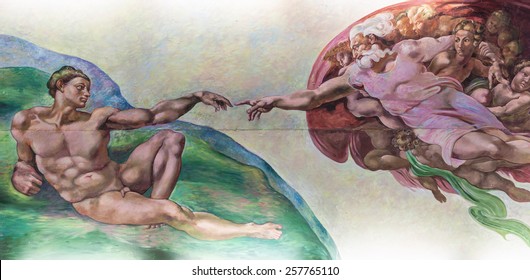
  In the Old Testament, before the days of Noah, “The sons of God saw the daughters of men that they were fair; and they took them wives of all which they chose” (Gen 6:2). The “sons of God” were ben ‘Elohymn, and the “daughters of men” were bath ‘adam in the Hebrew. Therefore, the reference to Jesus as the “Son of man” (Huios Anthropos; Greek) would refer to the “Son of Adam” or the Flesh from Adam. “Anthropos” refers to a man with both body and soul. That applies to Adam since God breathed life unto him and he became a living soul (Gen 2:7). Hence, Jesus was the “Last Adam” or the “Ultimate Adam” in that Adam will someday be like Jesus.  Adam represents death, and Jesus life because Adam sinned and Jesus did not (Rom 5:12-21).
 Adam morphed (Gen 3) just as the Serpent did. He went from the Old Creature to the New Creature when God removed his apron of fig leaves and replaced it with a coat of skin (Gen 3). Of course, the Serpent morphed from a walking creature to a slithering one, (from that same chapter).
  Adam was transformed from an endangered naked creature to a safe covered creature. How was he “covered” in safety? By the blood that God shed on his behalf. In Genesis chapter three, Adam was transfigured from an iniquitous beastly creature (like the Serpent) to a justified righteous creature (like God.)
  During “phase one” Jesus was not “the son of man” as is written, “God is not a man, that he should lie; neither the son of man, that he should repent…” (Num 23:19). God was “the Word” in phase one (John 1:1-2). In phase two, God like Adam before him, put on skin (John 1:14). He was “the Second Adam” in phase two, or the “Son of Adam” (aka, “the Son of man”).
  The psalmist sang of that metamorphosis when he wrote, “Let thy hand be upon the man of thy right hand, upon the son of man whom thou madest strong for thyself” (Psalm 80:17). That was written as prophecy forecasting that the Word of God would be transformed into the Flesh of God — phase I to phase II, and the process of Jesus’s Glorification was well on the way to homeostasis.
  The Old Testament was not to trust in Jesus who had yet to die, but the trust in Jesus who would die for them: “Put not your trust in princes, nor in the son of man, in whom there is no help” (Psalm 146:3). The Jews were expecting a “prince” (what kings were often called), but they were not to put their trust in the Son of man. Who then? The Son of God. Something would happen to Jesus which transformed Him from the Son of man to the Son of God.
  Metamorphosis is changing from what once was to a new figure with no ability to change back. Jesus changed as he moved between one reality to the next — from the natural to the supra-natural. Jesus traveled freely from in earth to in heaven. Not from the place Earth to the place Heaven but from one existence to another. His “substance” seemed to be what it needed to be in whatever realm He was in.
  Jesus arose and disappeared in the clouds. I believe that He transformed from the physical to the Spiritual. Likewise, when Jesus descended as the Holy Ghost, He transformed Himself into the Holy Spirit for His new residence, which is inside the souls of Christians, as God breathes life (Jesus) back into them.
  And when God comes to get His children, He will be seen in the clouds as “the Son of man,” according to this verse, “I saw in the night visions, and, behold, one like the Son of man came with the clouds of heaven, and came to the Ancient of days, and they brought him near before him. (Dan 7:13).  In other words, Jesus’s countenance as a human being is as the Son of man, and His countenance as the Holy Ghost is as the Son of God. That surely refers to Jesus because Matthew wrote, “For the Son of man is Lord even of the sabbath day” (Mat 12:8).
  Jesus made a distinction between His physical nature and His Spiritual or supra-nature:

And whosoever speaketh a word against the Son of man, it shall be forgiven him: but whosoever speaketh against the Holy Ghost, it shall not be forgiven him, neither in this world, neither in the world to come. (Mat 12:32)

  Therein, it is clear that God has another nature, and now there are three: The Son of God, the Son of man, and the Holy Ghost. That should be recognized as the Holy Trinity.
  Jesus was in the tomb three days as was the son of man, Jonas. Jonas was physically in the whale’s or fish’s belly, and Jesus was physically in the tomb for three days. (“For as Jonas was three days and three nights in the whale's belly; so shall the Son of man be three days and three nights in the heart of the earth;” Mat 12:40)
  While Jesus was “asleep” in the tomb, all the sins of mankind were being delivered into Hell. As Jesus died, His Holy Ghost was given up (Mark 15:37). Jesus Flesh died but His Spirit lived on as the “Ghost” of Jesus. Jesus was alive in a different form; hence, he was merely sleeping. God suffered death but He did not die. He was in a different form.
  God adjusts His form, perhaps, for mankind. The Holy Ghost resides in the souls of men, of course unseen, but when God comes to reward those in whom He resides, He will again appear as “the Son of man,” as is written: “For the Son of man shall come in the glory of his Father with his angels; and then he shall reward every man according to his works” (Mat 16:27).
  Today, I have tried to explain the implication of Jesus as “the Son of man.” Tomorrow we shall examine Jesus as “the Son of God.”

(picture credit: Shutterstock)
Adam Images, Stock Photos & Vectors | Shutterstock

Thursday, April 9, 2020

DENYING ONESELF


KEY VERSES: 
Then said Jesus unto his disciples, “If any man will come after me, let him deny himself, and take up his cross, and follow me.” (Mat 16:24)… “deny himself” (Mark 8:34)… “deny himself” (Luke 9:33)… “if we deny him, he also will deny us.” (2 Tim 2:12) 
Peter answered and said unto him, “Though all men shall be offended because of thee, yet will I never be offended.” Jesus said unto him, “Verily I say unto thee, That this night, before the cock crow, thou shalt deny me thrice.” Peter said unto him, “Though I should die with thee, yet will I not deny thee.” Likewise, also said all the disciples. (Mat 26:33-35)

  In Mat 16:16, Peter said, “You are the Christ, the Son of the living God.” To which Jesus responded “blessed art thou” (Mat 16:17). How would Peter be blessed? “I will give you the keys of the kingdom of heaven” (Mat 16:19).
  Peter, because he knew Christ, would be “blessed” — blissed, well-off etc. Jesus wasn’t referring to “well-off” in earth because as we find out from Foxe’s Book of Martyrs, Peter was crucified, and not right side up as Jesus, but upside down. He did not want to trivialize Jesus’s Purpose. Peter took-up Jesus’s Cross and followed him to death (Mat 16:24). In between, Peter denied Jesus three times; for what Purpose? To save his own flesh from death.
  You see, Peter did not depend on Jesus. He said that he knew that He was God, and what had Jesus said about himself? “The Son of man must suffer many things, and be rejected of the elders, and of the chief priests, and scribes, and be killed, and after three days rise again” (Mark 8:31). Jesus said that he would die but live again. With that said, if Peter had truly known that Jesus IS God, then he would never have denied Jesus! It seems that Peter had some doubts that evaporated when Jesus suffered, died, and was resurrected. Peter had not theretofore denied himself.
  Dietrich Bonnhoeffer called that “cheap grace;” Peter believed, but he had not denied himself. At his own crucifixion, Peter did exactly what Jesus would have him do; deny himself, and take up the cross and follow Him (Mat 16:24). That verse is packed full of the Way to salvation. When Peter suffered for Jesus by spreading the Word, in the end, he took on Jesus’s Cross himself. Finally, he was not ashamed of Jesus!
  Jesus went on to say, “Whosoever will save his life shall lose it; but whosoever shall lose his life for my sake and the gospel's, the same shall save it” (Mark 8:35). Peter eventually lost his life for Jesus and the gospel’s sake. With that accomplished, Peter is in Bliss, as Jesus promised. What and where is bliss? It’s living in the Presence of God in heaven. Jesus said, “Blessed are the meek: for they shall inherit the earth” (Mat 5:5). But did not Peter inherit the heaven? “Earth” (with small “e”) in this context would be matter.
  Peter, although he would die, and return to the dust from which he came, would be resurrected in material form. When the soul rejoins the body at the rapture, when the dead in Christ shall rise, the bodies will be glorified; bodies will be with the spirit just as in the Garden Paradise. I believe that is “regeneration;” that is being generated a second time, and is when Christians return to their designed state. This “regeneration” would commence when those “born again” (John 3:7) are glorified and taken to heaven, as is written:

But we all, with open face beholding as in a glass the glory of the Lord, are changed into the same image from glory to glory, even as by the Spirit of the Lord. (2 Cor 3:18).

  Let me re-write that; When we see ourselves, not as gods, but like Christ, we get His glory. Finally, those who are Christians (justified) are regenerated in the original image of Christ, who by the way, was there in the Garden (John 1). The English Standard Version says, “… with unveiled face, beholding the glory of the Lord, are being transformed into the same image.” The meek will be transformed into the glorious. When? When they are snatched into the heaven with the coming of Jesus. That is called the “rapture.” Because Peter took up his cross and followed Jesus, Peter will be resurrected and be like Jesus.
  There is some ambiguity to regeneration. Calvinists consider “regeneration” as the moment when people first believe. That moment is “born again.” Regeneration is enduring suffering as Jesus did, until death, terminating in resurrection. I believe that regeneration is finished at the resurrection. Think about that; after Jesus was raised from the dead, he could not be touched until he had been in the presence of His Father. It seems that Jesus’s regeneration commenced at the transfiguration and was completed when He was with His Father in Heaven.
  With that said, the point of today’s verses, is that people must deny themselves and take up Jesus’s cross. That means, humiliation, suffering, and even death. As Jesus was resurrected after that was finished, we too shall be if we are Christians. What makes one a Christian? Not merely believing as Peter had, but taking up Jesus’s cross. How is that done? By denying himself. (Note that the brazen serpent on the pole was Jesus’s “cross” because His Purpose was the slay the Serpent; Gen 3:14).
  Was Peter able to save his life by denying that he followed Jesus? Did thrice denying keep him alive?
  Now let’s travel back to Adam. He was told that eating of the forbidden fruit would cause death. Eve ate, and did not appear to die, so Adam ate as well. He failed to understand death. It is not death of the flesh but isolation from God. What caused Adam’s spiritual death? As the Serpent rightly said, they would be as God (Gen 3:5). That was their perception of themselves. They did what they wanted to do in the face of the Serpent. They would be like the Devil. Paul (from above) wrote, “(All) with open face beholding as in a glass the glory of the Lord.” Glorification is when Christians quit seeing themselves as the Serpent, but see themselves as Jesus. Not that they are not God, but are TO BE in the image of Him.
  When Adam and Eve ate, there was some introspection. They did not see themselves like God, but they saw themselves in their minds’ eyes as the Serpent. They were contrite and made aprons of fig leaves. That did not cover all their flesh, but merely their genitals. (Circumcision only ridded the Jews of the flesh of their genitals, but did noting to circumcise their hearts. Circumcision was basically a repetition of men trying to justify themselves by cutting-off only part of their flesh to compensate for their sin. Circumcision of the heart is God cutting off all the flesh.)
  Denying oneself, is denying that a person can save their own soul. For a few years, Peter saved his skin, but not his soul. When he took up his cross is when Jesus saved his soul because he was being more like Jesus. “Denying oneself” therefore is imperative to be saved. By denying Jesus, Peter lived a little longer, but by denying himself, he finally got the keys to heaven. Not the physical “keys” but the “password.” Just what is the password to heaven? “Jesus!” because nobody can save themselves but Jesus can. When Jesus said, “marvel not; ye must be born again,” He explained that by recounting the story of Moses with his brazen serpent on the pole.
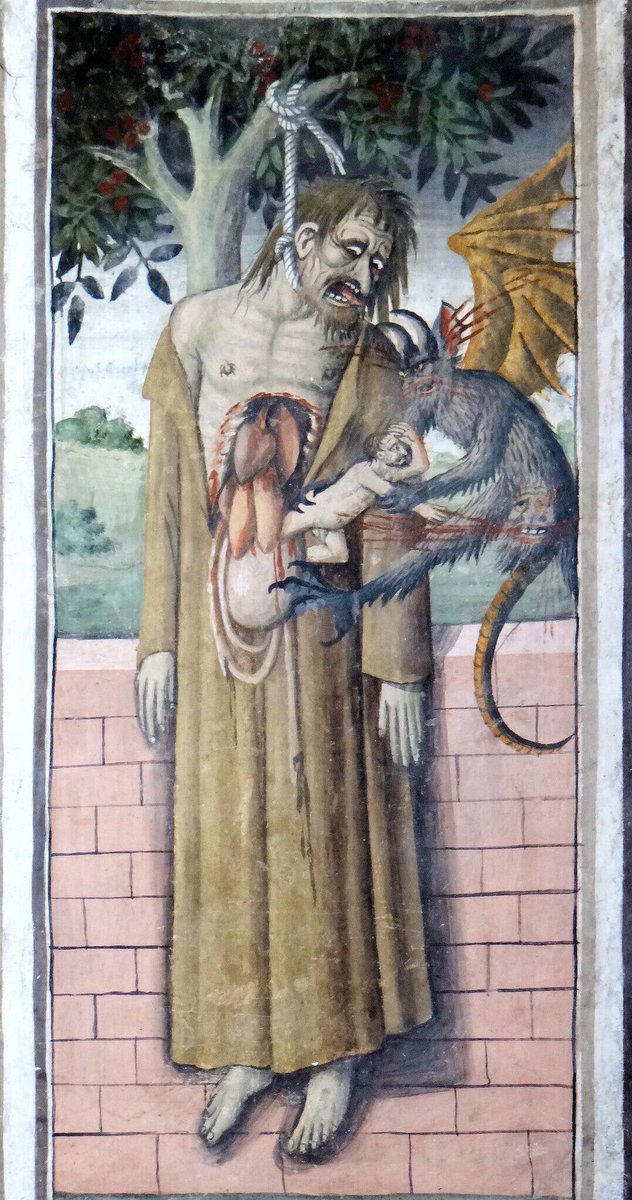
  Some say that the brass serpent on the pole was a foreshadowing of Jesus. It was not “Jesus” who the serpent symbolized, but Jesus’s Purpose — to crucify the Serpent in his Tree. The serpent, looking bloody red in the sun, was Jesus’s Purpose. At about the same time that Jesus was crucified, Judas took care of his shame himself. He failed to depend on Jesus’s death to save him, but took it on himself to endeavor to do what only Jesus would be able to do. With Judas hanging from his tree and Jesus crucified on His Tree, God’s need for Flesh was finished.
  Humility is recognizing that we are not gods, and cannot save ourselves. Just as the Hebrews who walked among serpents were bitten and would die unless they looked up at what God can do, Peter had to trust Jesus for salvation. He could not deny Jesus and expect to live. He had to finally trust Jesus enough to sacrifice his own flesh just as Jesus did.
  “Cheap grace” is believing without trusting. Right now, I could save my own flesh by social-distancing, and that is the rational thing to do. However, the imperative thing to do, is depend on Jesus to save both my flesh and my soul. I suggest that is the same for you as well! Self-esteem is mankind’s problem; Christ-esteem is the solution to our problem.

(Picture credit: Damien Kempf on Twitter)

Damien Kempf on Twitter: "Judas Hanging Himself [Notre-Dame-des ...

Wednesday, April 8, 2020

THEY DIDN'T GET IT

  Jesus had fed the five-thousand and later the four-thousand with bread and fishes. Jesus in the first miracle had broke five loaves, fed 5000, and took up twelve baskets of left-overs. Later, Jesus fed the 4000 with seven loaves, and they took up seven baskets of remnants. The Jews had seen those two miracles, yet the Pharisees and Sadduccees asked to have a sign. Jesus questioned their hearing and vision. They could not add two plus two and get four.
  Bread takes leaven to rise. Jesus increased five and seven loaves to feed 5000 and 4000 respectively plus had twelve baskets and seven baskets left over. Jesus’s “leaven” was those two miracles which they had seen and heard about. Leaven increases the size of bread. Jesus increased the amount of bread without it losing its yeast. Yeast is the leavening agent for natural bread, but in this case, Jesus was the leavening “Agent.” Yeast is impure, but Jesus is pure. The Jews had seen two great signs, but asked for another.
  Those two groups, knowing the Talmud quite well, knew about Moses well. They knew that Moses saved them from Pharaoah and Egypt, representing Satan and sin, respectively, but needed another sign. They always, throughout history, needed signs to convince them. God would work miracles, and yet they would still not believe.

  The rich man in Hell was discussing Hell with Abraham. He wanted to convince his brothers to change. Abraham said, “They have Moses and the prophets; let them hear them.  And he said, Nay, father Abraham: but if one went unto them from the dead, they will repent.” (Luke 16:29-30) Obviously, the Pharisees and Sadduccees should have looked at Moses for their signs. In fact, Moses and the Exodus was symbolic of Jesus and salvation. The Jews had not connected the dots and wanted another sign.

  Years ago, I connected the dots. I wondered about Abraham and his willingness to sacrifice his only remaining son for the sins of the Jews. With that dot down, I connected many of the dots. I soon realized that the exodus from Egypt represented salvation from the Devil, and it was by the blood of Christ. Soon I began to connect many more dots until I said to myself, “The Old Testament is all about Jesus, and is not old at all; it’s the same “testament” to Jesus and salvation was always for everyone and by grace.” Incidentally, that is the “mystery of Christ” of which Paul spoke (Rom 16:25). God revealed the mystery to me, but the Jews, represented by the Pharisees and Sadduccees were still blind to the mystery.

  When the Pharisees asked for a sign, Jesus sighed (they had not connected the dots), as you shall see in the next passage:

11 And the Pharisees came forth, and began to question with him, seeking of him a sign from heaven, tempting him. 12 And he sighed deeply in his spirit, and saith, Why doth this generation seek after a sign? verily I say unto you, There shall no sign be given unto this generation. (Mark 8:11-12)

  Not only did they know about Moses, but saw and heard about both miracles of the loaves. They just did not get it because they lacked discernment. Their spirit was disharmonious to Jesus’s and had been to the Holy Spirit all along. Jesus called them out, if the sigh was not enough:

4 A wicked and adulterous generation seeketh after a sign; and there shall no sign be given unto it, but the sign of the prophet Jonas. (Math 16:4)

  The Sadduccees did not believe in the resurrection of the dead (Mat 22:23), and surely were making doubters of the Pharisees who did. Those of that generation already had a sign, but failed to understand. Jonah’s three days in the belly of a great fish was representative of Jesus’s stay in the tomb before he was resurrected. Jonah was given a second chance, and the Jews would be given the same with resurrection. Paul validated that:

22 For the Jews require a sign, and the Greeks seek after wisdom: 23 But we preach Christ crucified, unto the Jews a stumblingblock, and unto the Greeks foolishness (1 Cor 1:22-23)

  Gentiles would consider the resurrection as irrational; thus “foolishness.” Because Jews did not recognize all the signs throughout the ages, Jesus’s crucifixion and resurrection would make them stumble. They thought their works would save them, and missed the point that Moses holding up the dead Serpent in his tree of knowledge was what would save them (John 3:15).
  Jesus was harsh on the Jews, but the Gentiles were foolish. Greeks, especially at that time, thanks to Plato and others, used reason in their doctrines of Stoicism and Epicureanism. Plato even questioned reality! How can a second life be real if the first life may not be?
  The Pharisees and Sadducees were somewhat Hellenized around the south shore of the Sea of Galilee. They reasoned just as the Greeks would, but were not so good at it, according to Jesus. Examine that conversation:

17 And when Jesus knew it, he saith unto them, Why reason ye, because ye have no bread? perceive ye not yet, neither understand? have ye your heart yet hardened? 18 Having eyes, see ye not? and having ears, hear ye not? and do ye not remember?  19 When I brake the five loaves among five thousand, how many baskets full of fragments took ye up? They say unto him, Twelve. 20 And when the seven among four thousand, how many baskets full of fragments took ye up? And they said, Seven. (Mark 8:17:20)

  Jesus was saying, I leavened the bread and I did it without yeast! Yeast in the Bible represents sin, or more precisely the law of the world which Paul called the “Law of Sin.” That “law” is in the flesh of mankind (Rom 7:23). Jesus’s leavening was pure, and was from the “Law of God.” Natural leavened bread took yeast, but spiritually “leavening” was by the blood of Jesus in that unleavened bread is to be used in remembrance of Jesus’s death.
  The Jews knew their scripture, but failed to understand that the Torah had provided them all the signs they needed. Indeed, the entire gospel can be found in Genesis Chapter three alone if one looks for it there! Test yourselves; go do that.  Jesus pointed to two numbers in regard to His “leavening” — twelve and seven. Let’s look at the easiest one first (seven);

Seven days shall ye eat unleavened bread; even the first day ye shall put away leaven out of your houses: for whosoever eateth leavened bread from the first day until the seventh day, that soul shall be cut off from Israel. (Exod 12:15)

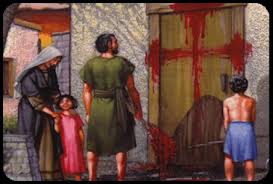
  In Egypt, just as in Judea, Jesus… yes, JESUS)…  was about to save the Jews by blood on the “cross” of the wooden Hebrew doors. In preparation for salvation and the resurrection of the Hebrews, Moses would lead them out safely because of His confidence in Jesus… and yes, Moses had spoken with JESUS… The Hebrews would eat unleavened bread for seven days. They would eat bread that represented the Bread of Life, Jesus by Name. The lack of leaven represented Jesus’s pure Flesh.
  It was by grace the Hebrews were saved. That was one “mystery of Christ.” The doctrine of Jesus is that He is the “Leaven” in the Showbread. The natural leavening was yeast, and that was the doctrine of the Pharisees:

And he charged them, saying, “Take heed, beware of the leaven of the Pharisees, and of the leaven of Herod.”  (Mark 8:15)

  The leaven of the Pharisees was works, and by the way, reason. They apparently were beginning to believe the reasoning of the Sadducees. And how about Herod? Herod Antipas was king at the time. He was essentially an Epicurean; that philosophy was the pleasure principle, which by the way, was two of the three temptations of the Tree of Knowledge (Gen 3). I believe that Jesus was implying, Leaven works to raise the bread, I can raise bread and my own Bread. Don’t you get it yet? The leaven of the Pharisees was salvation by works, and with the miracles of the loaves, Jesus did the work.
  How about the twelve baskets? Jesus fed the multitude, but there were twelve baskets left over. I believe those baskets represent the 144,000 remnant of the Jews who will be saved at the Great Tribulation. God, by grace, shall resurrect them as well, of course after the multitude of Christians are fed:

And had a wall great and high (New Jerusalem), and had twelve gates, and at the gates twelve angels, and names written thereon, which are the names of the twelve tribes of the children of Israel (Rev 21:12)

  Perhaps, Jesus was indicating that you Jews are represented by the remnant of bread in the twelve baskets, just as the multitude was represented by the seven baskets. Because the miracle of the loaves was in an area that was heavily Gentile and quite Hellenized (like the Greeks), that the multitude was mostly Gentile. They had ample bread left over for those who knew the Law so well.

  I use “perhaps” in my conclusions. I’m sure that the Pharisees knew much better what Jesus was implying than what I do, but they rejected His Purpose. I do not! He is the Bread of Life, and in the end, a remnant of the Jews will come to understand what the miracle of the loaves is all about!
  How about the fish? Jesus is represented as a “fish” because he was born under that sign. The sign of the Antichrist is Aquarius. “Jesus” was in those baskets, symbolized by both the bread and fish.

(picture credit: GentlyHewStone,com)

download (1)

Monday, April 6, 2020

BREAK ONE AS BREAKING THEM ALL

  Traditionalists asked Jesus why his disciples failed to wash their hands before they ate? Jesus wondered… uh, knew… why the traditionalists did not wash their thoughts before they spoke:

3 But he answered and said unto them, “Why do ye also transgress the commandment of God by your tradition? 4 For God commanded, saying, ‘Honour thy father and mother: and, He that curseth father or mother, let him die the death.’ 5 But ye say, “Whosoever shall say to his father or his mother, ‘It is a gift, by whatsoever thou mightest be profited by me; 6 And honour not his father or his mother, he shall be free.’” Thus, have ye made the commandment of God of none effect by your tradition.  (Mat 15:3-6)

  If you’ll remember, “honour thy father and mother” is imperative.  So, imperative that, “that thy days may be long upon the land which the Lord thy God giveth thee” (Exod 20:12). Note that the command was not to honour good and perfect parents, but our parents even with all their faults! Why would that be? Honoring parents is a way to honor God, and by honoring parents, it is honoring God. Honoring hard to love parents is even harder work, and God rewards those significantly who do that.
  Honoring those parents who are hard to love, is much the same as God who loves his children who are hard to love. Who are those children? Those who dismiss God’s commands as trivial. Those who don’t honor their parents take God’s Word trivially. When they don’t love their parents, as God so loves them (John 3:16), then they profane God’s Name. (That is blasphemy.)
  What if God only loved you if you were a perfect child? Then no child would be loved! What if children only loved perfect parents? Then no parents would be loved! We must love even the most deficient parents, because God even loves his most deficient children.
  God even rewards for that honoring: “…that thy days may be long upon the land which the Lord thy God giveth thee” (Exod 20:12b). That comes from the Abrahamic Covenant. God’s people would obtain the promised land if they kept their end of the bargain. God expected His people to honor their father and mother. If they did not, they would forfeit their “land.”
  What the Hebrews did not realize, albeit Abraham and Moses did, is that God wasn’t referring to economic prosperity. His people would not be landed gentry, but humble peasants on His land, doing His Will. What God was referring to was the real promised land — an eternal home in a mansion in His House, as is written:

2 In my Father's house are many mansions: if it were not so, I would have told you. I go to prepare a place for you. 3 And if I go and prepare a place for you, I will come again, and receive you unto myself; that where I am, there ye may be also. (John 14:2-3).

 The Fifth Commandment was not necessarily a “commandment” in that God did not want parents honored by tradition, but because they truly love them; with their faults and all. That intensive love warranted a long life on God’s “land.” What they failed to understand is that God was not referring to a long mortal life, but an everlasting immortal life — an eternal life. Thus, honoring parents is harmonizing our wills with God’s Will.
  Tradition is by the things coming out of the mouth. Anyone can say they are ritually clean, but it is all ritual. Saying that one loves his parents is noble, but shallow. He or she must truly love their parents, even bad parents, from the heart just as God loves us. Jesus even elaborated on what comes from the hearts of those destined to perish:

20 And he said, “That which cometh out of the man, that defileth the man. 21 For from within, out of the heart of men, proceed evil thoughts, adulteries, fornications, murders, 22 thefts, covetousness, wickedness, deceit, lasciviousness, an evil eye, blasphemy, pride, foolishness: 23 All these evil things come from within, and defile the man.” (Mark 7:20-23)

  Evil thoughts, perhaps about one’s father or mother; adulteries — being your own god rather than being “married” to Jesus who is the “bridegroom;” murder (hatred); wickedness (doing it your way); pride in doing what you are doing; and so forth. Those who fail to honor their father or mother will exhibit one or more of those characteristics.
  Thus, the Fifth Commandment is a prescription for eternal life. Realizing that, that “commandment” is a prescription for eternal well-being, just as God promised. It should be obvious that to claim to honor is a deficient tradition. Honoring parents must be from the heart, and done for the love of them and for God. Hence, all the commandments are prescriptions for eternal health — or more bluntly, eternal life!
  Jesus mentioned all sorts of sins in the verse from Mark 7 above. All of those are covered in the Ten Commandments. Hence, the Ten Commandments are corporately God’s “Ten Prescriptions” for eternal life.
  Jews call them the “Ten Words.” Why is that?  Because the Ten Words are introduced by, “God spake all these words, saying” (Exod 20:1). Just Who is the Word? The Word was God made Flesh and His Name is Jesus (John 1). The Ten Commandments are Jesus’s Ten Words giving the Ten Prescriptions for eternal health.
  Jesus even mentioned them all when he spoke those words in Matthew chapter fifteen and Mark chapter seven. The parable was not just about clean hands, but also clean hearts. The Ten Commandments are neither about clean hands from the tradition of the Law, but clean hearts as to the Will of Jesus.
  Who Wills that His people not murder? Jesus. His Word said so. Who is He that wills that parents be honored? Jesus. His Word commands that, and promises a great outcome… essentially living forever. What does one forfeit by ignoring Jesus’s Fifth Word (or saying)? Eternal life! Since breaking one Word is as if breaking them all, what is forfeited by ignoring any of Jesus’s Ten Words? Eternal life! You just as well be an adulterer, liar, or blasphemer for all the good that your commandment keeping by tradition would be.

  I know of a man who often provoked his mother. She was provoked until she had, had enough. Due to the stress and such that the prodigal son had induced in her, she emancipated him by legal action. He could have accepted the consequences of his behavior by admitting that he had coveted and taken some things that belonged to his mother. He had dishonored her, and his father for that matter, but he became hateful and resentful of his mother, and oddly, for some reason to his father, brother, and sister as well! Not only that, but he failed to do what was God’s Will was for Him, and neglected God. Should that prodigal son be welcomed back by his father, mother, brother, sister and even the Father? They would all welcome him back with loving arms. When one dies it will be too late because dead parents cannot sense contrite and loving children.
  Ironically, that man resented his mother and abandoned her because it has cost him great money. How so is insignificant. However, he put the love of money over the Will of Jesus. The irony of it is that he had cost the father the same amount, but his father never mentioned that he had squandered the father’s money. The father welcomed the prodigal son back, but yet the son will not do the same for the imperfect mother, who of course, could have handled things better, but how she did as how she knew best.
  The old saying when parents punish; this will hurt me more than you, is so true. The mother was distraught when she had to emancipate her son for her own mental health and well-being; she had emancipated with tough-love because the things that God would have us do are usually not easy, but remain the right thing!

  Then steps in prodigal son number two who feels the same way about his brother, sister, and father. Because pride is a difficult thing to overcome, a prideful attitude wins out, and only one person is left pleased, and only Satan smiles. Honoring parents is also toughlove because all people are tough to love. Why would Jesus command that we love others as ourselves? Because loving is hard work for everyone but loving ourselves comes easily. Hard love is a test that the Ten Prescriptions are having the affect of healing the soul.

  When my own parents died, I lived remotely from them. When I heard the news, I did not need to rush to make amends when they were still alive. I honored both my parents continually from my infancy through my adulthood, and still love and honor them in their death. I expect that God will give me a long life here (which He has) and an eternal life in Heaven as He promised. Doing the Words of Jesus because you are willing to, leads to long-life, but if it is only by the tradition of obeying the Law, then it is frivolous and foolish.

(picture credit: The Forward):

11 Ways To Show Moses Breaking the Tablets – The Forward

Friday, April 3, 2020

DO YOU BELEIVE IN MIRACLES?


  Miracles are tangible outcomes that are independent of natural phenomena. In the case of the Creation, everything came from nothing. That was a miracle. However, miracles are for a purpose. The purpose of the Creation was for God to have people with whom to commune. Miracles require a catalyst just as any process does. For the Creation, it was God who had the Plan and the Power to generate the greatest miracle ever. Today’s verses are on the miracles of generating bread and meat. The “Catalyst,” just as in the beginning, was Jesus Christ. (John 1-3,14). Christians usually believe the miracles of the loaves and fishes, but cannot fathom the miracles of Creation. Let is examine the miracle of the loaves and fishes:

37 He (Jesus) answered and said unto them, “Give ye them to eat.” And they say unto him, “Shall we go and buy two hundred pennyworth of bread, and give them to eat?” 38 He saith unto them, “How many loaves have ye? go and see.” And when they knew, they say, “Five, and two fishes.” 39 And He commanded them to make all sit down by companies upon the green grass. 40 And they sat down in ranks, by hundreds, and by fifties. 41 And when he had taken the five loaves and the two fishes, He looked up to heaven, and blessed, and brake the loaves, and gave them to his disciples to set before them; and the two fishes divided he among them all. 42 And they did all eat, and were filled. 43 And they took up twelve baskets full of the fragments, and of the fishes. 44 And they that did eat of the loaves were about five thousand men. (Mark 6:37-44)

  In that miracle, Jesus started with five loaves and two fishes. He fed 5000 men plus women and children, and when they were all filled, there remained twelve baskets of bread and fish. The math does not balance. Let’s say that one loaf was required for each family. That is reasonable. Hence, five loaves were turned into 5000 loaves plus what was left over. We don’t know the size of the baskets, but let’s estimate five loaves per basket with room left for the fish. Perhaps five loaves generated 25,000 loaves.
   Obviously, that could not have happened except with divine intervention. All four apostles saw that miracle and gave the same report. Did they all lie? If so, why would they lie, then later on die for the Man who tricked (sic) them? In a court of law, the words of four honorable men and 5000 to 15,000 witnesses would vindicate the story. True Christians believe that miracle to be true, because there was irrefutable evidence, and the apostles left depositions to that effect. The bread and fish have long decayed, but the testimony of people willing to die for that truth remains.
  Rational Christians believe that Jesus took a little something and made much. That would seem to be alchemy, because lead cannot be turned into gold, and little cannot be turned into much unless someone we refer to as “God” did it. Jesus demonstrated that He Is God, and validated John’s claim that Jesus was there in the beginning, and did the creating. Jesus generated everything in existence from nothing. The job of “making” more bread and “catching” more fish without a net or pole was easy because he Is God.
  Where have we heard of that miracle before? The clue is in the verse 41, “He looked up to heaven, and blessed.” Jesus got the bread from heaven. Not the place “Heaven” but from the invisible “world.” The Greek for “looked up” is not directional, but recovered from what could not be seen (anablepo; Strong’s Dictionary). 
  The miracle of the loaves and fishes was in the “desert” near Bethsaida. Jesus provided bread from heaven because Jews require a sign whereas Greeks (Gentiles) wisdom, or reason (1 Cor 1:22). Jews always required miracles to enable them to believe. I didn’t see the miracles of the loaves and fish, but as a Gentile, I believe it because of the testimony of the eye-witnesses. Likewise, I believe in the Creation miracle, not because I saw it or can explain it, but because the evidence is remains — it still exists and the process is inexplicable.
  Scientists have never explained how everything came from nothing, nor have they attempted to even explain where the “no thing” of space came!
  The Jews were in the desert; a multitude of them, when Jesus did the increases in loaves and fishes. In the Exodus, the multitude of the Hebrews were in the wilderness when bread was sent from “heaven” as is written:

Then said the Lord unto Moses, Behold, I will rain bread from heaven for you; and the people shall go out and gather a certain rate every day, that I may prove them, whether they will walk in my law, or no. (Exod 16:4). 

  The Lord (Jesus by the way) rained bread from “heaven” (shamayim in the Hebrew). That would be the same “lofty” place (Strong’s Dict.) as Genesis 1:1, not “upward” but the “space” or invisible realm.  It seems that the King James translators considered it the same as in neither case is “heaven” capitalized to designate a place. The Lord provided bread to the Hebrews in the same manner as Jesus did for the Jews in apostolic times. He did both for the same reasons — to prove to them that He is Lord, and to encourage both groups of Hebrews to walk in His Law, or not.
  I believe (from too many places to elaborate in this short commentary) that the Garden Paradise co-exists with the Kingdom of David. In other words, the Garden of Eden is not gone, but is merely hidden from sight, and in the end, it will return to the visible realm (Rev 21:1). Where did the Lord get the manna (bread) from heaven? From the Garden Paradise were grain was plentiful sustenance (Gen 1:29).
  It seems that the Garden of Eden is God’s “storehouse” and still exists:

Bring ye all the tithes into the storehouse, that there may be meat in mine house, and prove me now herewith, saith the Lord of hosts, if I will not open you the windows of heaven, and pour you out a blessing, that there shall not be room enough to receive it. (Mal 3:10)

  What did Jesus do? He merely desired it, and the Father opened the windows of heaven, and poured out His blessings, and then what? “There shall not be enough room to receive it.” With the bread and fishes, the Lord made the room with the twelve baskets and full stomachs! Jesus fulfilled Malachi’s prophecy. Malachi knew that God did it before with the multitude of Moses, and would do it again with Philip’s multitude.
  “Meat” in the passage from Malachi means “food.” Jesus did not bring only “meat” from the heavens, but bread and meat (fish). He totally fulfilled Malachi’s prophecy and the Jews were savvy and educated enough to know what was happening there in the desert; Jesus was identifying Himself as the Lord “prove me now herewith” as Malachi wrote it.
  Jesus looked unto the heaven and blessed (verse 41 from the key verses). Jesus glorified the Father in heaven. That is “bestowing honor, praise, or admiration” for His Father (Merriam-Webster Dict.). The Lord, according to Malachi would, “pour you out a blessing.” That’s what Jesus did when he blessed the Father for blessing His people. Who told all those multitudes of people that they needed to act as if that miracle really happened? How did Philip and the other apostles convince thousands of people to fake being full when there was only five loaves and two fishes? It wasn’t an act, and not false depositions, but Jesus fulfilling prophecy to prove to them that He Is God!
  What about the fishes? From where did they come? Heaven with a small “h.” When the manna came down, quail did as well. Like Jesus in apostolic times, the Lord supplied bread and flesh for the Hebrews to eat in Moses’ day. Bread came from heaven and so did the quails. I have often wondered about that, but within the Garden Paradise animals were docile. Animals, following Adam’s lead, must have became feral as mankind did outside the Garden. Hence, the animals as did mankind, became beasts.
  In Heaven, animals will be tame. Lions will eat grass as the oxen and their feral nature will be gone. In other words, they will be as they were in Paradise (Isa 11:6; 65:25).
  There seems to be a problem with that; animals do not have souls and God’s Spirit was not breathed unto them. They will not GO to heaven, but some will still exist IN heaven. Scripture does not address the fate of the animal kingdom, but it appears that some animals remained in the Garden, and with an entirely good estate wherein there is no death, many still reside there. God surely translated both the manna and quails from Paradise to the wilderness, and surely did the same for the bread and fishes in the desert.
  Of course, Jesus could have just generated more bread and fishes, but he looked toward heaven when He prayed. I believe, since he glorified the Father, that bread and fish were sent from Paradise!
  It is amazing to consider the Words of Jesus. Much more could have been written about how he did everything.

And there are also many other things which Jesus did, the which, if they should be written every one, I suppose that even the world itself could not contain the books that should be written. (John 21:25)

  Commentary is just that; trying to write the books that Jesus did not. Paul called it, “the mystery of Christ.” I consider the Word, and much of the mystery is revealed. The Word satisfies my quest for truth. The truth is, that Jesus did it all and paid it all. Figuring out the “why” is the pursuit of truth. I believe because Jesus defied logic.

(Picture credit: "Miss Ocean" from Google on line)

FEEDING THE MULTITUDE 5 FIVE LOAVES 2 TWO FISHES JESUS CHRIST

Thursday, April 2, 2020

JUDGE NOT!


A cousin this morning made a comment that I have heard often, and one that I addressed before. Perhaps I need to clarify what, Don’t judge me, actually means. That is a cunning way of blaming others. The Serpent used that same ploy to mislead Eve. Note that the Serpent was not a snake but the demon angel, Lucifer, within the snake. What I am getting at, is beware to whom you listen! It may be that the silent voice in your mind is a nefarious demon.
  Don’t judge me, comes from the actual Bible verse, “Judge not…” (Mat 7:1). That passage is the most often quoted and misquoted (don’t judge me) of any verse in scripture. It is true; our place is not to judge. That belongs to Jesus (Acts 10:42): “He (Jesus) commanded us to preach unto the people, and to testify that it is He which was ordained of God to be the Judge of quick (living) and dead.”
  Jesus’s came to save mankind from spiritual death. He had to discern who is worthy. Just who is worthy? Not those who do not sin, but,

 “Whosoever therefore shall confess me before men…  He that loveth father or mother more than me is not worthy of me: and he that loveth son or daughter more than me is not worthy of me. And he that taketh not his cross, and followeth after me, is not worthy of me. (Mat 10:32,37-380).

  Judgment is YOU deciding who is worthy of eternal life and who is not. That is the sin within the First Word — “Thou shalt have no other gods before me” (Exod 20:3). YOU judging makes you the god in opposition to God. That attitude is damning for yourself if you harshly judge others. But how is one convicted if they are not judged? Refer to part B — “…that ye be not judged.” What did I write about you judging who is worthy and who is not? That you are play-acting Jesus. You will be judged for deciding who is worthy of eternal life and who deserves eternal Hell.
  God has already done that (see above): (1) Christians confess to others that Jesus is their Lord, (2) Jesus must be the person’s first love (not others or even themselves), and (3) Christians must serve Jesus, which is how they bear their cross as Jesus did.
  Jesus was willing to die for us; therefore, we must be willing to die for Jesus. Jesus judges by those metrics. He did not judge by who fornicates, lies, steals, and other things; but note that if you love Jesus, you will not do those things. If you live in sin, what is one to expect, but that you are a sinner. When a Christian looks at anyone, the correct assumption is that those people are sinners. When I look in the mirror, a sinner looks back (1 John 1:8). How can anyone even think of judging another person? The rest of the story!

For with what judgment ye judge, ye shall be judged: and with what measure ye mete, it shall be measured to you again. And why beholdest thou the mote that is in thy brother's eye, but considerest not the beam that is in thine own eye? Or how wilt thou say to thy brother, Let me pull out the mote out of thine eye; and, behold, a beam is in thine own eye? Thou hypocrite, first cast out the beam out of thine own eye; and then shalt thou see clearly to cast out the mote out of thy brother's eye. (Mat 7:2-5)

  What is the “mote” and what is the “beam?” The mote is the sin that you see in the other person. What is the beam? That you do not see your own sin. Again, what would be your sin? You, as God does, determining who is worthy of Heaven and Hell. In other words, if the juryman’s attitude is one of love, rather than condemnation, then judging is acceptable. How do I know that?

Judge not, and ye shall not be judged: condemn not, and ye shall not be condemned: forgive, and ye shall be forgiven: Give, and it shall be given unto you; good measure, pressed down, and shaken together, and running over, shall men give into your bosom. For with the same measure that ye mete withal it shall be measured to you again. (Luke 6:37-38)

  “Judging” ranges from having an opinion to condemning to Hell (damnation). It is written, “And through covetousness shall they with feigned words make merchandise of you: whose judgment now of a long time lingereth not, and their damnation slumbereth not” (2 Pet 2:3).
  “Condemnation” is damning others — merchandising them to the Devil and destruction. Why would Christians even do that? Perhaps they know that they too are sinners and want others to be worse sinners. True Christians would want the sinner to repent, and to be born again. Hypocrites would be focused on the sin, and that those they judge, don’t deserve the new life that God has given them. Rather than condemn others for their sins, the attitude would be to forgive them of their sins as you would have God do unto you!
  Thus, “judging” is attitudinal. Does the person “judging” have the motive to convert or condemn? Sincere, loving Christians will first judge themselves, and they will certainly find sin. It’s there without much looking. Even thinking, I do not sin, is sinful. When the Christian comes to realize that, and deal with it, then he or she can inform others. How is that done” All have sinned and do not deserve eternal life. (It must be generalized not particularized.) What tool to use? Scripture! How can our words be supreme to God’s Word? How can we be the “god “ who informs when God has all the information written down. It’s a question of who applies the Word. Here is what is written:

All scripture is given by inspiration of God, and is profitable for doctrine, for reproof, for correction, for instruction in righteousness: That the man of God may be perfect, thoroughly furnished unto all good works. (2 Tim 3:6-7)

  Our words our ineffective. Scripture is God’s Word already given to mankind. Look at the purpose that God had it written — “that the man of God may be perfect.” Perfection is the goal; and imperfection is practical Christianity because we are NOT God but an image of Him. (Only God is good). We all will sin even when our spirit wills that we not. (Mat 26:41). The sinner’s attitude is imperative as well; he or she must want NOT to sin. What is sin? “TO BE” what we are not. We are not God, and if we say that we don’t sin, then we are as gods, but we are not.
  Scripture is for information (doctrine) — what God expects from us and what He has promised us. “And I will walk among you, and will be your God, and ye shall be my people” (Lev 26:12). Then scripture, not us, is for correction. As the eunuch asked, How would I know if someone doesn’t explain it to me? The eunuch wanted it explained, and Philip explained it. He did not force-feed it into the man’s mind, but persuaded him. Condemning is not effective persuasion. However, the eunuch judged rightly; that he was a sinner, and Philip concurred with him because we all are.
  The attitude that you are not a sinner is damning because it makes God out to be a liar. Conviction is owning the sin to the extent that you desire to do something about it. Denial is that you have not sinned, and deserve reward. No one deserves the reward, because that circumvents grace by which you are saved. Grace is obtaining what is not deserved. The attitude that you do not sin, makes you unworthy of grace. When I am accused of being a sinner, I think, Thank you brother! because I know that I am. The brother knows that both he and I have hidden sin. Why deny it? Just fess up, and all will be forgiven.
  Those who shun the Christians who merely want that they not perish, are foolish. Even that little old lady who encourages you to go forward and repent is not judging. She knows that you have sinned even this day. Have you watched an ungodly program on TV? If so, you have sinned. Have you been angry at your spouse today? If so, it is probably a sin. Christians, therefore, need not worry about being judged, because they inherently know that they sin. As for the preacher and deacons, it is their business and responsibility to tend the sheep, so to speak. If the lamb gets away from the flock, it is the duty of the shepherds to persuade the lamb to come back to the flock. Some degree of judgment is required for that. However, the lamb cannot be hit with the shepherd’s hook and driven back; he must follow the path that leads to safety. That would be the shepherd that loves it so that he wants the lamb to not perish in the wilderness.
  Ask yourself when you feel judged, Are you guilty? Does the preacher look down on me, or want to raise me up? Does the deacon want that I not perish, or condemn me to perishing? It’s all in the attitudes of the judge and the judged.

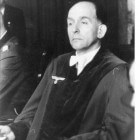
(Judge Roland Freisler condemning Hitler's attempted assassins)

Freisler, berucht nazi-rechter en het Volksgerichtshof | Kunst en ...

Wednesday, April 1, 2020

LET THE LIGHT SHINE OUT!


  My main gift is discernment (1 Cor 12:10), specifically discerning of spirits. I test all things according to the Word of God, from whose spirit it is — from God or false prophets (1 John 4:1). Like some who claim to be “smart,” I was gifted by intelligence. That was not of my own doing, but a gift from God, and it is nothing in which to have pride. Intelligence is proportional to the brain’s gray matter (the area of the folds in the brain). I had nothing to do with that; God did it all. Those with wisdom do not use their gift from God to have supremacy over others. Humble people thank God for any “smarts” they have, and do not Lord it over others.
  Intelligence is the ability to consume knowledge. Those with high IQ would have the ability to absorb information. There are two types of information: (1) truth and (2) falsehoods. Smart people easily learn both, transferring information from their environment to their brain’s gray matter. Computers can do that; so, don’t feel so special.
  “Discernment” is the sorting out of information. Discerning people, using God’s Word, sort out truth from falsehoods.  Most people cannot do that, because they stand by a “basket” that conceals the light from the candle beneath (Mark 4:21). Although intelligent, I once was that man — the one who stood by the basket without lifting it to get Light.
  What was outside the basket? Both truth and lies. That comes from the fruit of the Tree of the Knowledge of Good and Evil. Truth is goodness, and lies are evil. Outside the basket are both. The candle under the basket represents God who is Light, and it is said of Him, “For thou wilt light my candle: the Lord my God will enlighten my darkness” (Psalm 18:28). The Lord is that “candle” beneath the basket, and many stand outside the basket in spiritual darkness.
  It takes Light to discern truth in the world. For those who are not born again, there is a blinder between truth and lies. Satan is the “blinder.” He is the “father of lies” (John 8:44). Consider a basket; it is woven in different directions and often with different materials. A colorful basket has two woods interwoven. The basket of which Jesus was speaking, referred perhaps, to the two Trees of the Garden — the Tree of Life (truth) and the Tree of Knowledge (truth and falsehoods). In the dark, the “color” of neither can be discerned, but inside the basket where the candle is, the differences are easily differentiated. God provided a physical “Candle” and He Is Jesus. Satan sneaked in and covered Him with a basket so that the truth would not be known.
  One day while driving and considering God, He tipped the basket a little. Light emerged from the “candle” to which before I had been hidden, and some truth was revealed. I considered Abraham and Isaac of who Moses wrote. Suddenly, Abraham and Isaac were transformed in my mind’s eye, and I saw God the Father and God the Son. I saw “God” about to sacrifice His “Son” for my sins. With that discernment, I finally understood God, and God lifted the basket from the “candle” and revealed much more of His Light to me.
  Moses wrote about Abraham and Isaac, and also about the creation and the Law. With the “basket” lifted, I could clearly see Jesus throughout the Books of the Law that Moses wrote. The spiritual knowledge I gained from the Law increased my faith, and my child’s faith in Jesus matured. Rather than a fable which I wanted to believe, Jesus became reality, and I really believed.
  Jesus even commented on that type of transformation: “For had ye believed Moses, ye would have believed me; for he wrote of me. But if ye believe not his writings, how shall ye believe my words?” (John 5:46-47). Suddenly, with my eyes open to God’s Light, what Moses wrote increased my faith. Soon, I found it imperative to believe in a real creation because that’s what God’s do! God would not be able to regenerate if He had not generated in the first place. He could not prepare for me a room in His mansion, if He had not made for me a Paradise in the beginning! I look around at what God made, and the existence of it in its grandeur confirms my belief in God.
  Jesus confirmed my thoughts when he said, “For he that hath (Light), to him shall be given: and he that hath not, from him shall be taken even that which he hath” (Mark 4:25). When God tipped the “basket” for me to see His “candle” I received some of His Light. The truth was revealed to me about Abraham and Isaac. I saw what Isaac saw when he was about to be sacrificed. I saw the ram that God provided in my stead. I saw God providing the ram. I saw the ram as Jesus.
  What could I have done with that Light? I could have covered it fully with the basket, or I could have kicked the basket entirely away from over the candle. I chose the latter. I diligently read and re-read the Old Testament to learn more about Jesus, and with that, God has revealed much more truth to me. I now understand that the Law in its entirety is all about Jesus (John 1). True to Jesus’s Words, He provided even more Light because I had a little and used His “candle” to obtain more. My discernment is not from intelligence or smartness, but God revealed much truth to me. If I had saw that trickle of Light and turned my back, I would have received no more Light, and the little that I had, when the basket returned to its position, I would have lost what I once had.
  Again, I do have intelligence, but with a basket covering truth, what would I do with it? It would serve no purpose. The reason that God revealed Himself to me in the story of Abraham was to allow me to see Jesus’s Purpose. God put on Flesh to be the sacrifice on my behalf. It came to me, that taking God’s Name in vain, is taking Jesus’s Purpose frivolously. In fact, all the “Ten Words” written by the Finger of God points toward Jesus. I saw that when the “basket” was lifted which had concealed ultimate truth from my eyes.
  God gave me wisdom. That is the using knowledge for betterment; for good judgment. I judge what is truth and what is not by the use of God’s Word.
  What “good” comes from that? I have hope because Jesus is in God’s Plan and my future. (Mat 6:31-32). I know and understand Holy Scripture, not because I am smart, but because I discern the truth in the entire body of knowledge. There are two sets in the body of knowledge: (1) the Doctrine of God, and (2) the vain philosophies of men from the Law of Sin.
  I have studied the philosophies of men in pursuit of a graduate degree in psychology, and in my undergraduate degree in the science of engineering. While working on my master’s degree, I listened to God and read the entire Bible. I tested what I learned from what Moses wrote about God and what Jesus said about Himself.  At that time, I chose the Doctrine of God above the vain philosophies of men. I saw knowledge but God shined His Light on the truth. Suddenly I had bright eyes and a new bright nature because the Light from God’s “candle” had revealed the truth to me. I abandoned the field of psychology and adopted the study of Holy Scriptures, and the Light intensified as I became more discerning.
  What I know is by the grace of God and is not mine. Because of our fallen nature, I may have preferred to stay blind to the truth, as blindly following is usually much easier and pleasurable. I get excited with the increased understanding when I study Scripture searching for truth all the time; so excited that I want to share that depth of knowledge with others around me. To be honest, I am a zealot and my church has little use for my excited spirit, and that’s why I am writing what I am writing at this instant.
  One member told me that my knowledge of scripture intimidated others who are less knowledgeable. Perhaps that is the case. Certainly, I cannot compare myself with Jesus, but this is what Jesus’s own people thought about His firsthand knowledge:

And when he was come into his own country, he taught them in their synagogue, insomuch that they were astonished, and said, Whence hath this man this wisdom, and these mighty works? Whence then hath this man all these things? And they were offended in him. (Mat 13:54, 56b, 57a)

  The truth offends people because others don’t have the same degree of understanding. My preacher years ago was led to preach against abortion and fornication. By God’s Planning, that day a couple who cohabitated and had aborted were in church. They were offended at the truth. Their Christian parents, who were members there, were repulsed, and asked, “Why would you preach that on this day?” It was because God led the preacher to speak the truth. The couple and her parents had just put a rock on the “basket” to keep from seeing the Light of Truth from God’s candle who the preacher represented. They were “offended by the truth” just as Jesus’s own people were offended at His great wisdom.
  I know that I am not even close to the truth that Jesus spoke, but for me, I have a little truth that has intensified by reading and studying the Word. Because all of us are sub-par to “very good” as we were in the beginning, we need to be corrected of our false beliefs. That correction offends people. It offended the Jews that the Law, according to Jesus, would not save them, but He would! People still want salvation on their terms, and if it is not, they get offended.
  The truth will set us free (John 8:32). Free from what? The bondage of sin, but most people are quite content, at least until they are on their deathbed, with the candle hidden.

  As an afterthought, people have come to depend on the government for many things. The socialist slogan is, “From each according to his ability, to each according to his needs.” Jesus said, “For he that hath (Light), to him shall be given: and he that hath not, from him shall be taken even that which he hath.” That is a juxtaposition of Marx’s saying. Having the light is a spiritual ability. Rather than taking it away from those who have it, and giving it to others who have less, God gives them more ability to see the light, and takes away from those who have little. Rather than those who have much giving to those who have little, what little the latter has is given to those who have more. Perhaps socialism has it all wrong!

(photo credit: Hanna Taniukevich)

Easter straw basket decorated with a festive napkin with Easter cake and bright decorated eggs and a lit church candle. A festive treat and a peaceful mood.