Friday, January 28, 2022

GROWING AND HARVEST OF GOD'S GARDEN - Part 1

  Usually commentary is topical; a topic is selected, and scripture is searched to enlarge upon the thought. Today’s commentary will be expositional; each word will be scrutinized and expanded upon. Few understand the impact of imperative scriptures because they are not fully explored for doctrine.

  Today’s key verse is from Paul: “For to me to live is Christ, and to die is gain” (Phil 1:21). That verse does not stand alone; it has context. Just what is the topic of which Paul was speaking? For that, Paul must be understood and that is from his teaching. However, first look at the immediate context of that chapter.

  First off in scripture, words mean things, or they would not be in scripture. What Paul wrote was inspired by God or it would have remained unsaid. Because it is in scripture, therefore, it must have merit.

  Since the entire thread of scripture is amplified by, “For God so loved the world, that he gave his only begotten Son, that whosoever believeth in him should not perish, but have everlasting life” (John 3:16), then “gain” in the key verse most certainly has something to do with immortality, and at first glance, the “gain” would have something to do with perishing or not. Paul explained that as well, “In a moment, in the twinkling of an eye, at the last trump: for the trumpet shall sound, and the dead shall be raised incorruptible, and we shall be changed” (1 Cor 15:52). That change would come in stages, the last stage being the general resurrection.

  Looking at “gain,” then, should be the change — then corruptible, after death, incorruptible. Neither the flesh nor the spirit will no longer be corrupt. That is the “shall not perish” part of John 3:16.

  Peter wrote about that as well: Speaking of the resurrection, “To an inheritance incorruptible, and undefiled, and that fadeth not away, reserved in heaven for you” (1 Pet 1:4).

  Incorruptibility comes at the resurrection.  Resurrection is more than the flesh raised from the dead but a regeneration in the same manner as the generation in the beginning — in the same process that Adam was generated: “And the Lord God formed man of the dust of the ground and breathed into his nostrils the breath of life; and man became a living soul” (Gen 2:7).

  The resurrection entails the same thing — speaking of those dead in Christ, Paul wrote, “For the Lord Himself shall descend from heaven with a shout, with the Voice of the archangel, and with the trump of God: and the dead in Christ shall rise first” (1 Thes 4:16).

  The “gain” of death is what? The resurrection, or the completion of regeneration of mankind. God will again take dust from the ground just as in the beginning, and breath life unto the soul again. In the beginning, the bodily shape of the Spirit of God (Luke 3:22) breathed life unto man’s kind (Adam), and in the end the “second Adam” will come again in Body and Spirit to breath life unto the dust again.

  In effect, God planted man in the Garden of Eden, and asked that it multiply, surely for a good “crop” where none would perish in the perfect Garden. However, the Garden was corrupted, its nutrients depleted, and part burned off with the destruction of Sodom and Gomorrah, and no longer would it produce as much good crops as tares. In the end, from the Book of Revelation, God will prepare new ground for those who are resurrected.

  Had you missed the part about the Garden as a “Garden of Living Souls?” It is written, after Adam was planted in the Garden, “And the Lord God planted a garden eastward in Eden; and there he put the man whom he had formed” (Gen 2:8).  Adam was the first “Tree” that was planted, and just what was his “seed?” His living soul.

  Living can be summarized by one word and that is growing. Adam was to grow and to multiply. The Garden was to produce a crop of living souls and not a garden of corruptible tares!

  Jesus, as Matthew wrote, validated that it was a Garden all along. It was meant that none of the “crop” should perish, but much of it would: “Let both grow together until the harvest: and in the time of harvest, I will say to the reapers, ‘Gather ye together first the tares, and bind them in bundles to burn them: but gather the wheat into my barn’” (Mat 13:30).

  The “gain” of which Paul wrote was what the “Husbandman” (God) would do with the harvest. He would thresh the tares from the wheat, put the tares in bundles and burn them. However, the Husbandman would gather the wheat into His barn. His desire, however, was that none should perish and to prevent that, he would supply the perfect nourishment — His Body and Blood.

  The tares represent the unrepentant and the wheat those who repented of their wickedness and not only replanted as new seeds, but those that would grow to fruition in the dirty soil of the world, despite the lack of nourishment in the soil.

  The Husbandman had produced a Son from the original “Vine” in the Garden (John 15:1), and the Vine grew to be a mature “Husbandman” like His Father.

  Life is like a crop to be harvested, and it was to begin in the Garden. With the Garden contaminated by sin, then the vines spread unto the world with both Adam and Cain (the “Wonderer” as his name means). The “gain” of Paul points toward the harvesting of the crop.

  Just when was Paul planted? “According as He hath chosen us in Him before the foundation of the world, that we should be holy and without blame before him in love” (Ephes 1:4). Paul was chosen back before the Garden was even planted. But not only was he chosen but also even Cain! They both were selected to be living souls; and that was God’s intent for all those that He chose for His Garden.

  The fact that anyone lives in the world means that God chose their souls to have flesh to enclose their spirits. Paul was planted in the Garden of Eden as one of the symbolic “trees” of the Garden. As an immature “plant,” his name was Saul but at maturity and ready for the harvest, Saul grew into Paul, as Jesus spread His “Vine” and made the “tare” Saul “holy and without blame” as he wrote in the passage above.

  It is time to review the short key verse: “For to me to live is Christ, and to die is gain.” Paul was speaking of himself — “For me.” He was not speaking of the tares — those who had not been replanted in the world, so to speak. He was speaking of himself but not what he did himself. Jesus had made Saul holy and without blame — Jesus had covered Saul’s unholy disposition. Rather than a murderer of Christ through the killing of Christians, Saul, as Paul, would become a priest to preserve God’s “crop” that Jesus was tending.

  “For me” indicated Paul was the prototype for everyone else. You too can say that if you have been born again and remain under the “dome” of the Garden wherein there is safety.

  Jesus, responding to the inquirer Nicodemus said, “Verily, verily, I say unto thee, ‘Except a man be born again, he cannot see the kingdom of God’” (John 3:3), and for him to “Marvel not; ye must be born again” (John 3:7).

  The “birth” was not biological but spiritual. God first bore Saul and planted his soul in the Garden. You have probably not thought of this before, but your soul was made on “day one” before the firmament. As such, you were planted in the Garden along with Adam. His soul blossomed then and yours when you were “planted” in the womb of your mother and was reset just as Adam was in the beginning after he sinned (Gen 3:23). As such, you like David and Saul (Paul), were “shapen in iniquity” (Psalm 51:5), and the Husbandman came to reshape the “plant.”

  After 930 years the “plant” (Adam) withered until “it” died. But God was not through with the first of the crop. It had multiplied and many of his “shoots” might make it, or they should anyway (John 3:16). Adam was finished, not when he was created but when he matured, was replanted, and then regenerated. Jesus said, “It is finished” as He gave up the Ghost (John 19:30) when He died for Adam and His kind. Jesus died to save His Garden!

  Calvary was the place of Adam’s cranium. Jesus shed his blood on the earth below. He “fertilized” the Garden so that the crop would grow and grow it did! The first to be harvested was surely Adam: “And the graves were opened; and many bodies of the saints which slept arose, and came out of the graves after his resurrection, and went into the holy city, and appeared unto many” (Mat 27:52-53).

  Those “saints” would refer to, “the dead shall be raised incorruptible,” as Paul wrote — the firstfruits of the crop — were as was usual, when harvesting the crop.

  Those firstfruits were always given to God. Where are those who arose with Jesus today? They are in the many mansions in God’s house in Paradise! (John 14:2). That was the “gain” that Paul wrote about! That is where the harvest of living souls is taken.

  Peter explained rebirth as a replanting of the seed: “Being born again, not of corruptible seed, but of incorruptible, by the word of God, which liveth and abideth for ever” (1 Pet 1:23).

  When a garden is planted under poor conditions, some fail to grow and the vacancy must be replanted. With Adam and Eve, the entire crop failed. God replanted Adam outside the corrupted Garden and there he lived (grew) until the penalty was more obvious.

  Adam was condemned to die, and as he withered, so did the whole crop until the deluge overwatered the seedlings until all, but eight “plants,” were reset in new clean soil. Immediately one of those plants was revealed as a “tare” …Ham by name.

  So far, the message is that you and I are one of those “plants” that was seeded in the Garden of God. Plants that did not take root until we were seedlings, and as soon as we matured, “fertilization” would be required.

  “Born again” is when sinners finally recognize that the Blood of Jesus doomed Satan in Judas and also the demons in us. His Blood was to overcome the world (John 16:33). With that, those reborn are grown on the good soil that the Blood of Jesus watered with Living Waters from His belly (John 7:38).

  Christians are watered by the Holy Ghost of Jesus whose Living Water, not flowing waters, keeps us safe from the tribulations of the world. The “One Baptism” of the “One Christ” is the baptism of the Holy Ghost.

  Adam and Eve were shielded from the Devil and the world by coats of lambs’ skins. Christians are shielded from the Wicked One and the world from the “Coat” of the Lamb of God. Just as their coats were removed for intercourse in the world, so can our coats be hung up as we intercourse in our daily lives.

  Noah apparently removed his coat of flesh that he put on when he found grace (Gen 8:6). Ham, it is said in sacred literature, stole the Garment of Adam that Noah usually wore, and then Noah was left alone in the world, unsafe from the Wicked One. Christians must always wear their “coats” that scripture reveals as the whole armor of God for us to stand against the wiles of the Devil (Ephes 6:11).

  Had you not seen before that Adam’s Garment was not just an apron to protect his seed but the whole armor of God to protect himself as well? Adam and his seed would be protected, not just the seed that he would plant!

Understand this... you are part of the crop that God is growing!

(To be continued tomorrow)

(picture credit: The Telegraph;  "Garden of Weeds")

Weed Thriller: Garden of weeds takes home gold at Royal Horticultural  Society show

Monday, January 24, 2022

THE LAW: WORK OR PLEASURE?

  Most Christians often get frustrated because they are tempted to break the Commandments and often do. Moses got frustrated too because he also broke all the Commandments as if they are one.

  On the other hand, Jesus never broken any Commandments but was wrathful because His people did.

  Things were not so bad for the Israelites who were wandering in the wilderness for forty years as it had been for the Kenites (Cain’s seed) as they wandered in the world for one-hundred and twenty years. Nobody, perhaps not even his sons, worked on the Ark because nobody was willing to do that. A good guess is that Ham did very little work because he disrespected his father.

  Now, the time had come for work for the Israelites. Moses had found grace as is written:

32 And afterward all the children of Israel came nigh: and he gave them in commandment all that the Lord had spoken with him in mount Sinai. 33 And till Moses had done speaking with them, he put a vail on his face. 34 But when Moses went in before the Lord to speak with him, he took the vail off, until he came out. And he came out, and spake unto the children of Israel that which he was commanded. 35 And the children of Israel saw the face of Moses, that the skin of Moses' face shone: and Moses put the vail upon his face again, until he went in to speak with him. (Exod 34:32-35).

  In verse 35 when Moses removed his vail, they saw that he had been transfigured.

  Noah had found grace, and undoubtedly the “Garment of Adam” had been put upon him for preservation while the work was done.

  Now, in the time of Moses, the Israelites work was ready to commence. Noah had built and Ark for God and themselves for God to be with them. I submit that Lucifer was on that Ark, either in Ham or his wife, and that God was on the Ark in Melchizedek who sacred writings say carried the bones of Adam on that Ark; both him and Seth.

  By the time of Moses, the Garment of Adam had been stolen and was in possession of those of Nimrod’s line who would have used it unworthily due to lack of contrition. From there, the Garment was lost to the world.

  Rather than material fabric, God put onto the flesh of Moses spiritual “fabric.” Moses, while on the Holy Mountain had God put onto him another “fabric.” Moses put on the Holy Spirit while on the mountain and was transformed. The Israelites just like Peter, James and John would witness much the same with Jesus in apostolic times.

  Moses had been transformed for the work ahead, and why was Jesus transfigured?

29 And as He (Jesus) prayed, the fashion of his countenance was altered, and his raiment was white and glistering. 30 And, behold, there talked with him two men, which were Moses and Elias: 31 Who appeared in glory, and spake of his decease which he should accomplish at Jerusalem” (Luke 9:29-31)

  Just as Moses was about to do his work, leading them to the gate to the Garden Paradise, Moses and Elijah talked to Jesus about His work — to “accomplish,” or literally to finish. Jesus said what on the Cross as He gave up the Ghost? “It is finished” (John 19:30).

  What would happen to Jesus at the transfiguration? (1) His countenance was changed and (2) His raiment revealed the change as He radiated the Glory of God. Much like Jesus, Moses had been transfigured when he saw the back side of God, and now he could finally see the Glory in the Face of God that had been withheld from him on the Mountain of God, and even perhaps the same mountain.

  What happened to Moses when he saw the Glory of God? Before he had been a wrathful man, and after seeing the Glory of God his countenance changed to one of lovingkindness for his sinful people.

  But Jesus was never and angry man… or was He? When scripture spoke of the wrath of God, that was the wrath of pre-incarnate Jesus. Something did happen to Jesus when He was transfigured; the work ahead would be one of grace and not of wrath. Right there on the spot, Jesus fulfilled the Law, and the work was to finish the Law by grace. His work was hard work (ergon) so that ours would be ergonomic (katergazomai), to “accomplish” salvation without working.

  Wrath was removed from Jesus. He would no longer overturn the usurers’ tables at the Temple out of anger but would die for the merchants that he had scared so much.

  Moses changed as well. He was no longer a bearer of hard works, but another type of work; work that the Greeks called “katergazomai.” Paul used that same Greek word when he wrote for people to “work out their salvation” (Phil 2:12).

  When Moses was angry, the people obeyed out of fear. God to them was a wrathful God and Moses had demonstrated the same wrath when he “turned over their tables” by breaking them. (Those tablets were tables of the Will of God.)

  Then Moses went back and God wrote new tables with the same words as before. One big difference — the wrath was gone, and glory took its place. It was the same words, of the same material, by the same hand, and carried there by the same person; but the countenance of Moses had changed to be more like Jesus than the angry God that the Israelites had thought Him to be! The Spirit of the Law was all that had changed!

 Everything was the same but how Moses presented the Law. It was not really works the second time, but tables to demonstrate love for God. Speaking of loving God and others, Jesus said, “On these two commandments hang all the law and the prophets” (Mat 22:40).

  Moses returned with a new countenance; the first time as “Angryman” and the second time as “Kindman.” No longer would the exodus be about pleasing Moses but God Himself, and the second set of commandments were more about countenance than the Law.

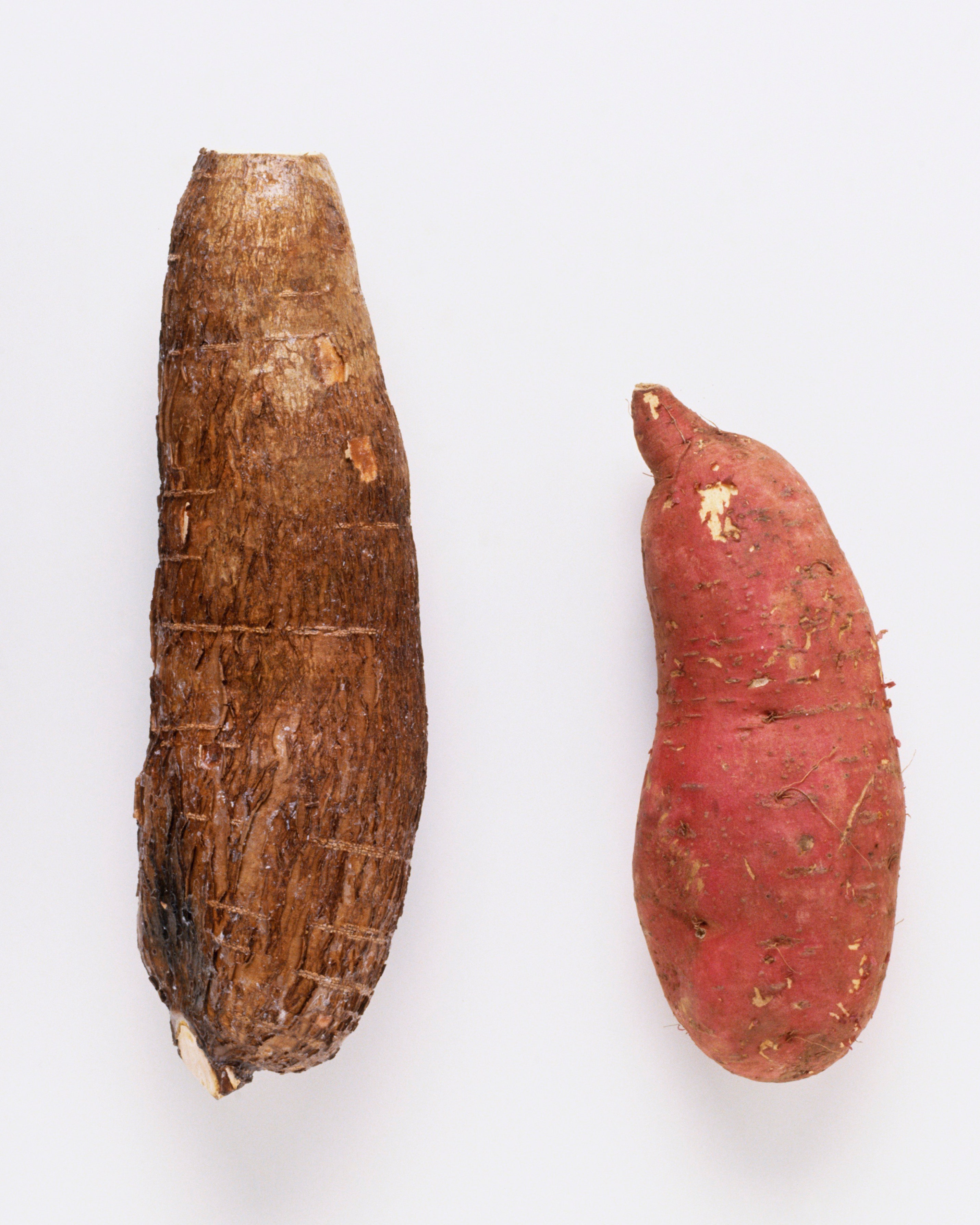
  Now consider a modern comparison: Arthur on the sitcom, “King of Queens,” confronted the merchant with a small yam that he wanted to buy. He was not just an ordinary person, he wanted what the rich would get. He asked the clerk to go in back and get a better yam, and the clerk went to the back and came back with the same yam. Arthur then praised the second potato, but unbeknownst to him, it was the same potato. Well, that was the perception of the Israelites. They finally got the better “potato,” but it was the same “potato”!

  God modified Moses and his new countenance modified the behavior of the Israelites. Moses had passed along loving kindness to them that he had received from God. The tablets were new but of the same substance. Moses was new but of the same substance. Moses had changed in Spirit and so had the tablets because Moses presented them in a different manner than the first ones.

  The same goes for the “Ten Commandments” as we still call them. It all lies in how they are presented! Theologians and preachers present them as “commandments,” but they are really the itemization of the Last Will and Testament of God to which He desires that His children ascribe.

  So, what was Joshua doing on the Holy Mountain with Moses. He was witnessing the Last Will and Testament of God. He was the “testator” to the Will and God’s Will was signed in the Name of Jesus — as Joshua ascribed to it. Jesus would probate the Will of God hundreds of years later and “sign” it in His own blood.

  All the time the Hebrews were looking at Moses (Water) they should have been looking at Joshua (Yahweh saves). All the while Campellites are looking at water, they too should be looking at Jesus in the living water of the Holy Ghost.  The “one baptism” of scripture is not the baptism of water but the Holy Ghost.

  Face it, all the while that you focused on Moses in the Book of Exodus, you missed Joshua. You might have noticed his name, but not his purpose! All the while some are focusing on the baptismal, they are missing the Spirit!

  Just as Jesus was transfigured and His countenance changed, so did Moses’ countenance. Not stopping there, the “countenance” of the Law changed as well. It went from hard work to willing work. It went from ergon to ergonomic.

  It turned out that there was no work at all in the Commands! Revering God was not work, and neither were the “thou shalt nots.” It takes no work to not do things! Even Moses had misperceived them as hard work, but God changed him. He had a change of heart, a change of mind, and even a changed flesh.

  What’s more, with his new countenance, the Israelites were transformed by God: With the new “person” of Moses, the countenance of the people change as well:

 5 Take ye from among you an offering unto the Lord: whosoever is of a willing heart, let him bring it, an offering of the Lord… 21 And they came, every one whose heart stirred him up, and every one whom his spirit made willing, and they brought the Lord's offering to the work of the tabernacle of the congregation, and for all his service, and for the holy garments. (Exod 35:21)

   What had changed among some of the Israelites? For some, perhaps most of them, God stirred up His Spirit in them. Perhaps like Jesus, some virtue left Moses for them. Their countenance changed because they saw the glory of God in the face of Moses. They saw that Moses was the “image” of God inside and no longer would they need Apis, the golden calf.

  Which “yam” are the tablets of stone for you? Are they the ones to be broken as the first tablets or are they those for perpetuity that were stored in the Ark of God until the end? And somewhere those same tablets will exist until Jesus comes again to “break” them, not only in Spirit, but in real substance.

  How do you look at the Words of God on the tablets? Are they commands that you can never accomplish or are they the conditions of the Will of God that you want to keep because you love and honor the Father and desire His Estate in heaven” It is written,  “In my Father's house are many mansions: if it were not so, I would have told you. I go to prepare a place for you” (John 14:2). That is what God Wills to us and for us!

  For Jesus, the change in His countenance was for building the invisible Church for residence in God’s “House” in another realm. For the willing Israelite workers of the exodus, they were about to build for God a temporary “House” (a Tabernacle) because their hearts had changed. It was no longer about them, but about God. No longer were the tablets of stone about their will but about the Will of God!

  Like it or not, the “Ten Words” of God remain His Will to this day. Whether they are things to be accomplished with no work, or hard work, depends on how the worker looks at them and that would depend just whose spirit is in them.

(picture credit: Bon Appetite; "Difference between a sweet potato and a yam")

What's the Difference Between a Sweet Potato and a Yam? | Bon Appétit

Sunday, January 23, 2022

REMEMBER: WITH WINE OR JUICE


  Just what is to be eaten and drank while remembering Jesus? Should we or should we not drink wine? Is there evidence either way? Let is see.

  Christians to this day are called “Nazarenes” in scripture because of scripture, “And when He was come into Jerusalem, all the city was moved, saying, ‘Who is this?’ And the multitude said, ‘This is Jesus the prophet of Nazareth of Galilee’” (Mat 21:10-11). 

  Of course, Jesus was born in Bethlehem, not Nazareth but He was from Nazareth. Also, it is written, “Philip findeth Nathanael, and saith unto him, ‘We have found him, of whom Moses in the law, and the prophets, did write, Jesus of Nazareth, the son of Joseph’” (John 1:45).

  The obvious question is where did Moses write about Jesus of Nazareth? Credit is given to Moses for writing the Torah but not the account of his death which was written by Joshua. Hence, the Torah (Pentateuch) is all about Jesus of Nazareth, but it did not end there. What the prophets wrote is also all about Jesus of Nazareth.

  It came to me one day that the Old Testament, just as the New, is all about Jesus and wherever I looked, like Philip, I find Jesus right there along with Moses and the prophets. The Old Testament would be better named “Finding Jesus in the Word” since Jesus is the “Word” of God (John 1-3,14). Moses and the prophets wrote the Word, and wherever “Word” is used that is Jesus speaking.

  God is not three beings, nor even technically, three “persons.” Jesus is the One Person of God with the Personality of God. Jesus is the material substance of the One True God. His other two “substances” are Spirit and Truth, the latter being the Word from the Mind of God. Jesus is not a separate Being nor another “God.” He IS the I AM (Existence) manifested to mankind.

  When Moses spoke to God, the Words returned to him were audible Truth and was the Voice of Jesus. The God who walked in the Garden of Eden had a Voice and spoke Words. Moses was not there but while on the Holy Mountain, “Jesus” revealed the story of His kind.

  One of many places that Moses wrote of Jesus was in the Book of Exodus chapter thirty-four. Today, the focus is on this passage: The key verse, “Thou shalt not offer the blood of my sacrifice with leaven; neither shall the sacrifice of the feast of the Passover be left unto the morning” (Exod 34:25).

  Passover was when death “passed over” the first-born sons of the Jews who used the blood of the lamb on their doorposts and lintels of their homes in Egypt. The Angel of Death recognized the blood of propitiation as sufficient for preservation of those within the walls of the homes.

  The “Angel” was the Messenger of God who was the very Presence of God in Spirit. Again, never separate the substances of God; that was Jesus who passed over the Israelites because fresh blood still warm from lambs was recognized as a sufficient sacrifice.  In other words, the Passover was all about Jesus and the Blood that He would propitiate at the Passover on April 3, 33 AD.

  Paul recalled the conversation that Moses had with God during the exodus: “Whom God hath set forth to be a propitiation through faith in his blood, to declare his righteousness for the remission of sins that are past, through the forbearance of God” (Rom 3:25). It seems that it is our past sins, and it does include all of us, but specifically it was forbearance… when Jesus bore the sins of the Israelites all along and specially at all the previous Passovers after that first one in Egypt.

  That shalt not compares well with the Third Commandment: “Thou shalt not take the Name of the Lord thy God in vain” (Exod 20:7). That is not saying the Name of the LORD GOD, but “taking” it in vain, or frivolously. Taking His Blood and Body unworthily is vanity.

  The Mosaic Covenant can be condensed to one idea: “In all places where I record my Name, I will come unto thee, and I will bless thee” (Exod34:24); then God revealed where His Name would be recorded in blood in verse twenty-five.

  God was speaking to Moses. His Voice was the audible manifestation of Jesus. He had no Flesh yet, but Jesus was still Jesus!

  God (in verse 24) spoke of His Name. Scripture revealed the Name long after — that He is called “Jesus” and “God With Us” (Emmanuel). God recorded His Name in the Third Commandment and He recorded it in Blood at the crucifixion. The propitiation of His Blood on Calvary bore record of the sins of man and grace for sins past, including those of Moses, Aaron, and the Israelites.

  Who was there all the time bearing record of the Acts of God with Moses? Joshua bore witness to the Commandments, God on the Holy Mountain, and God in the Tabernacle. Joshua’s name is “Jesus” in another form. Not that Jesus was Joshua, but he was the name that bore record, and he really did so after Moses died. He bore record of Moses, and long after, Moses was there on the Holy Mountain of God again, seeing the namesake of Joshua.

  He had seen the backside of Jesus and there on the Mount of Transfiguration, he finally saw the Face of God on the Body of Jesus.

  A good guess is that Joshua and Jesus looked alike, and that Joshua, just as Adam, was the Image of God in Person!

  Now review the key verse: “Thou shalt not offer the blood of my sacrifice with leaven; neither shall the sacrifice of the feast of the Passover be left unto the morning.”

  There is much significance in that one verse: First, the Passover could not wait until morning, and Jesus’s death was the last evening of the Passover before morning. The death of Jesus was the “Angel of Death” passing over the Israelites, but not only for their past sins but those of all mankind.

  When Jesus passed over Egypt, if the Egyptians had put the blood on their lintels in faith as the Israelites did, they too would have been passed over. They would have been Israelites inwardly.

  When the Father sacrificed His own Flesh, the Death Angel passed over those who were Jews but also those who were Jews inwardly (Rom 2:29), which would make the Gentiles God’s chosen and peculiar people just like the ancient Israelites that He passed over (Deut 14:2; 1 Pet 2:9).

  Hence, the key verse is a picture (forbearance) of the sacrifice of God’s own Flesh.

  Jesus would be the final Passover sacrifice. That was what Moses wrote and what God was talking about!

  The shalt not there is in the offering. The offering was to be pure blood not contaminated by leaven. Leavening in the Hebrew is chometz and means “risen.” Chometz of wine is not yeast as in bread but any foreign substance that would make the wine ferment like some sugar-eating fungus. Therefore, juice is “leavened” by fungi to make wine (Blech, Rabbi Zusche Josef; www.kashrut.com; “Bread… And Wine and Beer”).

  With that explained, Judas sopped his bread in the “fruit of the vine” at the Last Supper. At the Last Supper, Jesus referred not to “wine” but the “fruit of the vine” (Mat 26:39). The other apostles took the unleavened bread and fruit juice separately and only Judas sopped.

  Because the bread and juice were symbolic of the Body and Blood of Jesus, to sop would have been to put the “blood” on the “body” of Jesus which Judas would do with his betrayal.

  Partaking of the juice and bread must be done appropriately. Paul wrote about remembering the Name of God: “Wherefore whosoever shall eat this bread, and drink this cup of the Lord, unworthily, shall be guilty of the Body and Blood of the Lord” (1 Cor 11:17).

  Just what is unworthily? As Judas did! He sopped but that was not all; he was ready to betray Jesus. Great care must be taken with the Body and Blood of Jesus, and the Catholic doctrine of transubstantiation is unworthiness.

  Judas took the “Blood” of Jesus with “leaven” so to speak. He caused the Body of Jesus to “leaven” — to rise into the heaven. He also contaminated the “blood” of the Savior with His “Body” by sopping the two together.

  Judas leavened the juice with an added substance and God forewarned Moses of that. It would be taking the Lord’s Name in vain as Judas would do long after, and it would be what billions of people do when they fail to remember the Blood of Christ that was shed for them and take the elements frivolously. Moses was told that that was coming!

  Unleavened bread was eaten at the Last Supper. Why would they use fruit of the vine that was leavened? They would not have. With that said, when offered wine at a service in remembrance of Jesus, I refuse it because it is leavened. That was a serious offense to God in the time of Moses and it remains so to this day by taking the elements unworthily.

  There is no record of Jesus drinking wine. He drank nothing at the Last Supper; he merely passed His Virtue on to the others, and only Judas corrupted what Jesus provided.

  Now back to Jesus of Nazareth. He is THE true “Nazarene,” and like John who neither ate bread nor drank wine, the evidence is that Jesus was not only a Nazarene from Galilee but a Nazarite from birth. So, what is a Nazarite?

1 And the Lord spake unto Moses, saying, 2 “Speak unto the children of Israel, and say unto them, ‘When either man or woman shall separate themselves to vow a vow of a Nazarite, to separate themselves unto the Lord: 3 He shall separate himself from wine and strong drink, and shall drink no vinegar of wine, or vinegar of strong drink, neither shall he drink any liquor of grapes, nor eat moist grapes, or dried. 4 All the days of his separation shall he eat nothing that is made of the vine tree, from the kernels even to the husk. 5 All the days of the vow of his separation there shall no razor come upon his head: until the days be fulfilled, in the which he separateth himself unto the Lord, he shall be holy, and shall let the locks of the hair of his head grow. 6 All the days that he separateth himself unto the Lord he shall come at no dead body. 7 He shall not make himself unclean for his father, or for his mother, for his brother, or for his sister, when they die: because the consecration of his God is upon his head. 8 All the days of his separation he is holy unto the Lord.’” (Num 6:1-8)

  Note that Jesus did not even eat at “His” Last Supper. It was not even His supper as supper had ended long before (John 13:2)! It turned out that it was Judas’s last supper before he hanged himself. It was his last supper because he betrayed Jesus and took the Body and Blood of the Savior unworthily.

  Jesus ate no bread and drank nothing from the vine, The Nazarite, during his separation from the world could drink neither the fruit of the vine nor partake of wine. Jesus did neither at the Last Supper, and neither should Christians.

  Jesus was not just a Nazarite but one from birth like Samson, but where Samson failed, Jesus succeeded. If he ate bread or drank juice before is unclear but He certainly did not when He was finishing His separation from the world during the Passover.

  Someone tried to make Jesus unworthy! On the Way to His death, “They gave him vinegar to drink mingled with gall: and when he had tasted thereof, he would not drink” (Mat 27:34).  Vinegar is fermented juice. He, as thirsty as He was, would not break the Nazarite vow.

  The Roman soldiers would drink sour wine and vinegar mixed. That was offered to Jesus, and He refused because He was surely a Nazarite who was separated from the world from birth.

  The gall that was mingled with it was wormwood, a poisonous species of ornamental plant. If he drank the juice of wormwood, that too would have violated the vow of the Nazarite, and rather than shed blood, he would have been poisoned without doing so.

  Jesus recognized that men and women would drink wine even to insobriety and that could make them vulnerable for the Devil to devour (1 Pet 5:8). It is not the wine per se that is the problem but too much wine. While remembering Jesus, any wine is too much wine. Jesus would not even drink the juice, but we can do that because we are not Nazarites.

  On the other hand, it is still God’s will that, “Thou shalt not offer the blood of my sacrifice with leaven” and that is specific to the “Blood” of the “Body” of Jesus while commemorating Him.

(picture credit: Pedestrian TV; "Holy Grail")

Spanish Historians Reckon They've Found The Actual Holy Grail