Showing posts with label anger. Show all posts

Wednesday, April 16, 2025

EAT AND DRINK: WHO DO YOU SEE?

After leaving the land of Sin during the exodus from Egypt, the Israelites became thirsty for there was no water to drink.

The people blamed Moses who they believed sought to thirst them to death. Apparently, by then they neither trusted God nor Moses, possibly thinking that Moses was more Egyptian royalty than the spokesman of God.

Moses asked for God to intervene before he himself was stoned by the Israelites. God had a plan and revealed it to Moses: 

Go on before the people and take with you of the elders of Israel; and your rod, wherewith you smote the river, take in your hand, and go. Behold, I will stand before you there upon the rock in Horeb; and you shall smite the rock, and there shall come water out of it that the people may drink. And Moses did so in the sight of the elders of Israel. (Exod 17:5-6) 

Moses did not perform to standards but by grace God delivered water from a rock anyway.


Above is a picture of what is believed to be the rock from which the water flowed.

What has that got to do with anything? It is a foreshadowing of Jesus. You see a dry rock while I see the Image of Jesus. You see dry ground; I see a stream!

Paul wrote to the brothers at Corinth about that same event, “And did all drink the same spiritual drink: for they drank of that spiritual Rock that followed them: and that Rock was Christ” (1 Cor 10:4).

Now can you see Christ Jesus in the rock? Squint tightly. I see invisible water flowing from the crevice of that rock. I see a stream flowing down the mound of stones. 

Jesus, when He had cried again with a loud voice, yielded up the ghost, and, behold, the veil of the temple was rent in twain from the top to the bottom; and the earth did quake, and the rocks rent; and the graves were opened; and many bodies of the saints which slept arose, and came out of the graves after His resurrection, and went into the holy city, and appeared unto many. (Mat 17:50-53) 

When Jesus died, what flowed from the rent rocks? Living water from the belly of Jesus (John 7:38). When “One of the soldiers with a spear pierced his side and forthwith came there out blood and water” (John 19:34). Then the blood and water flowed through the crevice on Calvary after the quake. God had again split the “Rock” to make the water flow!

What happened when the rock split on Calvary? The dead arose. What happened when God split the rock shown in the picture? The Israelites lived. In both cases it was the living water of God that prevented death, in the first instance, so that the Israelites could live and in the latter case, so that none should perish (John 3:16).

Now look at the rock again. The water is no longer there but neither are dead bodies. Jesus stood before Moses; it was not living water from Moses but from the invisible belly of Jesus.

What did the Jews at the crucifixion miss? That Living Water came from the belly of Jesus, not from Moses. What did the Israelites miss during the exodus? That the water that gave life did not come from Moses but from pre-incarnate Jesus. Jesus has been with them since ancient times, but they failed to see Him.

Even Christians miss Jesus in all respects. When they are nourished, they see food provided by their own hands, but when I eat, I see Jesus feeding me because all things proceed from Him.


Wednesday, September 4, 2024

THE REBELIOUS CHILD: THE IMPERFECT PARENT

Rebirth (i.e., “born again”) is to make a new creature in Christ, to wit: “If any man be in Christ, he is a new creature: old things are passed away; behold, all things are become new” (2 Cor 5:17).

The “old creature” is one like Satan. He is pompous like Lucifer (Isa 14:12) who according to Webster is seeing himself as irritatingly grand, deluded with self-importance.

Never challenge anyone’s perception of themselves because they enjoy their insanity.

When I look in the mirror and compare myself to others, it is humbling; I am a “nobody” except for Jesus, and to Satan, I would be a “nobody” not worth the time it would take to come to me.

Job was an important leader and wealthy man. Satan came to him because Job was an important tall, tall man; in a tall, tall land, as the lyric to the song goes in the theme song of Naked Archeology.

Part of rebirth is to humble ourselves and let the Lord lift us up (Jas 4:10). We are to rid ourselves of pomp — that irritating self-aggrandizement as if we are important in the world. The world has no use for us. We are mere tools for Satan, thusly fools!

By now, you may be irritated. I do want to get under your skin, so to speak. I want you to self-examine yourself to do a moral inventory of just who you are. You may say that you are “in Christ” as a Christian, but even the demons believe in Christ (Jas 2:9). So, do you believe in Christ in the manner of demons or in the manner of righteousness?

The evidence is that so many Christians show no evidence of being in Christ. Sure, they believe in Jesus, and that He is God in the flesh, but they behave more like the demons. That type of “Christian” has a high opinion of himself; only his viewpoint is valid, and in their view, they can arrogantly sin with impunity, and if they are called out, anger, or vengeance, ensues. An angry person gets so wrathful that he must get vengeance, usually hating the challenger to his pedestal. Not just mildly angry, but angry, angry — wrathful — extremely angry. Maybe so angry that the wish is that someone is dead… “Whosoever hates his brother is a murderer: and you know that no murderer has eternal life abiding in him” (1 John 3:15).

It is not that a wrathful person hates the person but hates the standards of another person. Kids say, “I hate your guts,” but what they mean is they hate who you are within. They hate your authority, and as such, they are little rebels who want the parent to console all the while setting no expectations for them.

Parents expect their children to respect them. So many do not deserve respect and to think we do is arrogant. The commandment is to “Honor your father and your mother: that your days may be long upon the land which the Lord your God gave you” (Exod 20:12).

The biggest rival for anybody is their own father and mother because they have authority over you; they are responsible for your well being — to live a long life here and in heaven. It is the parent who sets the example and exerts authority over you much of your life, so what do they get in return for doing their job responsibilities? Often it is hostility. No maverick likes to be broken, and the reborn child is like a wild stallion that objects to anything on their backs.

Therefore, the natural response of the new creature in Christ is to buck both the standards of Christ and the parents. It is as if the parents have sharp spurs in their maverick child, and it is hard for them to “kick against the pricks” (Acts 9:5). It is hard for the new creature to fight against authority. In other words, rather than giving into those who seem to “gig” them, they find it difficult to accept authority. Mavericks must become docile, and sometimes the reigns must be pulled hard and the spurs gouged in. That is a tough thing for the new creature to accept and for the parent to do.

Indeed, it takes much conditioning to tame maverick ponies. They don’t like it and buck every chance they get. They have been free range so long that any type of cajoling or even corralling may make them mean-spirited. Only after they are tamed are they content being loved and nourished.  

It takes time and persistence to tame the wild beasts that we are. Why would parents take the time to tame their little beasts? Because they were once “beasts” themselves and know that the relationship is much better when the father and son bond. If they cannot submit to the father here, would it be likely that they would submit to the Father in heaven? The ability to submit to those who love you is the humility that is required to submit to God above to even be born again. If a child never submits to the wisdom of the parents, would it be likely they submit to the wisdom of God?

A bucking bronco can be detected by its actions. A bronco is an unbroken or partially broken horse that was once free range. It can be detected by what? Its bucking the one who has authority — the one with the reins.

True, the authority must be gentle or for certain the bronco will buck, but oftentimes the wildness in the horse is persistence, and it just will not relent.

That is the situation in which people have with those they love; they hate to see them still wild and sometimes it is hard for them to kick against the pricks as well.

Broncos buck because they want to remain free range; they buck not because they hate the cowboy, but because the cowboy is on their backs. Humans are no different until the bronco comes to understand somehow that the man on the back is the man who loves them so.

Paul found out that it was hard for him because he did not understand the love of Jesus. Children often never come to understand the love of a parent. They have the responsibility of doing the hard things! It is not a fighting match for them but a way of demonstrating love. Parents who do not do the hard things are parents of mavericks all their lives. Children must be broken young before they are able to kick too hard.

Broncos can be forgiven. They are only protecting the freedom that they have always known, not understanding that there are advantages in being tamed. They get love and care all their days, just like the command implies, so that they live a long life. Why would parents not want rebellious sons and daughters? Because they want them to have a long and productive life. Just look at how untamed children turn out; many are dying of drug usage as they seek dominion in the world of Satan.

Parents admit failure when they allow authorities to control their maverick children using drugs. Parents have failed when their children depend on drugs for comfort and solace. Drug usage is as much a parenting problem as it is a user problem. Humble parents should admit that the usual case of drug usage is due to the laxity of parents that allow their little “ponies” to much free-range to ever break. If parents wait to long, it is hard for their big broncos to kick against the pricks.

What do broncos do? They buck in anger. They will flail about like a squeezed fish seeking comforting waters.

If you think a maverick is broken, you may still have a bronco that seems to be broken but wildness remains their main stay. They may be kept in a barn or corral, but their hearts are still free-range. Many rebellious children do not understand that they have never all the way submitted to their parents nor to their God. They claim both, then buck them both; It is hard for them to kick against the pricks of those in authority. If a child does not respect the parent, chances are he will not respect God.

To be a new creature requires change. The evidence that you are a child of God is a changed nature. Paul gave Christians standards of compliance for a self-check:


But now you also put off all these: anger, wrath, malice, blasphemy, filthy communication out of your mouth. (Col 3:8)


So, how are you and God getting along? It is measured by how things are going with you and others! Are you an “angry man” rather than a tall, tall upright man? Are you so angry that you seem crazed to others? Do you seem to hate those who you are called to love? Does your behavior put off God? Do filthy words come forth when you are upset? If the answer to any of those is that you still do those things, then you are not in Christ, meaning that you remain an old, wild creature into yourself. That blasphemes God because it makes you, the “bucking bronco,” the real god.

It is so easy to put off filthy communication but those not in Christ cannot just keep their mouths closed long enough to bridle their tongues. The first thing a cowboy does is bridle the bronco before getting on its back. Otherwise, it will whinny and go wherever it wants to go, and nobody controls it. In a sense, a bronco, if it still bucks, is its own master.

You may feel insulted and even angry by now. Many of you Christians still curse and say filthy things. When you talk, you speak what is on your minds. You are still a wild beast inside, all the while acting the part of a tamed child of God.

What need you do to control your filthy mouths? Keep the tongue bridled, and the best way to do that is to keep the teeth firmly clinched and the mouth closed. The easiest thing a Christian can do if they are truly a Christian is to keep the mouth closed. That requires no work at all but people still some are unable to do that! It is a horrible thing; from the same mouth to say filthy things that is used to praise God.

My young friend once said the sh-word. Her twin sister said, “Wanda, I wouldn’t have that in my mouth.” They were both Christians and one could not control her own tongue because she had not been fully broken!

One time long ago, maybe many times, God saw what His creatures were up to:


The Lord looked down from heaven upon the children of men, to see if there were any that did understand, and seek God. They are all gone aside, they are all together become filthy: there is none that does good, no, not one. (Psalm 14:2-3)


So, you think you are doing good by just claiming Christ? You think that you are without sin as you expect others to think and do as you do? Do you think that it is you that is the last word?

The Lord sees who you are! “There is none that does good, no, not one!” You are not important to anyone unless you are a new and improved you; the one that is tamed by the Power of God. You are the free-range bronco that now has the Holy Ghost astraddle you and are joyful about that. If so, you are tamed. If you cannot take daddy on your back, then it is blasphemy to imply that the Holy Ghost can ride you in peace!


They are all gone out of the way, they are together become unprofitable; there is none that does good, no, not one. Their throat is an open sepulchre; with their tongues they have used deceit; the poison of asps is under their lips: Whose mouth is full of cursing and bitterness. (Rom 3:12-14)


Those who still live in sin (iniquity) are wild, untamed “beasts.” They lie, even about the simplest things, and they are deceptive like the “Serpent” of long ago. Those who express anger mouth off.

Cursing and wrath does not make for a good and rational argument. Those who resort to the bestiality of the Devil are providing evidence that their argument is in vain. Christians would respond to dissension with patience and reasonable words; and only children still of the Devil would curse and be bitter.

Would you go to a doctor with a valid malady if you knew his response would be vile? No, you would expect the good doctor to be reasonable and reassuring. He would not offer anger and vile talk but a proven remedy. Anger and hostility are the absence of any proof. It is the last resort for those who have no reason left in them; their bronco is showing, and it needs more corralling and a little more spurring.

With that said, parents, children, and everybody should consider this commentary. If a parent spurs with too great intensity, it destroys the horse. We too must measure the words that we use because we all have sinned.

The commandment is not for just parents that are pure and righteous, but for parents who fail as well. If a child cannot respect a parent nor the parent respect the child, then the bond is broken, and the broken bond cannot be bonded again.

When I was training my teenagers, they all at one time said, " I hate you!" Later in life all three told me, "Thank you for bringing me up right." It was a tough ride for both me and them. Sometimes I fell off the broncos and sometimes they flailed until they failed. Hopefully, they all, even me, will be tamed by the Authority in Heaven, but before you can get into Ok Corral, we all must submit while we are here. 

Picture credit; The Daily Iowan

Tuesday, August 20, 2024

USE OF SCRIPTURE AS FIERY DARTS

What is the purpose of scripture? What IS scripture? Scripture is simply “written things” (Strong 2006). It is known from 2 Timothy 3:15 that the reference is about “holy scripture,” or holy written things. At the time that was written, the main extant holy writings were in the Old Testament: the Law, the wisdom literature, the psalms, and the prophetic writings.

The gospels were not written by the time of that letter that Paul wrote to Timothy (below). The “gospels” were at best, the same decade as the Pauline letters. The holy gospels were of two types: (1) the synoptic gospels of Matthew, Mark, and Luke; and (2) the gospel of John that is unlike any of the others, going back to the Word in the beginning.

Mark wrote about the gospel:

The beginning of the gospel of Jesus Christ, the Son of God; as it is written in the prophets, “Behold, I send My messenger before your face, which shall prepare thy way before you.” (Mark 1:1-2) 

The gospel is the account of the life and times of Jesus Christ as previewed in holy scripture; specifically in Malachi 3:1. Mark referred to the scripture that was the reference for what he was about to write; so technically, the prophetic scripture is the beginning of the gospel, and indeed, the prophetic books are mostly about Jesus. With that said, the prophetic books are part of the gospel.

The “gospel” is the English word for “euangelion” — “a good message” (ibid). According to Mark that good message begins with the activities of John the Baptist, which is found in the gospels, who was preparing the Way for the Good Messenger, Jesus (Mark 1:3).

The gospels are, therefore, the writings about both John’s preparation for Jesus and the Words of Jesus Himself.

As you can see, the simple answer is that the gospels are the written Words and actions of Jesus and about Him.

The gospel is all about Jesus, but Paul wrote about Jesus too! Paul’s words made him the new messenger in the absence of Jesus, so since he was given authority by Jesus and the other apostles, Paul’s writings are “canon” as well, meaning that they are “an authoritative list of books accepted as Holy Scripture” (Merriam-Webster 2023).

Note that the scribes did not carry around the writings of the gospels nor the letters of Paul and the others. Hence, the “holy writings” were the Law, the prophets, and the ancillary books of the Old Testament.

Paul wrote to Timothy about those holy writings:

All scripture is given by inspiration of God, and is profitable for doctrine, for reproof, for correction, for instruction in righteousness: That the man of God may be perfect, thoroughly furnished unto all good works. (2 Tim 3:16-17)

God inspired the prophets of old to write their prophecies. Those prophecies were, according to Mark, about the life and times of Jesus that would come to pass. Therefore, the gospels are validation of the Word of God written down by the prophets.

What is missed is that all the patriarchs of the Old Testament: Noah, Abraham, Isaac, Jacob, Moses, Joshua, David et al were, as well as the major and minor prophets, in that God spoke truths to them.  

For instance, David wrote psalms about the coming of the Lord God in the flesh. God gave him insight about the coming of the Lord — the gospel Messenger — long before the gospel writers set down their quills. Hence, overall, the gospels are the subject matter about Jesus both before and after His coming, if one uses the Bible as their “dictionary.”

God inspired the writers of the Old Testament. The words written in that book are the Word of God. John validated the authenticity of that when he wrote that the Word was there in the beginning and is Jesus (John 1:1-14). John saw the gospel message a little differently than Mark and perhaps the others. He saw that the Word began not with the advent of John the Baptist, but with the first Adam (man) that we have named “Adam.”  They didn’t even argue about their differences!

Since Jesus is the “last Adam” (1 Cor 15:45), the inspired Word of God is the gospel, and it began in the beginning. Jesus was the “quickening spirit” of the book of Genesis who, according to John, made all things.

The gospel story did not begin with John the Baptist who paved the way for Jesus, as Mark wrote, but John got it right. He was not “synoptic” with the other three.

John truly saw that the gospel story began with the Creation. Since Jesus was glorified at His death (John 7:39), then He returned to the original state in which man was made — He was the very Image of God as another Adam. Jesus was there in the beginning in “phantom” (that “quickening spirit;” selem in the Hebrew).

The gospel is all about Jesus from the beginning to the ending. It is Him that is the “alpha and omega” (Rev 1:8) — the aleph and the tav in the Hebrew (the Hebrew hieroglyphs for the ox and the cross which I believe is the life and the death).

So, what is the gospel? It is the Message from God throughout time.

Where is it in Genesis? It is God giving life in the beginning; it is God saving life after the two Adamah sinned (Gen 3). The Lord God who made Adam and Eve coats of skin and clothed them (Gen 3:21) was about the preservation of mankind; the very “gospel message.”

What I am leading to is that oftentimes there is no simple answer to what seems simple questions. I believe that the gospel message includes the Old Testament, and both Mark and John saw it that way as well.

The problem is that theologians call only the first four books of the New Testament “gospels.” Most people miss that the gospels began when the Word made Adam and the woman glorious in the very Image of God. All scripture is from people inspired by God with that message from the beginning of time.

Scripture, according to Paul’s letter “is profitable for doctrine, for reproof, for correction, for instruction in righteousness.”

“Doctrine” is the Message from those inspired from God.

“Reproof” is the evidence for the message and the Messenger. The Old Testament proves the things to come came from God because the prophets got it all right.

“Correction” is to make upright again. It is lifting-up, not putting down.

“Instruction” is nurturing in righteousness, not by diminishing those who are learning, but guiding them by the hand, so to speak to understand what is right — what is acceptable to God.

Note that within those uses for scripture nothing is said about judging others or putting them down. It is about exalting God and others, especially other Christians, because they (me included) have Christ in them. Why set out to destroy others who have Christ in them? Why destroy even your enemies who you should want to have Christ in them?

Each day, I write a commentary about what I have learned from the Spirit of God. Hopefully it is God that inspires me with His Word.

Sometimes I may err; perhaps often. God corrects me when I do when I discover more in the gospel story. Because I was “born again” does not mean that I became a “know-it-all” but one seeking the gospel truth about Jesus, and it begins in the beginning. Why so? Because what was “finished” on the cross (John 19:3) was numerous things, but one of them was the gospel about the truth about Jesus; that He indeed is God in the flesh.

The gospel story did not begin with John the Baptist, but with “In the beginning God created the heaven and the earth” (Gen 1:1). Technically, that is the beginning of the gospel, and it was proven at the Crucifixion and validated at the Resurrection.

Hopefully, you understand that I understand the gospel. That is my insight about the “full gospel” story.

Abraham was in Paradise because he knew and trusted Jesus long before the gospel writers were ever born (Luke 16)!

The entire Bible is, in a sense, the gospel story because it too prepared the Way for Jesus. Mark did get it right because he understood the Old Testament, but John even had more insight from God who knew that the gospel began at the beginning, not just with Malachai.

I write this with a heavy heart. I intend not to be denominational nor even ideological. My aim is not to offend anyone, nor do I desire to cut God short. I endeavor to present the message of the gospels and know that I am not perfect.  I will, and do, err at times and God corrects me. Whether you believe what I write is none of my business but the business of God. I write… God persuades (Acts 8:13) in the manner of Paul who said right things and God changed them.

What is scripture for? To present the gospel — the beginning and the ending of the truth about Jesus which indeed should be the “Good News” given that Jesus is the Source of the Virtue emanating from God.

That is the gospel; and there is no simple answer. It is the “gospel” as I understand it. If you are looking for Webster’s definition; that is his insight. If you understand it differently; that is your insight, but insight must not incite.

Many approach the Word as ammunition to “shoot” their grudges against each others. For some reason, some Christians, maybe many of them, must be right about all things and they even parse each word from the keyboard of others to find some technicality.

For myself, I can always express myself better but often do not. Some assumption must be made about the intelligence of the recipient. With children, every word must be literal, or they use it against the parent. So many Christians are like the little children in that they look for error in the ways of others.

The gospel is not a bully pulpit to put others down; it is to lift them up to the truth.

The gospel is not about catching the error of others but your own! “He that is without sin (error) among you, let him first cast a stone” (John 8:7) and nobody did so.

The gospel is not about slinging fiery darts at others; that is the vocation of the Devil.

The gospel is not about shutting anyone down but lifting them up to the standard of Jesus.

The gospel is not for warring but for making peace.

The gospel is not for destruction of others but for the salvation of their souls. You cannot argue a person into heaven; love is what persuades them!

Denominations came about, not because of different scripture, but because people understand the gospel differently. We cannot all be right! Each church errs on many points whereas the gospel is without error. It is us that may be messed up, not God.

The gospel intent is to love God and one another. It is not to diminish God and each other.

Some Christians are like Satan himself; just waiting on others to pass by and out of their own little world, and then fire scripture at them like Satan fires his fiery darts.

Theological arguments make Christians the adversaries of each other. Argumentative Christians become useful tools of Satan, and they are adversaries on his behalf. They are much like the early church and the inquisition — if you do not believe as I do, then you are dead!

I feel threatened when somebody comes at me with a gun or other weapon. I feel more threatened when someone comes at me with scripture. They are not going to convert me because I am already persuaded, so since they cannot harm that; they try to harm me.

When at odds with one another the worst weapon is one of destruction. Their “Greek fire” is using the gospel message to burn down the fortitude of another Christian. They fire scripture as if it is a rapid-firing automatic weapon to be aimed straightly at the forehead at the brain.

The message sent to me from so many is that I am smarter than you! Indeed, you probably are but I make not claim to smartness, it is not me, or as the song goes, “yet not I, but through Christ in me.”

We are to love one another. Oftentimes, I sense an attack on me operationalized by some other Christian. Sensing an attack, I get defensive and try to respond in a humble way that will keep the peace. Humility reveals my underbelly, and they take that for as soft spot to shoot.

I do wish I knew it all but only Jesus was the only man that knew all things. If I pretend that I know it all, then I am pretending to be Jesus in the same manner as Lucifer who was cleverly the “Serpent” within.

Since so many seem to know it all, then why read any more scripture? It is because none of us know the Thoughts of God and never will fully know what God is thinking. Do not ask me cunning questions to shut me down; ask God outright questions to left you up out of your arrogance.

I try not to be mean, but sometimes Christiam must defend themselves from both the barbs of the wicked ones and prideful Christians.

“Humble yourselves in the sight of the Lord, and He shall lift you up” (Jas 4:10).

I can be wrong and often I am wrong. God is never wrong; it is us who get it wrong.

If you genuinely seek an answer, please ask. If you want verbal warfare, please refrain. That is not the nature of us Christians to always be right in all things.


Saturday, July 27, 2024

VICARIOUSLY DRIVING NAILS

Those who rationalize “cause something to seem reasonable” (Merriam-Webster 2023). Rationalization is not a cause but is seemingly so. It is a figment of the imagination. It seems reasonable but it is not; it is a biased opinion about one’s own actions.

For instance, the attempted assassin of Donald Trump surely thought it was reasonable to shoot the former president for some unknown cause. The assassination attempt was the effect (or action) of some unknown cause that seemed reasonable to the shooter. Perhaps he really did believe that Trump was a threat to democracy; after all, according to Aldous Huxley in Brave New World, thousands of repetitions make one truth.

The media had repeated even millions of times that Trump was a threat to democracy without even naming how so! “Repetition” was the means to kill Trump to prevent him from destroying their skewed version of democracy.

What is the truth? Trump is patriotic and does want America to be better again. He has demonstrated that when he was president before.

However, this is not a commentary about politics. It is about people like Thomas Matthew Crooks who thought it was reasonable to murder a man just because so many do not like the man.

Crooks indeed was an extreme example of Trump Derangement Syndrome. Crooks was the deranged one because he could not live with the man with whom he disagreed so intesnely. He thought it worth giving his own life so that Trump was silenced. Hos death even meant that never again would he need to see nor hear Donald Trump ever again. He was so agitated with his enemy that he did something irrational. Who was hurt the most? Crooks himself who died because his imagination led him places that were unreasonable.

Was shooting Trump worth the latter’s silence? Even with Trump dead, the movement would still live on and perhaps with even more enthusiasm. Shooting at the former president was an irrational act that the shooter thought a reasonable thing. His mind was apparently so deranged that it was worth dying for it to cease the agitation it was experiencing.

Most of us would never even think of shooting someone else for various reasons. However, many vicariously murder others. How so? They experience or realize “through imaginative or sympathetic participation in the experience of another” (ibid).

Many Americans wanted Trump dead. They never pulled the trigger, but they imagined that they did so by wishing the bullet had hit its mark. They rationalized, just as Crooks, that the nation would be better with Trump dead.

Those with Trump Derangement Syndrome would have their anxieties alleviated if the bullet had hit the target. Crooks was not shooting at the former president’s heart but his mind. He wanted the thoughts of Trump dead and gone!

Now we can test that with the Bible.

Jesus said, “Whosoever looks on a woman to lust after her has committed adultery with her already in his heart” (Mat 5:28). The “heart” in that verse is the human will. Whosoever lusts has already committed the act vicariously. He envisions that the pornography that the others are doing is himself doing those things.

Vicariousness is not limited to imaginary sexual encounters. “Whosoever hates his brother is a murderer: and you know that no murderer has eternal life abiding in him” (1 John 3:15). According to that, millions of people wanted the former President dead. Crooks was the shooter but those with Trump Derangement Syndrome made it possible for him to pull the trigger. He almost fulfilled the fantasy of the mob. He fulfilled the thoughts of Biden and Harris.

Incidentally, the Jews did not kill Jesus alone. They were vocal about it but the others in the mob, even those who remained silent, wanted Jesus dead; not because He was guilty of anything, but they were uncomfortable with His teachings.

Who killed Jesus in their attempts to murder Jesus? The Father killed His own Son because that is what the mob wanted. Then mob was out to get Yahweh by killing His Son. Yahweh sacrificed His own Genome to the mob.

Nimrod, millennia before, had hunted God on His own turf but failed to kill the invisible God — Yahweh. Now, there on Calvary was the very visible Image of God, so if they could topple His Image, then God was as good as dead. They were not out to kill Jesus but to vicariously kill Yahweh. Jesus was the acceptable sacrifice for Yahweh Himself. If Jesus had remained dead, then to them, Yahweh would be dead, and they all could do what they wanted to do with impunity.

The killers had to get to Yahweh by killing Him vicariously because, despite what Muslims believe, phantoms cannot be crucified!

Who killed Jesus? Yahweh did not do the work, but He could have saved Jesus. Jesus revealed to Pontius Pilate, “You could have no power at all against Me, except it were given you from above: therefore, He that delivered me unto thee has the greater sin” (John 19:11).

Judas did not deliver Jesus, nor did Caiaphas nor even Pilate. Yahweh delivered Jesus to His death because Jesus was the only acceptable sacrifice: 

(Jesus) who gave Himself for our sins, that he might deliver us from this present evil world, according to the will of God and our Father (Galatians 1:4)… And He is the propitiation for our sins: and not for ours only, but also for the sins of the whole world. (1 John 2:2) 

When Jesus walked peacefully to His death; it was self-sacrifice; as Yahweh God in the flesh; it was Yahweh who took on the sins of the world and even toppled His own Image — the Man, Jesus. Yahweh murdered Himself in a vicarious manner; it was as if Yahweh drove the nails and fled!

The people did not hate Jesus, the man. They hated Jesus, the God.

Hatred (misio in the Greek) is as the name implies; they were miserable that they could not do whatever they wanted to do.

Just as love (agape) is goodwill toward God and man, miseo is ill-will toward God and mankind. Them all, even those who did no actions themselves, had ill-will toward Yahweh and His Image, Jesus. Their ill-will was the tough Law that Jesus invoked — the Law of Love. Love is a hard thing to do!

Jesus wanted them to be loving and kind and that was just not their nature. They preferred Jesus Derangement Syndrome to the Law of Love on that dreadful day.

“Whosoever,” the ones in John 3:16, who hates his brother has already murdered vicariously. No, they did not pull the trigger nor drive the nails, as the case must be, but they all are guilty if they hate the man that intensely. Whosoever cried out, “Crucify Him” (Mark 15:13). They did not drive the nails but did the dastardly, even bloody, act in their minds!

Jesus seemed to be lying about who He was. It was irrational at that time for a man to be truly God. They had seen many men who made that claim come and go, and for them, Jesus was just another pretender god. The others had died, so why not Jesus? That seemed a rational and reasonable thing to do!

Paul did not think that killing someone else for your own wrongs was a reasonable thing to do, so he said, “You present your bodies a living sacrifice, holy, acceptable unto God, which is your reasonable service” (Rom 12:1).

God had already made the vicarious sacrifice for your trespasses with the propitiation of the blood of His own Son; now it is your turn. Yours need not be a bloody sacrifice at all, but merely a turning away from sin in the same manner that God turned away your sin by presenting Himself. Your propitiation is not even your flesh but the desires of your flesh. You must have goodwill toward God and others. You must not think about getting even but getting them saved!

Hatred is ill-will. It is as if murdering another person, and murdering a creature of God is vicariously murdering God again. Each time you hate another, that is driving another vicarious, imaginary nail into the hands or feet of Jesus.

Why do people have hatred in their hearts (minds)? Because they have “People Derangement Syndrome.” (Yes, sometimes I too am guilty of that).

Even Christians oftentimes cannot stand the idea that others are not Christians. They even get pleasure out of shunning!

Not dining with those who reject God is a noble commandment (1 Cor 5:11), but if it is implemented ignobly, then that is as if murdering the sinful person, and makes the shunner the murderer.

The “knife” is the commandment, so to speak, but having pleasure in using the commandment is ill-will with the so-called “Christian.” Having pleasure in inserting the commandment into the heart and soul of the sinner is wrong… you know, the one (whosoever) that God loves so much!

Sin is hateful. It is as if crucifying Jesus all over again with each sin. Jesus has been re-crucified, even by Christians like me daily.

Sin is the thoughts of God as dead so that the penalty of sin is not justified.

Rationalization is self-justification: The inquiring lawyer inquired of Jesus about who would lie forever. The lawyer pleading his case was “willing to justify himself, said unto Jesus, “And who is my neighbour?” (Luke 10:29). speaking about the one that he must love.

Jesus used the example of the non-Christian, non-Jew — the Samaritan. The lawless Samaritan showed love and He was not obeying commandments, but he had goodwill for the dying man whereas those under the Law did not.

In other words, love (goodwill) is not to be only mouthed but put into action. The Pharisees were the mouths of the Law, and Jesus called them vipers. Those who press the Law unto others are the viperous generation of whom it is written (Mat 3:27).

The Law is good, but those who joyously make others obey the Law that even they cannot do, are the snakes even if they teach the gospel. Hence, Christianity is not strict obedience to the Law but a willingness to do better than the Law, even to love, not just neighbors, but even enemies. Jesus said, “Love your enemies, bless them that curse you, do good to them that hate you, and pray for them which despitefully use you, and persecute you” (Mat 5:44). So, what do Christians do so often? Either sue or persecute you!

Having ill-will toward those who do wrong things to you may be the command, but it is not the intent of the Law. Christians must overcome their hatred of their enemies and out-perform the Law. Worse yet is the satisfaction so many get in vicariously knifing their enemies.


Picture credit Pop Classics


Tuesday, February 6, 2024

COMING TO THE WEDDING

Christianity is like a wedding with the Church as the Bride and Jesus as the Bridegroom. Although that is written in many places one of the best said was by Isaiah the prophet: 

I will greatly rejoice in the Lord, my soul shall be joyful in my God; for He hath clothed me with the garments of salvation, he hath covered me with the robe of righteousness, as a bridegroom decks Himself with ornaments, and as a Bride adorns herself with her jewels. (Isa 61:10)

 That metaphor is repeated several times in the New Testament as well; no wonder marriage is a sacrament because it represents the Christian and Jesus.

Jesus spoke in parables. That is using one non-related but similar event to make a point. In this case it was a king whose son was about to have a wedding. Rather than analyze every word consider this passage: 

When the king came in to see the guests, he saw there a man which had not on a wedding garment: and he saith unto him, “Friend, how come you are in here not having a wedding garment?” And he was speechless. (Mat 22:11-12)

 All had been invited but few came. This one man came but failed to wear wedding apparel. Because of that, he was bound hand and foot and cast out into a place of weeping and gnashing of the teeth. As it turns out Jesus said, “For many are called, but few are chosen” (Mat 22:14).

Chosen — the Calvinistic doctrine of ‘election’ — is explained in this parable. The man could have worn a wedding garment. At the door, if he did not have one, he should have asked the king for a proper suit for the occasion.

We think of wedding garments as the formal attire — the best of the best. People dress up for weddings, but in the case of one peculiar Jewish wedding, the people dress down — Yom Kippur — ‘the day of covering’ from Leviticus 23 wherein the people are to ‘afflict their souls.’ It is the day of the year of the covering of the mercy seat.

Kippur comes from the same noun meaning ‘pitch’ like when Noah covered the Ark with pitch to keep it afloat unto salvation.

So, don’t think of the wedding garment as we would today, or even a royal wedding. The King has a different type of wedding than ordinary kings.

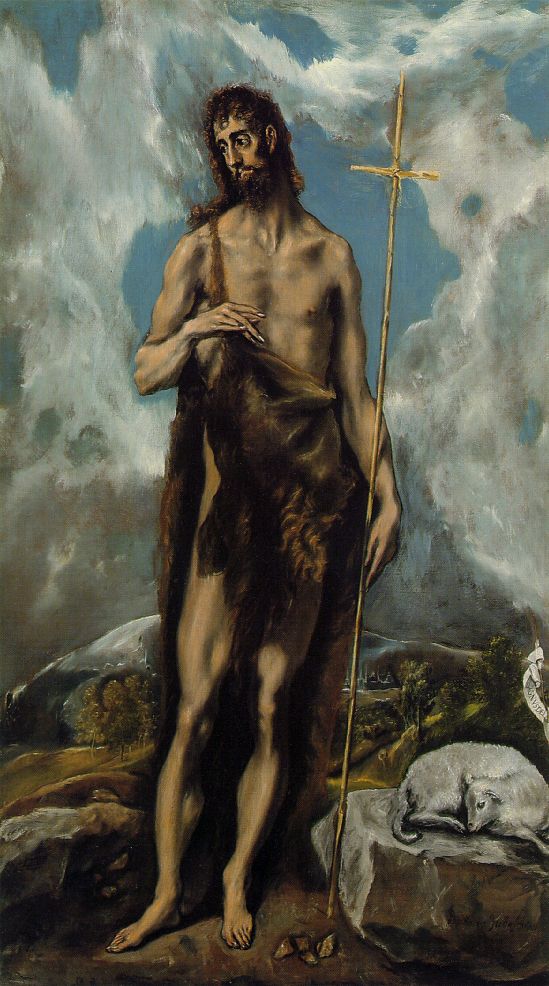
John the Baptist came to the ‘wedding’ so to speak, the wedding being the revealing of Jesus as God. John wore appropriate apparel for that occasion — a suit made of camel’s hair and girded about with leather (Mat 3:4). John came dressed for a wedding; it was not in fancy apparel but the basics.

Camel hair coats are for warmth and comfort. John was born with the Holy Spirit and his coat was his outer Comforter that symbolized the Holy Spirit covering him.

If this parable reveals the wedding of Jesus to the body of Christians, which it does, then the appropriate wedding garment would be the ‘Comforter’ — the Holy Ghost (John 14:16).

The man that came to the wedding. maybe dressed formally, or maybe even plainly, still did not have the proper attire for the wedding of Jesus. In that the Church is made up of the good and bad, as the seven churches of Asia reveal, they are still the ‘Church.’

However, consider the Church much like a threshing stone wherein all can come but few are chosen. There are criteria for who are threshed aside and who is kept. The man of the wedding was welcome there because he was allowed in, but before he was allowed to be part of the wedding party, the king checked him out; Was he properly dressed for the occasion?

Of course, he could have come ‘naked’ in the sense of Adam and Eve who should have come to the proper party beneath the Tree of Life.

Perhaps Adam and Eve were not even naked like we think of nakedness, but like angels. (More on that shortly.) The nakedness of which they were ashamed was their flesh which after sin was of a different substance and like the inglorious flesh that humans wear today.

In that instance, after Eve and her frolic with the angel, Lucifer, God covered both Adam and Eve with coats of skin (Gen 3:21) for them to be ‘married’ to Him after they had abandoned Him for the Luciferin ‘Serpent.’

God covered their newly acquired flesh with coats of skin, perhaps the wooly hide from a lamb. On the other hand, perhaps the ‘coats of skin’ was the ‘whole armor of God’ for them to be able to “stand against the wiles of the Devil” (Ephes 6:11).

Not knowing for sure about the fabric of those coats, God put onto Adam and Eve appropriate garments for their wedding.

‘Marriage’ after sin was merely coupling, as Genesis 4 reveals. They did not go to their wedding with God, becoming one flesh with Him, but put on wedding apparel that God provided — the Garment of Adam, as it was called. But more appropriately, the ‘Garment of God’ for both the man and woman of Adam’s kind.

Eve had gone to her ‘marriage’ with the Wicked One naked and Adam watched naked (Gen 4:1). Neither were dressed gloriously. We think of glory as splendorous, but it is in plain apparel.

Yes, I am implying that she gained carnal knowledge from the forbidden tree. Carnal knowledge is the knowledge of the flesh. Because they were ashamed of their pudenda (Gen 3), it is implied that their appendages were discovered to have multiple uses. The Books of Adam and Eve reveals that they had no digestive systems when in Glory but acquired them after sin. Perhaps they acquired genitalia as well to multiply Satan’s way.

Now read an afterthought later in the day when Jesus was asked about marriage in heaven after the general resurrection. “For in the resurrection they neither marry, nor are given in marriage, but are as the angels of God in heaven” (Mat 22:30).

Adam and the woman were made both in the Image of God and elohim — the angels who were made in the Image of God. Unlike the angels, God took living souls and surrounded them with a material image of the elements. Angels were invisible substances and men as much ‘angels’ with ‘coats’ made of some glorious material manufactured by God to become His Glorious Likeness. Imagine that Adam and Eve were like Jesus after He died and was resurrected. His Spirit, or Ghost, was the same, but His flesh was made glorious (John 7:39).

I submit that the glorified Jesus — the ‘last Adam’ (1 Cor 15:45) was of the same substance as the first Adam.

Jesus revealed to the inquisitive crowd that after the resurrection, there would be no marriages. ‘Marriage’ is two becoming one. Their will be no coupling in the realm of heaven. That implies that there should have been no coupling in the paradisical Garden in heaven. Adam and Eve were cast out into the world where coupling was the normative and their coats of skin would be removed only to couple. Eve had no ‘armor of God’ to couple with the Wicked One with one meaning of her name is ‘Adulteress.’

Adam and the woman were ashamed of their flesh after sin. Before sin, they had not been ashamed. They were in the Image of the resurrected Jesus before encountering the Devil, but afterward were brutish like the beasts. They had acquired animal skins with sin and lost their once dominant genes (Gen 1:26). The Wicked One had become the dominant one rather than Adam.

Now back to the parable. The man was thrown out because his clothes were not appropriate for a wedding with Jesus — the Son of the King. He had been called but had not found grace.

Noah found grace (Gen 6:8). The Book of Jasher reveals that the grace that Noah found was the Garment of Adam. Noah was elected from all those around him to find grace, not because he was a good shipbuilder, but because he ‘wore’ God in a sense. He was called and then followed. While covered with the Garment that God had provided, Noah avoided the fiery darts of the wicked ones and went to the ‘wedding.’

The Ark of Noah was God’s ship and since Noah was married with God, wearing His apparel — at one with Him — the Ark was nothing more than a ‘wedding cruise’ after which the ancient invisible Church was laid on new ground (a new Adam).

So, Noah came to the wedding dressed appropriately. Whatever clothing that he wore, beneath it was the Garment of God. Noah wore that coat for over 120 years, then Ham stole it and made him naked. Then Noah sinned. Soon Noah was like Adam as well; he found grace in the new world even without that Coat. However, Ham stole the Garment, and his son was cursed.

Ham came to the wedding without proper wedding attire, and his son was cast out into the world without proper attire, because he stole grace.

Today stealing the glory of the other is called ‘stolen valor.’ Ham kept the valor for some time, and it was passed on to his son Canaan, then through several others to Nimrod who used the Garment of Adam wrongly, to prove there was no God in heaven.

The point that Jesus was making in the parable is that many are invited to the wedding, few come, but those who come fraudulently, are due Hell.

I believe that today most Christians are frauds. They, and sometimes me, take off the Comforter for a few minutes to do as we please. If we wear the Comforter to the wedding of us to Jesus on the Great and Terrible Day of the Lord, we will be well received at the wedding of the King’s Son to the Invisible Heavenly Church.

Even after professing to be the bride of Christ, many come to the ‘wedding’ without the Garment of God. How would we know? “If you love Me; keep My commandments,” said Jesus (John 14:15). Before the wedding it is essential to dress appropriately, wearing the whole armor of God to even pass the angels guarding the Way to the wedding (Gen 3:24).


Saturday, January 27, 2024

THE BIBLE: THE WRITTEN WILL OF GOD

 SCRIPTURE

Many churches focus on the New Testament. Jesus said unto the apostles as He “took the cup, and gave thanks, and gave it to them, saying, ‘Drink you all of it; for this is my blood of the new testament which is shed for many for the remission of sins’” (Mat 26:27-28).

Indeed, the New Testament is a covenant, not replacing the old but finishing it. More on that shortly.

“New,” therein is a fresh covenant, but the Abrahamic and Mosaic Covenant were for perpetuity. Hence, the New Testament refreshes the previous Covenants.

Paul wrote about a testament, “For where a testament is, there must also of necessity be the death of the testator” (Heb 9:16). The testator of any will is a way of disposing of one’s own affairs. Just who is the ‘Testator’ about whom Paul wrote? The New Testament is essentially probating the Will of God. His ‘Estate’ is the heaven and the Earth, so it should be expected that all of those from of the gens of God should receive their portion of the Estate.

In His divine wisdom, God divided the Estate into two: (1) those who are faithful to Him until the end are to receive the Paradisical part of the Estate and (2) the unfaithful shall receive the ‘burning swamp’ land, so to speak — Hades or Hell.

The last words of Jesus as He probated the Estate was, “It is finished” (John 19:33). The Estate of God was probated by the Son of God, Jesus. He died so that God’s Will be divided fairly. As such, He signed and notarized the Will of God with His own blood. Jesus appeased God by the propitiation of His own blood.

With that said, the New Testament is the ‘codicil’ to the Will of God; “a legal instrument made to modify an earlier will” (Merriam-Webster 2023).

The Adamic, or Edenic, Covenant was the first writing of the Will of God, to wit: “And I will put enmity between you (the Serpent) and the woman, and between your seed (the Serpent’s) and her seed; it shall bruise your head (the Serpent’s), and you shall bruise His heel” (Gen 3:15).

‘Enmity’ is hostility of hatred. Thus, the Serpent as the ‘Adversary’ (Satan) was the penalty for Eve’s kind. (Note that by then Eve’s progeny was a new kind distinct from Adam’s kind.) As the ‘mother of all living’ our kind is Eve’s kind and is a mutation caused by the Wicked One. As such, we think of ourselves as mankind, but we are all born in iniquity, just as David admitted (Psalm 51:5). We all are born depraved, meaning that we “come short of the Glory of God” (Rom 3:23).

The latter part of the Adamic Covenant was who would get theirs and who would not. The seed of both the woman and the Serpent are their ‘seed,’ or genetics. The sons (genetics) of the Serpent will be the ones stepped on, and the sons (genetics) of Eve’s kind would do the stepping.

As it turned out that was a shadowy picture of the death of Judas with Satan gushing out of Him and Jesus who was harmed on the Cross. The Adamic Covenant was all about the Good Friday, AD 33 where it was finished!

We are not God’s children; we are children of the Wicked One, just like Cain (1 John 3:12), but those who are born again are engendered by God (Strong 2006) in some miraculous process that is marvelous.

Since Eve’s kind have already been born, that re-gendering makes Christians ‘sons of God’ by adoption; “You have received the Spirit of adoption, whereby we cry, ‘Abba, Father.’” (Rom 8:15).

It is sad that I must be blunt, but you are not a ‘child of God’ unless you have been born again. That you “must be” (John 3:7) to be “saved” (Acts 4;12). Therefore, rebirth is the cause and saved is the effect. They are not the same events but occurs in the process of time just like life.

Now back to the Will of God.

The entire ‘Bible’ is the Will of God; and it consists of the very Word of God written in some sort of tablet or scroll.

A ‘Bible’ is nothing more than the medium on which any text is written. The Bible could be written on the skins of animals, on stone, on paper, or even written on the minds of men. Jesus was the walking, talking ‘Bible’ since the Words in His Mind were the very Word of God (John 1:1-14). Jesus was the true ‘Living Bible’ because His very Words were God speaking His Mind to change our thoughts to His Thoughts.

Some people even smoke the ‘Bible.’ The paper is not important, but the Words written on it certainly are. So, for the medium of exchange, the important thing is the message conveyed on the paper or stone.

Now for a surprise: Scripture is not the New Testament. All occasions of the word ‘scripture,’ refer to the Old Testament from which the new is an appendage that does not change the original intent but clarifies the intent of the Will of God. The best example is that the Greatest Commandment clarifies the conditions that were an appendage to the older Will of God — the Mosaic Covenant and its ‘Appendix’ — the stones on which the Ten Words of God were written.

Although that ‘Bible’ is long gone, the Words thereon are still preserved on paper. My point is that the Bible can be destroyed in various ways — Moses shattered them — but the Words are for perpetuity. As such, according to John, Jesus was the walking, talking Word that quoted scripture form memory because the ‘finger of God’ that wrote it on stone was Jesus (Deut 9:10).

The two tablets of stone made a Bible made of stone, not the entire text but the ‘Appendix’ that wills so often have.

The Words on those stones were the Thoughts of Jesus. The ‘finger of God’ was dynamic; and it was the Spirit of God that burned those Words onto stone. What was it that the Holy Spirit of God wrote? Virtuous Words… good things that improve the defective beings.

‘Virtue’ is ‘dynamis’ in the Greek, and when God writes or otherwise speaks, it is divine Dynamics — forces that keep things in motion during time.

Any of the Words of God written anywhere in the Old Testament is scripture, “All scripture is given by inspiration of God, and is profitable for doctrine, for reproof, for correction, for instruction in righteousness” (2 Tim 3:16).

At all times, when the word, ‘scripture’ is used in the New Testament, it refers backward to the Old Testament: the Genesis, the Law, the Psalms, the Proverbs and the prophets. All the words in those writings are 'scripture.” (graphe in the Greek), or “things written down” (ibid).

So far, the Bible is the ‘paper’ on which people wrote down the Thoughts of God because it was by the “inspiration of God” as Paul wrote to Timothy.

The Old Testament is the Will of God — His Thoughts — that have been written on the paper or other medium. The manuscripts on which scripture was written was on the dried skins of animals, so animals were Bibles. But the Words on them, in a manner, kept the Word of God alive.

Paul wrote about the whole armor of God; to take “the sword of the Spirit, which is the Word of God” (Ephes 6:17). Therefore, scripture — the Word on some medium of exchange — acts like a sword to ward off Satan and Sin. It is not the actual words that do that but the Holy Spirit of God in our shape, called ‘Jesus.’

So, without scripture, even the Christian is defenseless.

Scripture was the ‘weapon’ that kept the wicked ones from the saintly in Old Testament times. The Old Testament was the weapon of God that the patriarchs used to ward off evil, and so it is to this day.

However, the New Testament is technically not ‘scripture’ because it did not exist in the times it was written. The Words of Jesus and the inspired words of the apostles and others were gathered long after they were written. Technically, they are not the scripture mentioned in the New Testament, but they were writings that were judged sacred. 

The canon of the New Testament is the set of books many modern Christians regard as divinely inspired and constituting the New Testament of the Christian Bible. For historical Christians, canonicalization was based on whether the material was written by the apostles or their close associates, rather than claims of divine inspiration. (Wikipedia 2023)

 Of course, that is from the Catholic viewpoint and their councils thought some writings worthy of canonization. ‘Canon’ essentially means ‘rule.’

Wikipedia writers determined that they were not inspired rules but manmade rules or opinions. They neglect that the apostles and the church fathers most often knew Jesus personally, even Paul who knew Jesus after He had arisen.

In my opinion, canon is based on the depositions of those who best knew Jesus personally. Each of the writers, endangering their own lives, wrote the truth. Were there mistakes made in writing. Not if they knew Jesus personally, but often they wrote about what they heard and saw.

As with any depositions, the court looks not so much that they all saw or heard the full story but that the stories support one another, and one person’s deposition does not contradict others.

There are cases in the New Testament where one writer might mention one blind man but another two. They remain in agreement because each focused on what was most obvious in their line of view. What they do not see or hear is called a ‘scotoma,’ sort of an unimportant distraction that the writer failed to notice or thought to be insignificant.

The early Church used the best criteria that they had to decide canon. That criterium was that only the writings of those closest to Jesus would be accepted as divinely inspired scripture.

Note the small difference: scripture is the very Words of God that was captured in the Greek from the Hebrew, and from there to the English. Scripture has some inadequacies in whatever language, so, the reader must defer to the oldest known Hebrew copies. (I believe the original writings were in archaic Hebrew, or possibly hieroglyphic Hebrew.)

English is not the very Word of God but a version of the received text (textus receptus in the Latin). It is scripture since it is the text of God’s Words. The actual Words of Jesus in Greek scripture is directly textus receptus as received from the mouth of God.

It is not just inspired by God, but spoken by God, hence the red-letter edition. The red letters are more than inspired like Old Testament Scripture, but actual Words, if in the Greek. That makes the quoted Words of Jesus the very Words of God. With that said, the New Testament is a codicil that explains God’s Will to clarify the misconceptions, primarily that it was not by the Law that the Will of God would be probated, but the intent of the heirs… Are they asking for their share because of the legal requirements, or knowing they do not deserve anything, ask for mercy.

The New Testament clarifies the Law, just as Jesus said, “On these two commandments hang all the Law and the prophets (Mat 22:4), referring to loving God and others. Essentially the will of the inheritors must coincide with the will of the Testator.

As it turned out the Testator, the ‘Word,’ just as Herod the Great before, came back from the dead to probate his own Will.

Herod’s will was read after he died, as if he was still alive, according to Josephus. Each of the writers of the New Testament were testifying to the validity of the Will of God that was probated by His only Son, Jesus.

Who will get what? All will get theirs and the conditions were well explained by the witnesses to the Will of God. The New Testament verifies who gets what and how fair it would be distributed. Each person will indeed get theirs: some the badlands with methane gases that burn continually wherein there is not water to quench their thirsts, and the faithful heirs receive the Garden Paradise wherein the glorious shall dwell forever.

Hopefully, you might have learned several things: (1) That the Bible is just ‘paper,’ (2) that scripture is the Word of God written on Bible, (3) that both sets of papers is the Will of God, (4) that the Old Testament is the full Will of God, (5) that the New Testament is a ‘clarification’ of the misunderstanding of the original, (6) that the Old Testament is the actual Word of God if in the original language, (7) that the gospels contain the very Words of God and that they are as much the Will of God as earlier scripture, (8) that the remainder of the New Testament was inspired by God Jesus to His closest associates, and is canon, (9) that the other writings of the New Testament are depositions that His close associates left behind that validate the conditions for receiving an inheritance, and lastly, (10) that the distribution of God’s Assets will be divided fairly when each their time comes.


Friday, January 19, 2024

A PENNY FOR YOUR THOUGHTS

In the parable of the workers, some were hired early and some later, but at the end of the day, they all received the same wages. So, it is with Jesus; He is the ‘Husbandman’ that pays the wages and the condition for payment is the same thing without regard for the duration of the work performed by the workers. Jesus explained Himself, “So the last shall be first, and the first last: for many be called, but few chosen” (Mat 20:16).

Paul wrote, “For the wages of sin is death; but the gift of God is eternal life through Jesus Christ our Lord” (Rom 6:23). Consider the penny in the parable a ‘gift.’

Jesus had said to the late arriving laborers, “Go you also into the vineyard, and whatsoever is right I will give you. And they went their way.” (Mat 20:4). For the first crew, Jesus had made a contract with them, “He had agreed with the labourers for a penny a day” (Mat 20:2).

Jesus saw men idle at the eleventh hour of the workday, He said, “Whatsoever is right, that shall you receive” (Mat 20:7). It was for Jesus to determine the wages for each of the crews without regard to the amount of time they worked. Each man got what was right, not in their eyes, but the eyes of the householder.

Compare that to salvation which comes at the end of the Day of the Lord. Zechariah the prophet saw it coming, “Behold, the day of the Lord comes, and your spoil shall be divided in the midst of you” (Zech 14:1). Malachi wrote about it coming as well, then there was silence for more than four-hundred years, “Behold, I will send you Elijah the prophet before the coming of the great and dreadful day of the Lord” (Mal 4:5).

In the Old Testament, the Day of the Lord was thought to be a terrible day (e.g., Amos 5:20). It is also written, “Hold your peace at the presence of the Lord God: for the day of the Lord is at hand: for the Lord hath prepared a sacrifice, he has bid his guests” (Zeph 1:7). The parable of the workers is a lesson about who He can invite to the Estate and their payment. For some, they will get their due and others get theirs by grace.

The ‘penny’ represents the reward at the end of the day. The householder paid all the workers the same at twelfth hour although some had worked all day and others one hour. The former group got what they contracted for, and the last group got whatever the master wanted to give to them; for them, it was not a contract but trusting the master would treat them fairly!

The Hebrews came first to the ‘Estate’ of God. God covenanted with them; their reward would be the land from the river to the sea; the same property that Palestinians still struggle with the Jews about.

On the Day of the Lord, the Jews will get their pay. It is God’s Estate and He contracted with Abraham about their payment thousands of years ago. Israel is what is left of their ‘penny’ after inflation, so to speak. That is because the Hebrews did not tend to the Garden as Adam’s kind were commanded to do. They were lazy and let the Philistines do what they contracted to do.

At the end of the day — the Day of the Lord — whatever hour that comes, the latecomers get the same pay. That is by the Covenant of Grace.

Jesus told the latecomers, “Whatsoever is right, that shall you receive” (Mat 20:7). There was no contract. They did not demand that they receive anything. They merely thought that the householder, Jesus, would be fair.

As it turned out with the late-arriving workers, Jesus was more than fair. He was generous with them. Note that the early-comers were paid their due, so why should they complain? They trusted the master to abide by the contract, and he did so. The same applies to the Abrahamic Contract for the Jews.

In the history of the world, Christians are the late-arriving workers. Coming late, they should be happy with whatever Jesus has in mind for them. Although not an official contract, as with Abraham, there was a settlement for not only the end of the day but the entire Estate at the end of the Age, to wit: “For by grace are you saved through faith; and that not of yourselves: it is the gift of God: Not of works, lest any man should boast” (Ephes 2:8-9).

That was not really a Covenant but a promise. With Abraham, there would be grace because of the faith of Abraham, but by the time of Moses, the Covenant was made a contract by the Law of God, “I will walk among you, and will be your God, and you shall be my people” (Lev 26:12).

The Mosaic Law was that His people would work until the end of the ‘day’ and they would receive their reward because it was due them. Their day would be longer, however. At the end of their ‘day’ 144,000 of them would be paid although they came to the ‘garden’ early (Rev 7:4). For those who fail to make it, it will be a terrible day and for those who do make it, a great day. Of all the Jews who ever existed without knowing their Messiah, none will make it. Add to those who were dead in the Messiah, only 144,000 more would have the grace of God.

Messianic Jews such as the seed of Abraham, Isaac, and Jacob were ‘grandfathered’ in because they walked with God, or at least the righteous ones did. They were kept safe in Abraham’s bosom (Luke 16) until the Lord’s Day after which they will be saved in the Bosom of Jesus.

The ‘Great Day’ for the Jews will be when the first to come, finally get their pay promised by the Abrahamic contract.  The 144,000 since the Law was abridged will get their underserved reward by the grace of God for what they do not do! That is to refuse the mark of the Beast.

The prophet Joel wrote, “The Sun shall be turned into darkness, and the moon into blood, before the great and terrible day of the Lord come” (Joel 2:31). That day was for the Jews after that event. John saw that terrible day, “I beheld when he had opened the sixth seal, and, lo, there was a great earthquake; and the Sun became black as sackcloth of hair, and the moon became as blood; and the stars of heaven fell unto the earth” (Rev 6:12-13).

That surely will be the “terrible day of the Lord’ when many are destroyed, and true to form, Elijah did come before that time (at the transfiguration). However, even after Elijah had come and even after the crucifixion, the “great and notable day of the Lord,” had still not come (Acts 2:20). The great day and the terrible day were not on the same day. They were possibly millennia apart.

The terrible day of the Lord is described in the letter to Peter, “But the day of the Lord will come as a thief in the night; in the which the heavens shall pass away with a great noise, and the elements shall melt with fervent heat, the earth also and the works that are therein shall be burned up” (2 Pet 3;10). That corresponds with John’s Revelation as well.

For the ones puffed up by the spirit of fornication, Paul wrote that he was, “To deliver such an one unto Satan for the destruction of the flesh, that the Spirit may be saved in the day of the Lord Jesus” (1 Cor 5:5). He would deliver the flesh to destruction, but the Spirit would be saved at the end of the day. When is that day? That implies that the old flesh is never saved but born again with an engendering by God above.

For those who came late to work, it was too late to do much work, but they will receive the same wage, “Be it known therefore unto you, that the salvation of God is sent unto the Gentiles, and that they will hear it” (Acts 28:28). What shall the Gentiles do? Just hear it and ostensibly to understand what they hear.

Paul also confirmed the parable of the workers, “I am not ashamed of the gospel of Christ: for it is the power of God unto salvation to every one that believes; to the Jew first, and also to the Greek” (Rom 1:16). The Jews so far have had to earn their wage, so they thought anyhow, except for the patriarchs. The Greek (Gentiles) are ‘grandfathered’ in, not because of what work they have done, but that a Christian is a Jew inwardly, to wit: “He is a Jew, which is one inwardly; and circumcision is that of the heart, in the spirit, and not in the letter; whose praise is not of men, but of God” (Rom 2:29).

A Jew has had someone do the work of circumcision at the beginning of the ‘day.’ For a Christian no work is performed; God Himself circumcises the heart. Again, Jesus has the right to do that because He is God!

Salvation is for those who endure to the end, both Jew and Gentile, as God is not a respecter of persons. The questions are to endure what and until when? The answer is the tribulations of the world, and the when is when the souls of the righteous are saved.

The salvation of the living souls occur when Jesus comes again, “The Lord Himself shall descend from heaven with a shout, with the voice of the archangel, and with the trump of God: and the dead in Christ shall rise first” (1 Thes 4:16). It is the soul that gets saved; the flesh undergoes a change, “to meet the Lord in the air: and so shall we ever be with the Lord” (1 Thes 4:17).

Thus, the Great (Noble) Day of the Lord is when Jesus comes from above to save the souls of the saints, both the living and the dead, without regard to time! Those who came last — the living — obtain their ‘pay’ without regard to their time following Jesus.

Neither the amount of work, nor the time involved, saves the otherwise damned. The end of the day is when the Lord really comes the second time… “at the coming of the Lord” (1 Thes 4:15) to save the saints that have endured to the end. The dead had to endure the world much longer than the living, but in the end, their rewards are the same. That sounds unfair, but it eliminates the competition — who worked harder and longer.

I remember when many of us built a new church building. It split, primarily because of who worked more and who paid more toward the building. Those who felt they were worth more wanted a special crown, and when it was not received, left the church.